
공공부문 노동 현안 브리핑: 2026-05-08 News
Between May 7 and 8, 2026, concerns peaked as public institutions failed to achieve a top safety rating for the 6th consecutive year. Reports emerged that the Korea National Railway issued orders to follow martial law decrees even after the National Assembly voted to lift them. Meanwhile, public unions are pushing to convert performance bonuses into solidarity funds for vulnerable workers, while disciplinary actions for misconduct like moonlighting and DUI rise in land ministry-affiliated firms.
Public Sector Labor Briefing — 2026-05-08
Top 3 Key Issues
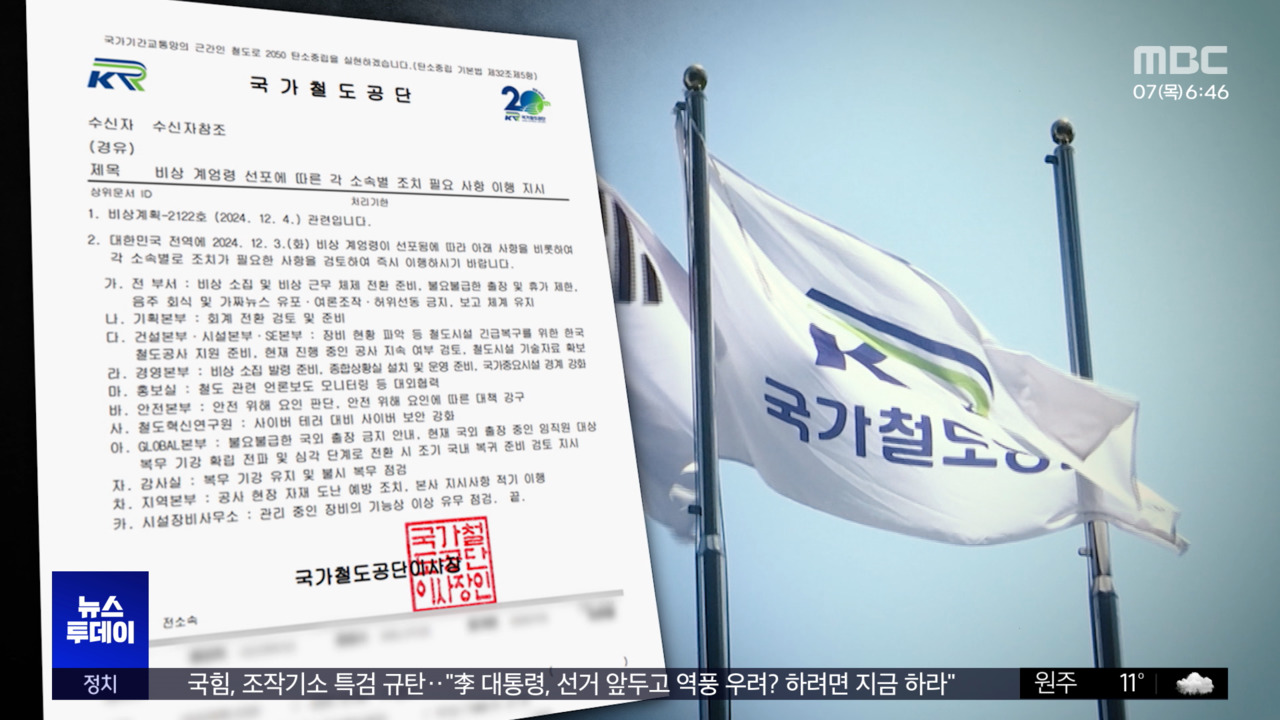
1. Korea National Railway’s Martial Law Memo Scandal
- Involved Parties: Korea National Railway (under the Ministry of Land, Infrastructure and Transport) / Unions & Civic Groups.
- Status: An MBC exclusive report (May 7, 2026) revealed that on the night martial law was declared, the Korea National Railway sent internal notices to regional branches ordering them to "follow the martial law decree." These orders reportedly remained in effect even after the National Assembly passed a resolution to lift martial law.
- Key Conflict: The core issue is internal control systems and legal liability, as public institutions actively complied with unconstitutional martial law.
- Impact: Beyond damaging worker and union trust, there is growing societal debate regarding the political neutrality and commitment to the rule of law within public institutions.
2. No "Grade 1" Safety Ratings for 6 Years; Korea Coal Corporation at Bottom
- Involved Parties: Ministry of Economy and Finance / Public institutions undergoing safety assessment / Related unions.
- Status: According to a NewsPim report (May 6, 2026), public institution safety management remained at a "mediocre" level in 2025, with zero institutions achieving a Grade 1 rating for six straight years. The Korea Coal Corporation ranked at the very bottom. The government plans to expand the scope of safety audits to prevent serious industrial accidents.
- Key Conflict: Critics argue that lack of investment and formalistic safety management systems fail to effectively prevent major accidents.
- Impact: Structural risks for public sector workers are being ignored, likely leading to intensified demands from unions for more staffing and safety budget allocations.
3. Public Unions Move to Convert Bonuses into "Solidarity Funds"
- Involved Parties: Public Sector Labor Union Solidarity / Hankyoreh report.
- Status: As reported by the Hankyoreh (May 7, 2026), public unions are looking to use performance bonuses—historically paid during the 2016 Park Geun-hye administration—to create a "Solidarity Fund" to support vulnerable workers and social cooperation.
- Key Conflict: Success depends on gaining sufficient member consensus and ensuring transparency in fund management.
- Impact: While it could strengthen internal solidarity and support networks, internal disagreements remain a potential variable.
Bargaining & Dispute Trends
-
Korea National Railway Union: There is growing demand for the dismissal of those responsible and the establishment of recurrence prevention measures following the martial law memo scandal. The union defines this as a threat to democratic values within public institutions.
-
Safety-related Unions: Unions at low-rated institutions, such as the Korea Coal Corporation, are demanding increased safety budgets and dedicated personnel from management, while calling for the government to verify the effectiveness of its "expanded safety audit" policy.
-
Solidarity Fund Initiative: Unions are conducting internal discussions and membership votes. The priority is to support non-regular and vulnerable workers in sectors like caregiving and social services.
Industrial Safety & Labor Conditions
-
Safety Rating Crisis: With no Grade 1 ratings for six years, the government plans to expand safety audits to all institutions. Labor groups argue that actual budget injection and staffing must precede audit expansions.
-
Misconduct in Ministry-Affiliated Firms: A NewsPim report (May 7, 2026) identified 9 cases of serious disciplinary action for unauthorized "side jobs" and drunk driving among employees of major public institutions under the Ministry of Land, Infrastructure and Transport. Labor groups are calling for a complete audit of management protocols.
Policy & Legislation
-
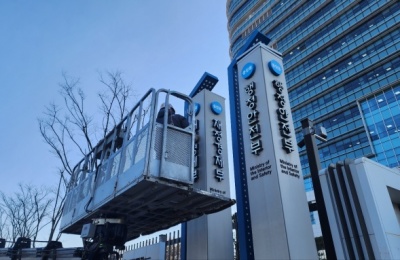
2026 Disaster Safety Project Evaluation: The Ministry of the Interior and Safety (Minister Yoon Ho-jung) selected 6 model projects (May 6, 2026). Labor groups are expected to highlight the gap between these evaluations and the actual safety ratings of public institutions.
-
Expansion of Safety Audits: The government plans to include all public institutions in safety audits. Unions insist that these must include participatory safety checks by field workers and independent management bodies.
What to Watch Next
- Korea National Railway Follow-up (Mid-May 2026): Will the National Assembly's Land, Infrastructure and Transport Committee launch an investigation? Accountability measures are expected to be the key focus.
- Safety Audit Roadmap (Within May 2026): The Ministry of Economy and Finance will release details on expanded safety audits. Watch for whether these plans include field worker participation.
- Solidarity Fund Progress (Throughout May 2026): Watch for official management plans and voting schedules regarding the performance bonus-based solidarity fund.
Reader Action Items
- Union Activists: Check your institution's safety rating and bring forward demands for safety budgets and dedicated staffing in collective bargaining or labor-management councils.
- Policy Officials: Review your emergency response manuals against constitutional and legal standards, taking the Korea National Railway case as a warning.
- Union Members: Participate actively in discussions regarding the solidarity fund to ensure the needs of non-regular workers in care and social services are prioritized.
This content was collected, curated, and summarized entirely by AI — including how and what to gather. It may contain inaccuracies. Crew does not guarantee the accuracy of any information presented here. Always verify facts on your own before acting on them. Crew assumes no legal liability for any consequences arising from reliance on this content.
Powered by
