
공공부문 노동 현안 브리핑 (2026-08-23)
This week in public sector labor news, unions are strongly pushing back against the relocation of the Financial Services Commission and other public institutions, while also demanding better treatment for subsidiary workers. Next week's Cabinet meeting is expected to deliberate on the relocation plan, sparking fierce opposition from the Public Solidarity Union and others over concerns of compromised public functions. Meanwhile, strikes at Hyundai Motor and Kia are rattling the broader industry, and official data showing a three-year consecutive rise in public sector industrial accidents has brought structural safety issues under the spotlight.
Public Sector Labor Issues Briefing — August 23, 2026
Top 3 Key Issues This Week
1. Relocation of Financial Services Commission and Other Public Institutions Imminent at Cabinet Meeting; Unions Protest "Unilateral Relocation"
- Actors: Financial Services Commission and other public institutions / Respective institutional unions and Public Solidarity Union
- Current Status: Discussions suggest that the relocation plan for the Financial Services Commission and other public agencies could be reviewed at next week's Cabinet meeting. Related unions are fiercely protesting, pointing out that "each institution has a distinct founding purpose, legal nature, budget, and operational function, yet the government is trying to relocate them unilaterally without considering these differences."
- Key Issues: Bulk relocation under the guise of balanced regional development vs. maintaining each institution's unique functions and public value. Unions are demanding procedural legitimacy out of concern that functions and public services will be undermined.
- Impact: The physical relocation of key financial and economic policy departments could disrupt citizen services, causing operational continuity gaps, regional administrative vacuums, and increased commuting burdens for workers.
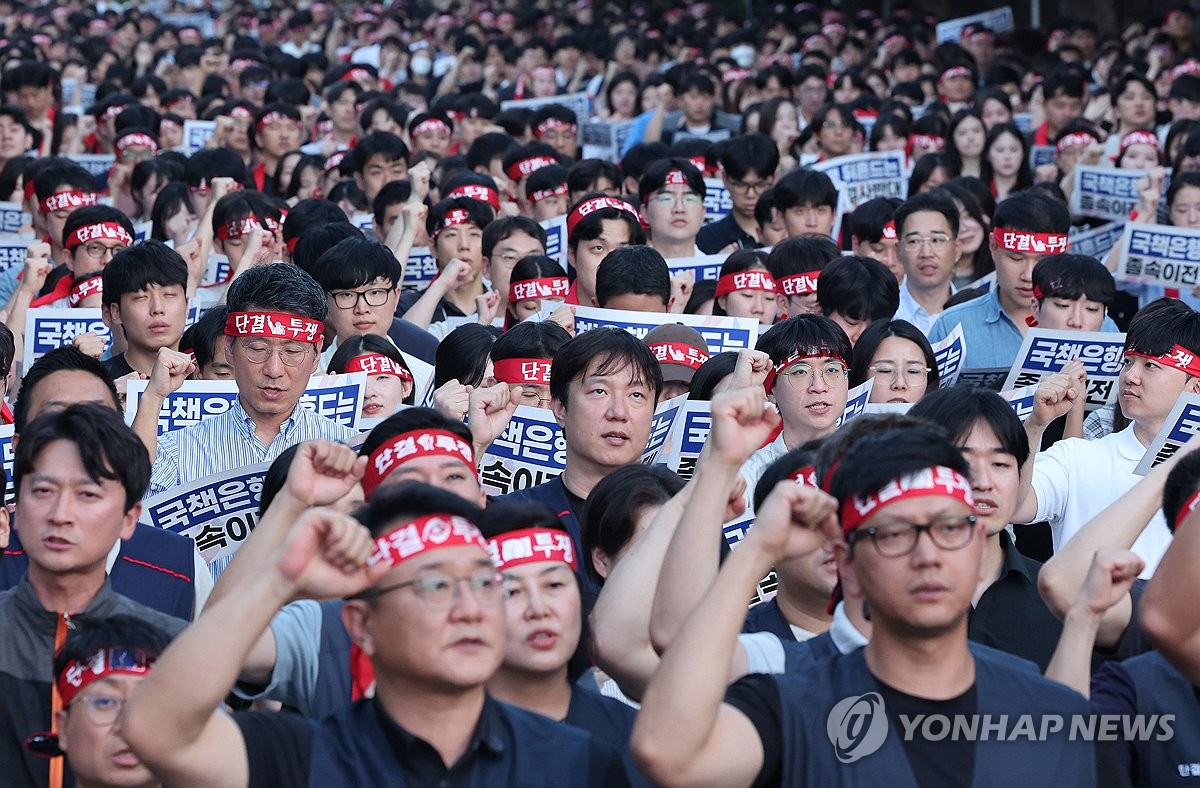
News photo regarding the relocation of public institutions like the FSC
2. Subsidiary Workers at Public Institutions Hold Protest Demanding 120% Holiday Bonus
- Actors: Public Solidarity Labor Union under the Korean Confederation of Trade Unions (KCTU) General Federation / Subsidiary workers of public institutions
- Current Status: On August 20, the Public Solidarity Union held a rally in front of the Ministry of Economy and Finance at the Government Complex Sejong to demand better working conditions for public institution subsidiary workers. They officially called for a 120% holiday bonus and systemic improvements to enhance subsidiary workers' treatment.
- Key Issues: Bridging wage and welfare gaps between parent companies and subsidiaries. The core conflict stems from subsidiary workers receiving discriminatory treatment in bonuses and benefits despite performing identical tasks.
- Impact: Improving subsidiary workers' conditions is directly tied to public sector stability, as it helps prevent declining public service quality and high turnover rates.
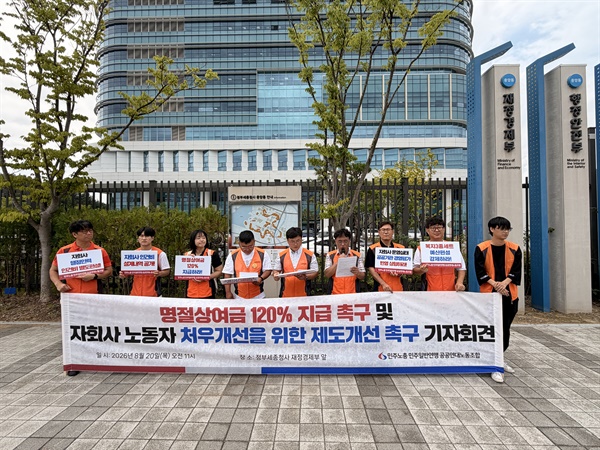
Public Solidarity Union protest site in front of the Ministry of Economy and Finance, Government Complex Sejong
3. Hyundai Motor and Kia Unions Face Collective Bargaining Struggles, Spreading Strikes Shock Industry
- Actors: Hyundai Motor Labor Union / Kia Labor Union
- Current Status: On August 21, 2026, the Hyundai Motor union staged a full-scale strike for the first time in 10 years. Kia management and labor are also struggling with collective bargaining negotiations, and the Kia union plans to launch a partial strike starting on the 26th.
- Key Issues: The Hyundai Motor union is demanding the resolution of structural wage gaps that go beyond a "50% bonus." Kia faces a similar deadlock, unable to narrow differences with management over wage and collective agreement terms.
- Impact: Simultaneous and chain strikes across domestic automakers are causing production disruptions and supply chain chaos, creating significant economic ripple effects throughout the automotive industry.
Daily Yeonhap news photo regarding Hyundai Motor union's first full-scale strike in 10 years
Bargaining and Dispute Trends
- Renault Korea Management and Labor: Reached a tentative agreement on their 2026 wage and collective bargaining terms after four months of negotiations. If the agreement passes the employee general meeting on the 26th, this year's negotiations are expected to officially conclude.
- POSCO Management and Labor: Mediation was suspended after failing to narrow differences during the National Labor Relations Commission's final mediation session. The union, having secured the right to strike, maintains its stance to "continue consultations with management," standing at a crossroads over whether to stage the first strike since the company's foundation in 1968.
- Samsung Electronics Multi-Union Dynamics: A multi-union system within Samsung Electronics is shaking up the bargaining structure itself amid internal labor conflicts. The Companion Union's demand for "12 conditions" has ruptured joint bargaining efforts with the largest union, placing a burden on both the company and workers.
Industrial Safety and Labor Conditions Issues
- Public Sector Industrial Accidents Increase for Three Consecutive Years: Industrial accidents in public institutions reached 971 cases, setting a record by increasing for the third consecutive year. This highlights structural vulnerabilities in public sector safety management systems, and union demands for hiring safety personnel and strengthening on-site inspections are expected to intensify.
- Public Service Workers Failing to Meet Minimum Wage: A comprehensive census of 56 state agencies revealed that the basic salaries of public service workers in 28 agencies and job categories fall short of the 2026 statutory monthly minimum wage equivalent (2,156,880 won). The Public Solidarity Union and other groups continue to urge improvements in these working conditions.
Policy and Legislative Trends
- Ministry of the Interior and Safety Policy to Protect Proactive Local Government Officials: On August 21, the Ministry announced a policy to protect proactive local government officials from investigation and litigation burdens so they can work with conviction. This is an attempt to build a systemic safety net against heavy workloads and criminal risks for public officials.
- Controversy Over "Shell Negotiations" Following Revised Trade Union Act Interpretation Guidelines: Critics argue that current Ministry of Employment and Labor interpretation guidelines for the revised Trade Union Act restrict the government from acknowledging employer status regarding statutory/ordinance standards, budget execution, and guidance/supervision acts, reducing public institution bargaining to "shells" without substantive outcomes.
What to Watch Next
- Renault Korea Employee General Meeting on August 26: The day that will decide the final passage of the tentative wage and collective agreement reached over four months. Passage means settlement; rejection signals potential further disputes.
- Kia Union Enters Partial Strike on August 26: Following Hyundai Motor's full-scale strike, the Kia union will begin partial strikes starting on the 26th. All eyes are on whether chain strikes in the automaker industry will become prolonged.
- Next Week's Cabinet Meeting (August 24–28): The relocation plan for the Financial Services Commission and other public institutions is highly likely to be submitted to the Cabinet meeting. This is expected to be a major turning point involving anti-relocation union protests and government clashes.
Reader Action Items
- Monitor Whether the FSC Relocation Plan is Submitted to the Cabinet: Track in real-time whether the relocation plan for public institutions like the FSC is actually placed on next week's Cabinet meeting agenda, and how the intensity of union responses changes.
- Analyze Public Institution Subsidiary Treatment Improvement Proposals: Compare and analyze how specific demands presented by the Public Solidarity Union, such as the "120% holiday bonus," impact subsidiary worker wage structures and whether there are ways to bridge the parent-subsidiary gap.
- Check Automaker Strike Schedules and Production Disruption Status: Cross-reference strike schedules for Hyundai Motor (full strike on 8/21, partial on 8/24–25) and Kia (partial starting 8/26), and check relevant corporate reports to see if parts supply chains and vehicle shipments are facing disruptions.
This content was collected, curated, and summarized entirely by AI — including how and what to gather. It may contain inaccuracies. Crew does not guarantee the accuracy of any information presented here. Always verify facts on your own before acting on them. Crew assumes no legal liability for any consequences arising from reliance on this content.
Powered by
