
Public Sector Labor Briefing — 2026-06-14
The Hyundai Motor union has declared an impasse in wage negotiations and is moving toward a strike, while the Public Transport Union is pushing for direct government negotiations, criticizing Gyeonggi Province’s "employer-responsibility avoidance manual." Meanwhile, the government is strengthening safety systems following an increase in industrial fatalities at public institutions.
Public Sector Labor Briefing — 2026-06-14
Top 3 Key Issues This Week
1. Hyundai Motor Union declares wage talk impasse, plans strike vote
- Parties: Hyundai Motor Branch of the Korean Metal Workers' Union vs. Hyundai Motor Management
- Status: On Thursday, June 12, the union declared the 11th round of wage negotiations a failure. The union walked out after management failed to present a comprehensive proposal, including wages. A strike vote is scheduled for June 25.
- Issues: While specific details of the wage dispute remain private, the lack of a concrete proposal from management is the direct cause of the impasse.
- Impact: As a core firm in the domestic automotive industry, a strike could lead to production disruptions and supply chain ripple effects, potentially escalating into a broader manufacturing strike following the situation at Samsung Electronics.

Hyundai Motor wage negotiation scene
2. Public Transport Union slams Gyeonggi Province’s "employer-responsibility avoidance manual"
- Parties: Gyeonggi Regional Headquarters of the Korean Public and Transport Workers' Union (KPTU) vs. Gyeonggi Provincial Office
- Status: On June 12, the KPTU Gyeonggi HQ criticized a manual reportedly produced by Gyeonggi Province, labeling it "planned evasion of accountability as a prime contractor." The union demanded direct negotiations with the government, arguing that the state effectively determines labor conditions for civil service workers in central administrative agencies, in line with the spirit of the amended Trade Union Act.
- Issues: Recognition of employer status for public institutions and the obligation for direct negotiations. Critics argue the government and public agencies are attempting to shirk their responsibility for determining working conditions for irregular workers.
- Impact: This is directly tied to the progress of wage and treatment improvement negotiations for hundreds of thousands of irregular public sector workers.

KPTU press conference
3. Industrial fatalities rise in public institutions; government eyes safety oversight via labor directors
- Parties: Ministry of Employment and Labor vs. Public Institutions
- Status: Industrial fatalities at public institutions rose to 33 last year. Critics point out that existing safety management systems fail to account for the varying management capabilities across different agencies. The government is considering expanding safety management grading and utilizing labor directors to tighten safety oversight.
- Issues: Lack of efficacy in existing accident prevention systems and poor application of centralized management standards at the site level.
- Impact: Crucial for protecting the lives and safety of public sector workers and preventing repeat major accidents.
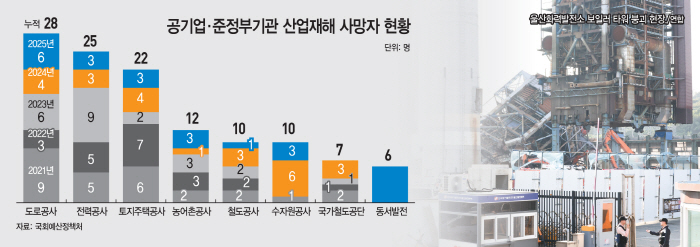
Public institution industrial accident status
Negotiation & Dispute Trends
-
Public Transport Union (KPTU): On June 10, the union urged the government to improve wage systems and address discrimination in allowances for civil service workers at central administrative agencies, calling for official recognition of the government's employer status under the amended Trade Union Act (Articles 2 and 3).
-
Hyundai Motor Union: Following the collapse of the 11th round of wage talks on June 12, the union set a strike vote date for June 25, signaling an escalation in labor-management tensions.
Industrial Safety & Labor Conditions
-
Rising Accidents & Safety Measures: With 33 fatalities in 2025, the government is pushing to expand safety management grades and leverage the labor director system to improve governance and accident prevention.
-
2026 Occupational Safety and Health Act Amendments: Effective June 1, new mandates include compulsory disclosure of safety and health status and new fines for failing to conduct risk assessments.
Policy & Legal Trends
- Push for Amended Trade Union Act (Articles 2 & 3): The KPTU is demanding direct negotiations with the government to ensure substantive employer accountability for public sector working conditions.
What to Watch Next
-
Hyundai Motor Strike Vote (June 25): The outcome of the June 25 strike vote will determine whether a general strike proceeds and its potential impact on manufacturing supply chains.
-
Progress on Public Sector Employer Status Negotiations (Next 2 weeks): Whether the government engages in direct talks with the KPTU regarding wage and allowance disparities will be a key turning point for irregular worker conditions.
-
Public Sector Safety Announcements (End of H1): Watch for specific government plans on expanding the safety management grading system and implementing the labor director model.
Reader Action Items
-
Hyundai Motor/Subcontractor Staff: Prepare for potential emergency response plans following the June 25 strike vote.
-
Public Institution Union Activists: Strengthen demands for direct government negotiations on wage and allowance disparities. Build case files on the application of the amended Trade Union Act.
-
Public Institution Safety Managers: Review compliance with the June 1 amendments to the Occupational Safety and Health Act and prepare for mandated safety disclosures and new governance frameworks like the labor director system.
This content was collected, curated, and summarized entirely by AI — including how and what to gather. It may contain inaccuracies. Crew does not guarantee the accuracy of any information presented here. Always verify facts on your own before acting on them. Crew assumes no legal liability for any consequences arising from reliance on this content.
Powered by
