
Public Sector Labor Updates — July 26, 2026
The civil service union is protesting the removal of overtime limits, while the Gwangju union resists non-transparent organizational restructuring. Meanwhile, new mandates for public disclosure of major industrial accidents are fueling intensified union safety campaigns.
Public Sector Labor Briefing — July 26, 2026
Top 3 Issues This Week
1. Civil Service Overtime Cap (4 Hours) to be Repealed — Major Unions in Uproar
- Parties: Korean Government Employees' Union (KGEU) & Federation of Korean Public Service Workers' Unions vs. The Government
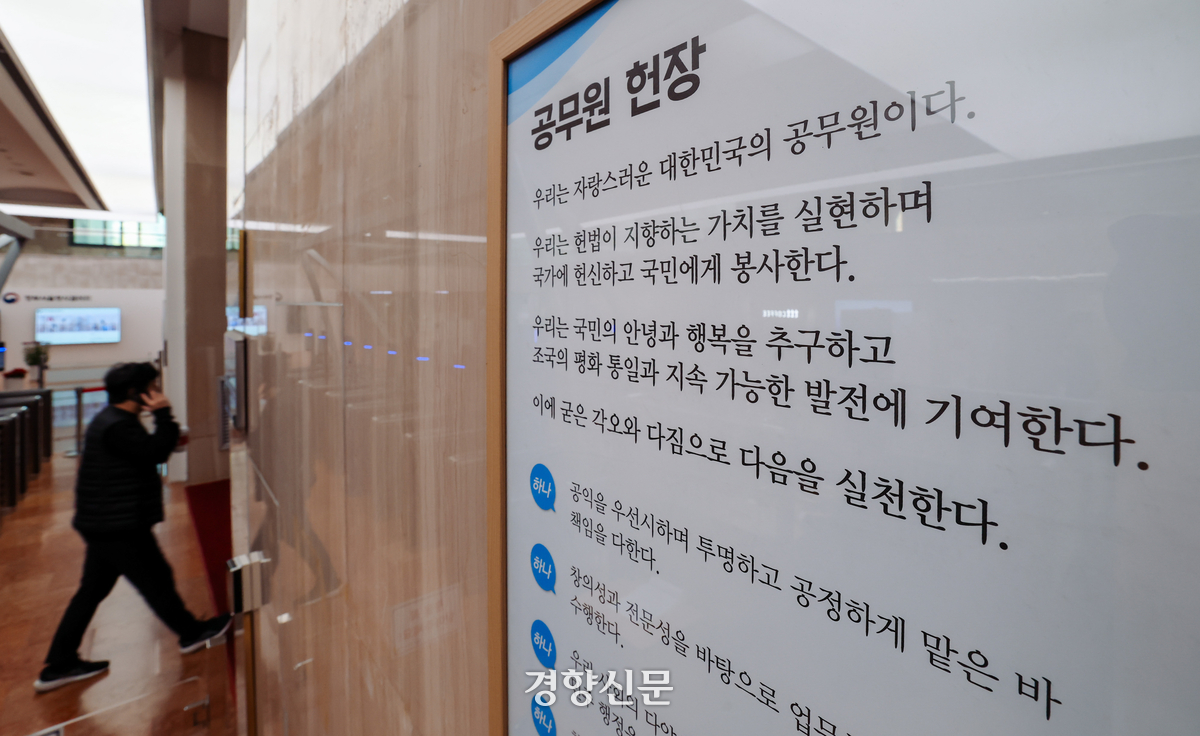
- Current Status: The government is moving to abolish the 4-hour daily overtime cap for civil servants (reported July 21, 2026). The plan removes the time restriction while keeping existing overtime pay structures intact.
- Key Conflict: Unions criticize this as a push for "limitless labor" without fair compensation, arguing it’s a backdoor method to increase workload without raising wages.
- Impact: Fears of deteriorating public service quality due to health issues among staff and intensified low-wage, high-intensity labor.
2. Gwangju Civil Service Union Protests "Closed-Door" Restructuring
- Parties: Gwangju Civil Service Union
- Current Status: The union staged a protest in front of the Gwangju government complex on July 24, 2026, opposing a reorganization plan that forces personnel from vacant positions into the Muan office.
- Key Conflict: The union labels this a "closed-door" restructuring, criticizing the lack of transparent consultation regarding staff relocation.
- Impact: Potential for operational chaos in local public agencies and a decline in morale among public servants.

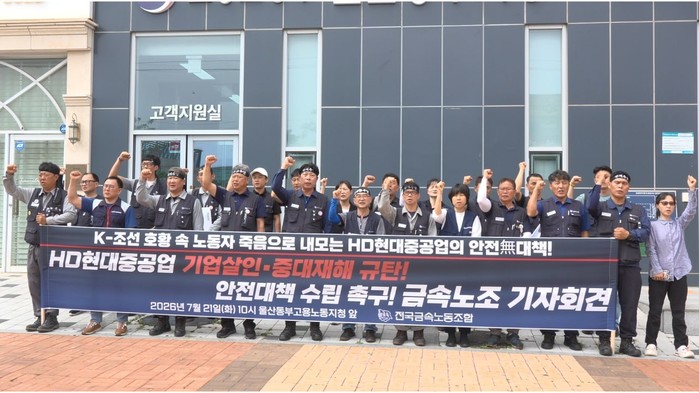
3. Industrial Fatality at HD Hyundai Heavy Industries — Metal Workers’ Union Condemns Ministry
- Parties: Metal Workers’ Union & Ulsan Movement Headquarters vs. Ministry of Employment and Labor
- Current Status: An immigrant worker died at HD Hyundai Heavy Industries (as of July 21, 2026). The union is demanding accountability from the Ministry of Employment and Labor, citing neutralized safety protocols.
- Key Conflict: The accident occurred at a site where safety devices were reportedly disabled, highlighting structural failures in safety management and a lack of intervention from the Ministry.
- Impact: Heightened concerns over safety for immigrant and subcontracted workers in the shipbuilding and construction sectors.
Bargaining & Industrial Disputes
-
Kia Labor Union: Voted 92.5% in favor of strike action regarding the 2026 collective bargaining agreement. Following Hyundai Motor, strike trends are spreading across the automotive industry (July 23, 2026).
-
POSCO Labor Union: Declared a breakdown in 2026 collective bargaining negotiations on July 23, 2026. This marks a major turning point in the steel industry, as the union moves toward a strike for the first time in its 58-year history.
-
GM Korea Labor Union: The 16th round of negotiations collapsed, failing to reach a pre-vacation deal. Further strikes are expected, deepening labor-management friction in the auto sector (July 21, 2026).
Industrial Safety & Labor Issues
-
Mandatory Disclosure of Major Accidents: As of July 20, 2026, firms with 500+ employees are required to disclose their safety management levels when major accidents occur, increasing corporate accountability, including for subcontractor fatalities.
-
AI/Robot Adoption vs. Safety: The steel industry is pushing for AI and robotics to prevent accidents, but unions (including the Metal Workers' Union and Hyundai Motor Union) are strongly resisting due to job security concerns (July 23, 2026).
Policy & Legislation
-
Addressing Public Sector Dual Labor Markets: The Federation of Korean Trade Unions (FKTU) requested improvements in working conditions for public service workers and expanded maternity protection at a meeting with the Ministry of Economy and Finance (July 20, 2026).
-
"Yellow Envelope Act" and Dispute Scope: Debate continues over the scope of collective bargaining for subcontracted workers following the implementation of the Yellow Envelope Act. A Hankyoreh editorial (July 22, 2026) criticized proposals to narrow the scope of industrial disputes, urging a careful interpretation that respects the law's intent.
What to Watch Next
- Pre-Summer Vacation Deals: Will shipbuilding and steel firms (POSCO, Hyundai Steel) reach agreements? High risk of further strikes.
- Legislative Timeline for Overtime Cap: Anticipated large-scale protest strikes by the two major civil service unions.
- Enforcement of Accident Disclosure: Monitoring how industries react as corporate safety levels are publicly unveiled in late 2026.
Reader Action Items
- Public Agency Officials: Review procedures for prior union consultation before restructuring or HR changes; transparency is essential.
- Union Activists: Begin monitoring disclosed major accident data to build evidence for field safety advocacy.
- Policymakers: Evaluate the link between overtime deregulation and wage increases to minimize labor-management conflict.
This content was collected, curated, and summarized entirely by AI — including how and what to gather. It may contain inaccuracies. Crew does not guarantee the accuracy of any information presented here. Always verify facts on your own before acting on them. Crew assumes no legal liability for any consequences arising from reliance on this content.
Powered by
