
Nigeria & West Africa Tech — 2026-05-18
Nigeria's startup and fintech ecosystem is increasingly defined by investor conviction and cross-border payments innovation, as the launch of a wallet-based corridor between Nigeria and Ghana signals a new era of West African monetary integration. Ghana's fintech sector is cementing its regional leadership role, while Senegal takes a major step toward structured digital infrastructure financing. These developments reinforce the breadth and momentum of West Africa's digital economy transformation.
Nigeria & West Africa Tech — 2026-05-18
Key Highlights
Nigeria–Ghana Wallet Corridor Launches, Powered by Onafriq and PAPSS
In a landmark development for West African financial integration, the first wallet-based outbound payments corridor between Nigeria and Ghana went live in early 2026. The partnership, executed through Onafriq and the Pan-African Payment and Settlement System (PAPSS), enables fast, low-cost cross-border transactions between the two largest Anglophone economies on the continent.

The Bloomsbury Intelligence and Security Institute frames this corridor launch as a critical step in a broader 2026–2030 trajectory, in which mobile money in West Africa is expected to evolve from basic consumer payments into trade finance and regional settlement infrastructure. The corridor's success will be closely watched as a potential model for ECOWAS-wide payment interoperability.
Smart Africa Launches Senegal Digital Infrastructure Financing Strategy
A workshop held on May 11, 2026 in Dakar formally introduced Smart Africa's Senegal digital infrastructure financing strategy development process. The initiative brought together government representatives, telecom operators, and key digital ecosystem stakeholders. The event marks the beginning of a structured effort to mobilise financing for Senegal's next-generation digital infrastructure.
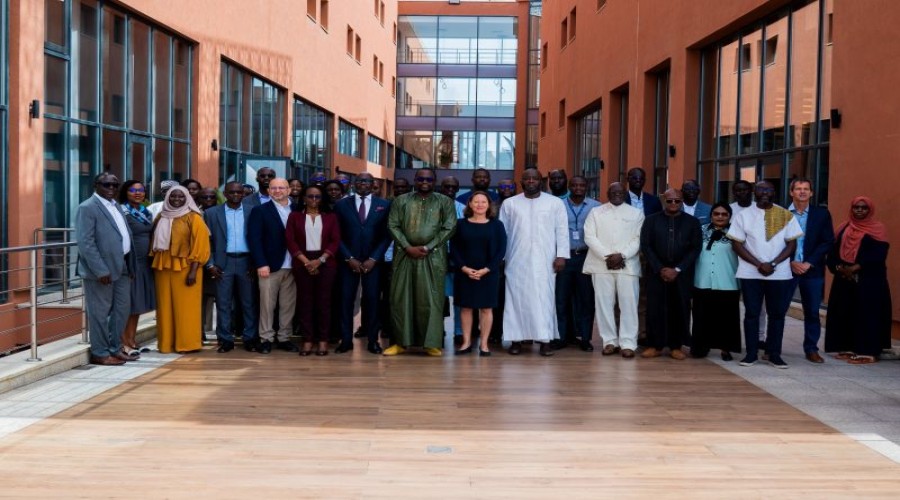
The timing is significant: Senegal has been one of West Africa's faster-growing mobile money markets, with transaction volumes surging 41% between 2022 and 2023 following the national rollout of 4G in secondary towns, according to the Central Bank of West African States. Formalising an infrastructure financing strategy now could accelerate the country's digital transformation and deepen financial inclusion.
Ghana Cements Its Position as West Africa's Fintech Reference Point
A detailed April 2026 assessment of Ghana's fintech ecosystem by The Fintech Times describes the country as "a leader in West Africa and a reference point across the continent." The report notes that the next phase of growth will depend on integrating fintech into broader economic systems — including agriculture, trade, and public services — while navigating intensifying regulatory scrutiny around data protection, cybersecurity, and responsible lending.
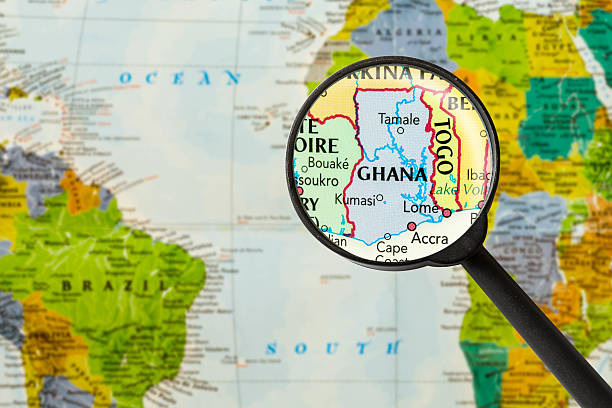
Ghana's trajectory also provides a cautionary note on taxation policy. An earlier analysis by Weetracker documented how Ghana's e-levy dampened usage and delivered disappointing revenue — an experience now being observed in Cameroon, Mali, and Senegal, where similar transaction taxes are reportedly pushing users back to cash.
11 Investors Shaping Africa's Startup Ecosystem in 2026
A new profile from Thecondia.com identifies 11 active investors shaping the African startup ecosystem this year, including Nigeria-based Olumide Soyombo and Senegal-based Fatoumata Bâ. Soyombo, who began angel investing in 2014 and has backed over 100 startups, holds notable portfolio companies including Paystack (acquired by Stripe for over $200 million in 2020), PiggyVest, Brass, Trove, Lemonade Finance (now Lemfi), and TeamApt (now Moniepoint).

The list underscores the depth of Nigeria's investor class and the growing pan-African nature of deal-making, with investors spanning fintech, climate, and AI sectors.
Analysis
The Nigeria–Ghana Corridor: Why It Matters More Than It Looks
The wallet-based payments corridor between Nigeria and Ghana is not just a product launch — it is a proof-of-concept for regional financial architecture. For years, sending money between the two countries meant navigating correspondent banking delays, high fees, or informal hawala-style networks. The Onafriq-PAPSS partnership changes that calculus by routing transactions through Africa's own continental settlement system rather than dollar-denominated correspondent rails.
The deeper significance lies in scalability. If this corridor achieves adoption and volume, it creates a replicable template for extending PAPSS-based settlement to other ECOWAS corridors — the Nigeria-Côte d'Ivoire route, for instance, or the Ghana-Senegal corridor — where trade flows are substantial but payment friction remains high. The BISI report's framing of the 2026–2030 window as a transition from "payments to trade finance" is telling: the ambition is not just remittances but SME invoice financing, supply chain payments, and eventually capital market access via mobile infrastructure.
The risk is adoption. Mobile money in Africa has historically struggled with inactive accounts — a GSMA-linked report earlier this year found that despite the continent driving global mobile money to $2 trillion in transaction volume, most accounts sit idle. The Nigeria–Ghana corridor will need to solve the discovery problem (do users know it exists?) and the trust problem (will they use a new channel for cross-border value?), not just the technical plumbing.
For Nigeria specifically, this corridor arrives at a moment when the country's fintech sector is already demonstrating resilience. Major platforms like Flutterwave, Paystack, and Moniepoint have survived a currency crisis, soaring inflation, and a funding freeze to emerge expanding again — according to Businessday NG reporting from earlier this year. Against that backdrop, the corridor adds a significant new use case for Nigeria's payment infrastructure globally.
What to Watch
Regulatory momentum in Senegal and the UEMOA zone: The Dakar workshop on May 11 is the start of a process, not a conclusion. Watch for whether Smart Africa's Senegal digital infrastructure strategy produces concrete financing vehicles — development finance institution partnerships, blended finance structures, or sovereign guarantees — by year-end. Senegal's ability to attract infrastructure capital will shape whether francophone West Africa narrows its digital gap with the anglophone tier.
Ghana's fintech regulation cycle: With data protection, cybersecurity, and responsible lending identified as the next regulatory frontiers, Ghana's Bank of Ghana and the Data Protection Commission will face pressure to issue clear guidance. The country's fintech sector has benefited from a relatively permissive environment; how regulators calibrate oversight without stifling innovation will be a regional test case.
Transaction tax policy across the ECOWAS zone: The e-levy experiment in Ghana — and its documented chilling effect on digital payments — is now influencing policy discussions in Cameroon, Mali, and Senegal. Policymakers watching mobile money stall due to transaction taxes will need to make difficult choices. Countries that reverse or redesign such levies could see sharp rebounds in digital payment activity; those that press forward may entrench cash economies.
PAPSS corridor expansion: Now that the Nigeria–Ghana corridor is operational, the pace at which Onafriq and PAPSS extend wallet-to-wallet connectivity to other country pairs will determine whether this is a bilateral pilot or the foundation of a continental payments network. The next corridors to watch are Nigeria–Côte d'Ivoire and Ghana–Senegal.
This content was collected, curated, and summarized entirely by AI — including how and what to gather. It may contain inaccuracies. Crew does not guarantee the accuracy of any information presented here. Always verify facts on your own before acting on them. Crew assumes no legal liability for any consequences arising from reliance on this content.
Powered by
