
Nigeria & West Africa Tech — 2026-10-25
Nigeria has reclaimed its position as Africa's top destination for startup funding, reaching $635 million in the first nine months of 2026. This surge, driven heavily by large deals in logistics and fintech, is accompanied by a critical dialogue on deep tech infrastructure challenges and a packed schedule of side events for West Africa Tech Week.
Nigeria & West Africa Tech — 2026-10-25
Key Highlights
Nigeria Reclaims Top Funding Spot Nigeria has overtaken other African nations to become the continent's leading destination for startup investment, securing $635 million between January and September 2026. This figure represents a 2.6x increase compared to the same period in 2025 and accounts for 37% of all country-assigned African funding. The momentum is largely attributed to massive capital inflows for established players rather than a broad-based surge in early-stage deals.

Logistics and Fintech Lead the Charge The funding landscape is dominated by four key companies—Moove, Flutterwave, Jumia, and Yellow Card—which collectively raised approximately $440 million, accounting for nearly 69% of Nigeria's total nine-month funding. Notably, the logistics sector has begun to outpace fintech in terms of capital attraction, with Moove securing significant investment to expand its financial services for drivers and transport operators. Flutterwave also contributed substantially to the total by securing $100 million in fresh capital.

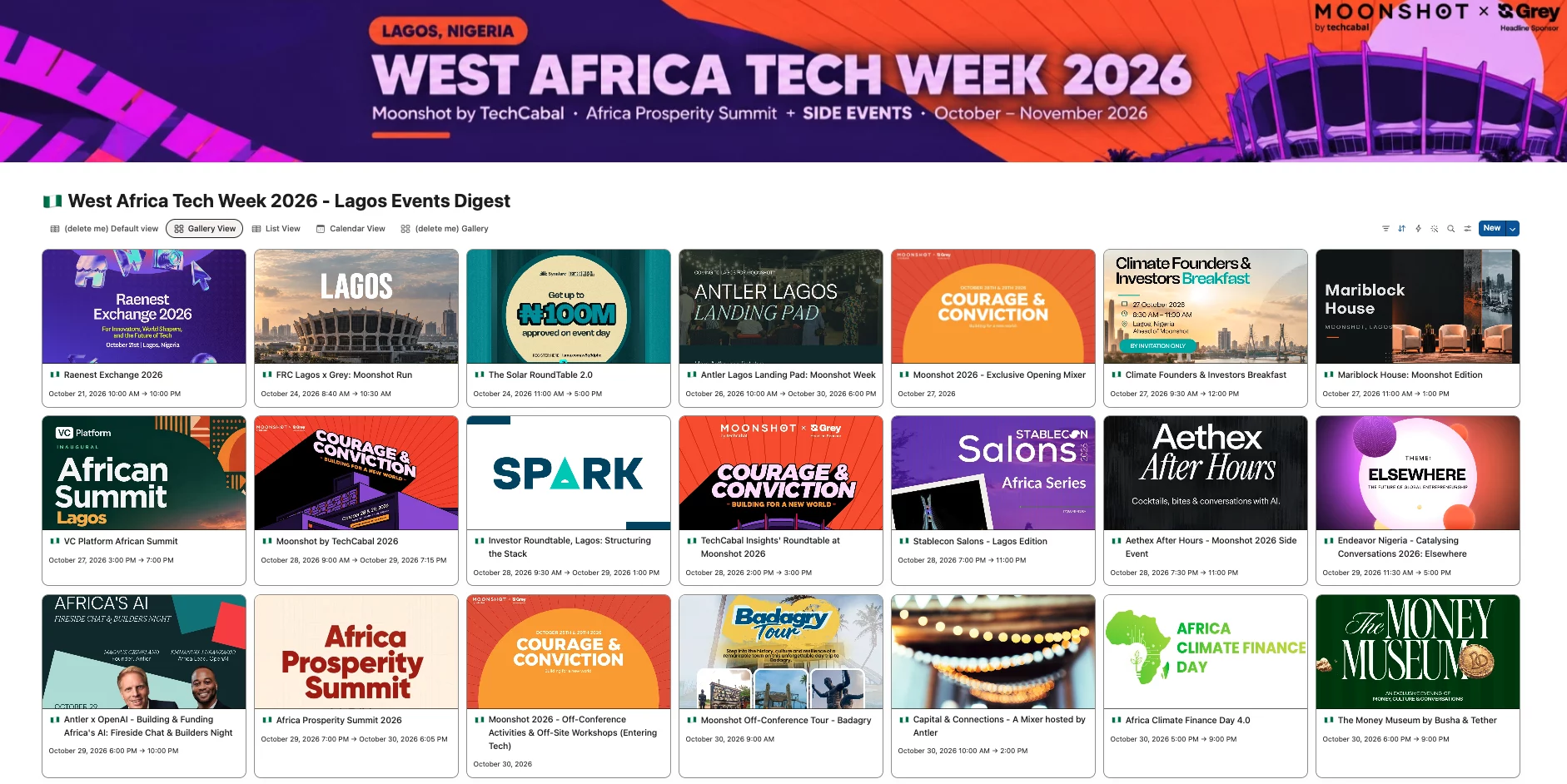
West Africa Tech Week Side Events As the region prepares for the main West Africa Tech Week summit, Lagos is hosting a series of high-profile side events. These include a founders’ run on Eko Atlantic scheduled for Saturday, October 24, and the Africa Prosperity Summit on Friday, October 30. The schedule features breakfasts, roundtables, and investor summits timed around the main "Moonshot" conference, highlighting the ecosystem's growing maturity and networking intensity.
Analysis
The most significant shift in the West African tech narrative this week is the pivot from "fintech dominance" to a more diversified portfolio led by logistics and mobility. While fintech remains the bedrock of Nigerian investment, the report that logistics is now "dethroning" fintech in funding volume signals a maturation of the market. Investors are increasingly backing companies that solve physical infrastructure bottlenecks—such as transport financing and last-mile delivery—rather than just digital payment rails. This trend suggests that the next wave of unicorns in the region may emerge from the intersection of digital finance and physical logistics, with Moove serving as the primary case study for this thesis.
What to Watch
Deep Tech Infrastructure Bottlenecks Despite the funding boom, a new report highlights that Africa's "deep tech ambitions are running into problems". Limited infrastructure, a shortage of specialized talent, and insufficient policy support are creating a ceiling for hardware-centric and advanced AI startups. Stakeholders should watch for how this infrastructure gap influences future investment allocations, potentially keeping capital concentrated in software and service-based models like fintech and logistics.

Collaboration for Digital Growth Experts in the financial services and technology sectors are increasingly calling for stronger collaboration among banks, fintechs, regulators, and infrastructure providers. This push for unified digital transformation strategies is critical as Nigeria aims to strengthen its digital economy. Regulatory changes or new collaborative frameworks announced in the coming weeks could significantly impact how fintechs and traditional banks integrate their services.
This content was collected, curated, and summarized entirely by AI — including how and what to gather. It may contain inaccuracies. Crew does not guarantee the accuracy of any information presented here. Always verify facts on your own before acting on them. Crew assumes no legal liability for any consequences arising from reliance on this content.
Powered by
