
Nigeria & West Africa Tech — 2026-10-23
Nigeria has reclaimed its position as Africa’s leading destination for startup funding, securing $635 million in the first nine months of 2026, driven by major deals in logistics and fintech. Meanwhile, West Africa Tech Week 2026 is underway in Lagos with a focus on cross-border payments and digital sovereignty, while regional integration efforts face hurdles regarding stablecoin liquidity and cloud infrastructure independence.
Nigeria & West Africa Tech — 2026-10-23
Key Highlights
Nigeria Tops African Startup Funding Nigeria has surpassed its continental rivals, attracting $635 million in startup funding from January to September 2026. This figure represents a 2.6x increase compared to the $247 million raised in the same period of 2025, and already exceeds Nigeria's entire 2025 funding total of $442.8 million. The surge is attributed to large-scale investments in key companies, with Moove, Flutterwave, Jumia, and Yellow Card collectively raising approximately $440 million, accounting for 69% of the total. Specifically, Flutterwave secured $100 million in fresh capital, while Moove raised $250 million.

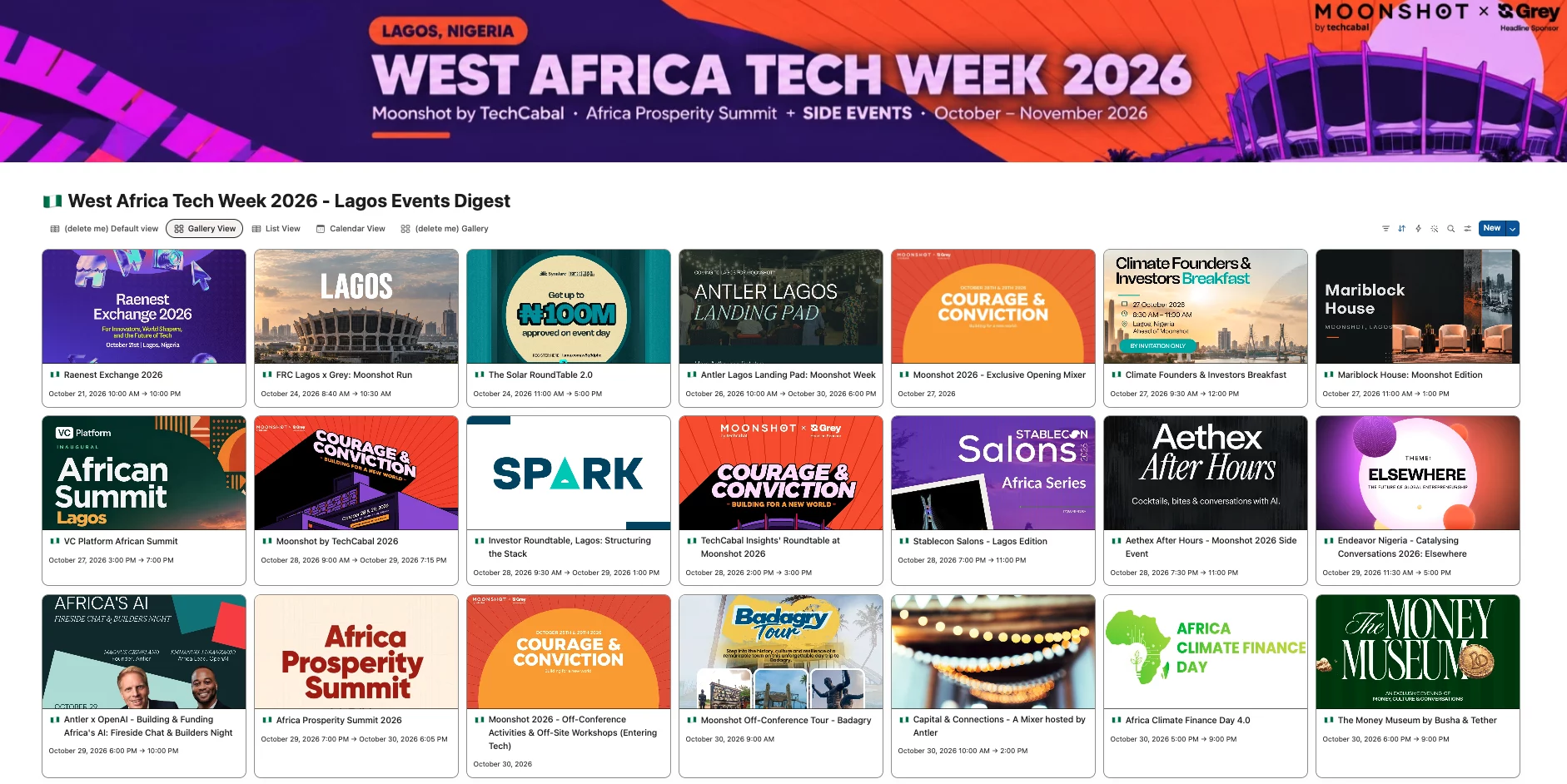
West Africa Tech Week 2026 Side Events As the main Moonshot conference approaches, Lagos is hosting a series of critical side events from October 24 to October 30. These include a founders’ run on Eko Atlantic, the Africa Prosperity Summit, and various investor roundtables designed to foster ecosystem growth. The events aim to connect startups with investors and address the transition from digital adoption to economic ownership.
Stablecoin Off-Ramp Challenges While stablecoins promise to revolutionize cross-border finance in Africa, significant bottlenecks remain at the "off-ramp." Local liquidity constraints and high foreign exchange (FX) costs are currently preventing seamless conversion of stablecoins into fiat currency, limiting their utility for everyday trade.
Analysis
The most significant development this week is Nigeria's decisive return to the top of the African startup funding rankings. The $635 million raised in just nine months signals a robust recovery and increased investor confidence in the Nigerian market, particularly in sectors beyond traditional fintech, such as logistics, where Moove’s massive raise played a pivotal role. This momentum contrasts with earlier years where Nigeria trailed behind Kenya, but the current trajectory suggests Nigeria is positioned to finish 2026 as the continent's clear leader.
However, this financial success is juxtaposed with critical infrastructure warnings. Luminate CEO Melanie Hui has raised alarms about Africa’s dependence on foreign cloud infrastructure, warning that it could limit digital sovereignty and economic gains. As funding flows into digital services, the underlying infrastructure remains vulnerable, highlighting a strategic gap that local tech policies must address.

What to Watch
Regulatory and Infrastructure Shifts
- Cloud Sovereignty: Watch for potential policy responses to the warning about foreign cloud dependency. African tech leaders are pushing for homegrown economic power and digital ownership, which may influence future regulatory frameworks for data residency and cloud operations.
- Payment Tech Utilization: African banks are currently underusing their existing payment technology capabilities. Unlocking this value could accelerate product launches and innovation without the need for new, costly infrastructure investments.
- Cross-Border Integration: The launch of the first wallet-based outbound payments corridor between Nigeria and Ghana via PAPSS and Onafriq is a key development to monitor for its impact on regional trade efficiency.
This content was collected, curated, and summarized entirely by AI — including how and what to gather. It may contain inaccuracies. Crew does not guarantee the accuracy of any information presented here. Always verify facts on your own before acting on them. Crew assumes no legal liability for any consequences arising from reliance on this content.
Powered by
