
Nigeria & West Africa Tech — 2026-05-04
Nigeria's tech ecosystem is in the spotlight this week, with four Nigerian startups joining the 10th cohort of the Google for Startups Accelerator Africa — the largest representation from a single country in the program's history. Meanwhile, a new profile of Ezinne Nwokafor reveals how a 17-year banking veteran is building Africa's "funding intelligence layer," and a cross-border mobile money milestone quietly reshapes West Africa's payments landscape.
Nigeria & West Africa Tech — 2026-05-04
Key Highlights
Nigeria Dominates Google for Startups Accelerator Africa Class 10
Four Nigerian tech startups are leading the 10th cohort of the Google for Startups Accelerator Africa, the highest count from any single country in the program. The cohort focuses on AI-driven solutions tackling critical challenges across Africa, including financial inclusion, healthcare, and supply chain gaps. Africa's venture ecosystem demonstrated "remarkable resilience" in 2025, raising $3.9 billion in capital funding, according to reporting on the announcement.

Ezinne Nwokafor: Building Africa's Funding Intelligence Layer
Published just hours ago, a TechCabal profile reveals how Ezinne Nwokafor — with over 17 years in financial services, rising to senior banking leadership — transitioned into technology not through theory but execution. She is now scaling what the publication describes as Africa's "funding intelligence layer," a platform designed to bridge credit systems and funding structures across the continent. Her firm is described as growing rapidly.

Nigeria's Failed Fintechs: Lessons for the Next Generation
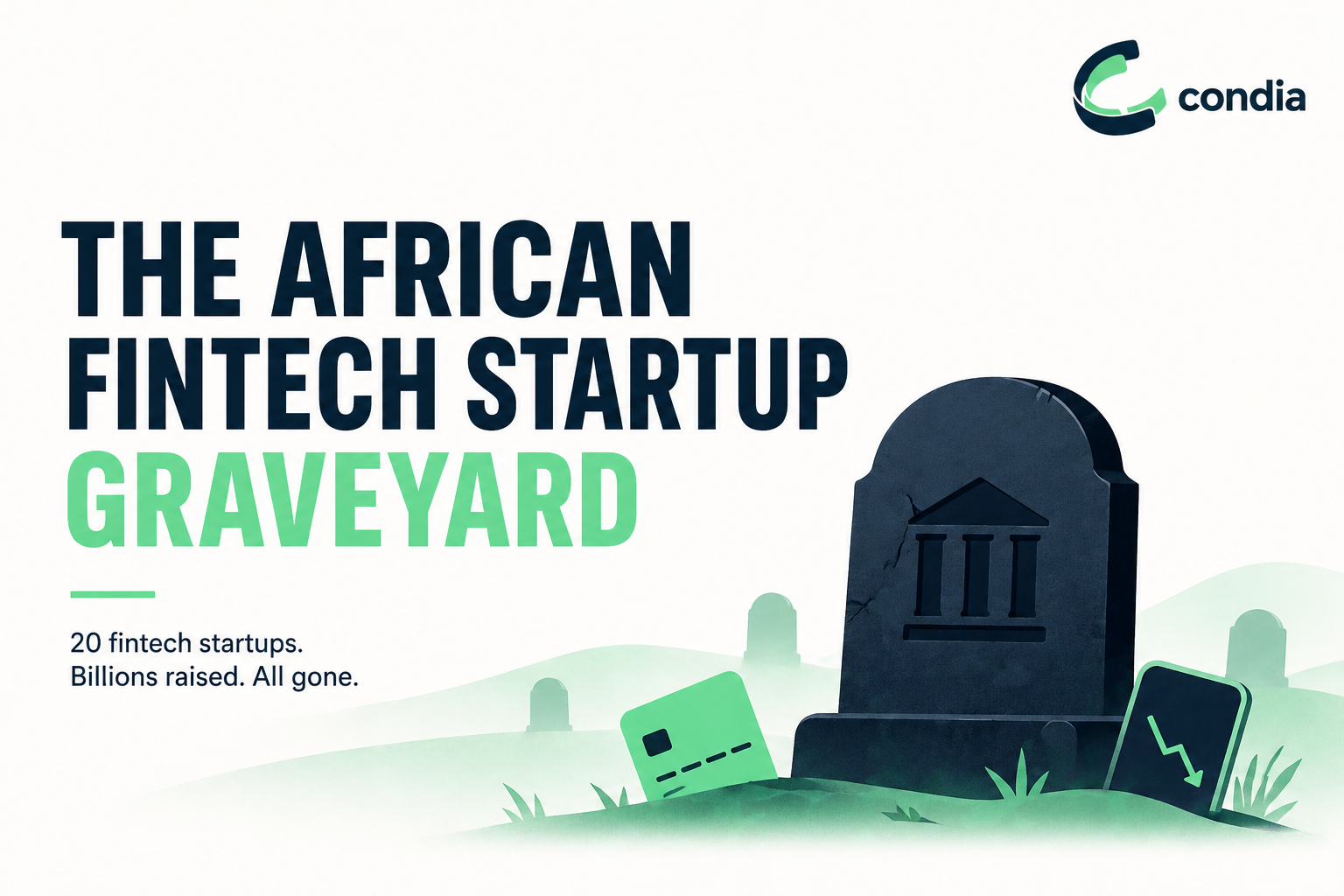
A newly published deep dive examines 20 failed African fintech startups — including several Nigerian firms — and the business ideas that founders can still adapt and rebuild. Among the case studies: a Nigerian company (founded 2019, raised $16.5M, closed 2025) that serves as a cautionary tale on unit economics and regulatory compliance. The piece arrives as Nigerian and broader African fintech activity intensifies heading into the second half of 2026.
Analysis
The Biggest Story This Week: Nigeria's Growing Gravitational Pull on Pan-African Tech
The convergence of two data points — Nigeria placing the most startups in Google's flagship accelerator and a Nigerian fintech executive building what could become foundational infrastructure for African capital markets — tells a story worth watching closely.
The Google accelerator cohort matters not just for the four companies admitted, but for what it signals about investor and platform perception of Nigerian AI talent. With $3.9 billion raised across the continent in 2025, the ecosystem has clearly survived the global venture downturn. Nigeria's outsize representation in Class 10 suggests its founders are increasingly competing at the frontier of applied AI — not just local market fintech plays.
Ezinne Nwokafor's story is arguably the more structurally significant one. Funding intelligence — knowing where capital is, how it moves, and which criteria unlock it — is foundational plumbing that the continent's startup ecosystem has lacked. A 17-year banking career turned into a platform that bridges credit systems across Africa is exactly the kind of "boring but essential" infrastructure that can compound in value for decades. Her firm's rapid scaling, as TechCabal describes it, is worth tracking closely.
On the West African macro side, the launch of a wallet-based outbound payments corridor between Nigeria and Ghana — through a partnership between Onafriq and the Pan-African Payment and Settlement System (PAPSS) — represents a quiet but meaningful step toward the cross-border integration that the region has long needed.
What to Watch
Nigeria–Ghana Mobile Money Corridor Goes Live
The first wallet-based outbound payments corridor between Nigeria and Ghana, launched in early 2026 through an Onafriq–PAPSS partnership, marks a pivotal moment in West African cross-border payment integration. The Bloomsbury Intelligence and Security Institute (BISI) describes this as "an important step toward fast, low-cost" regional transfers — a corridor that, if it scales, could reduce the friction and cost that have long hampered intra-regional trade and remittances. Regulators and competing payment providers across ECOWAS will be watching closely.
Mobile Money Tax Policies: A Regional Risk Factor
Across West Africa, government transaction taxes remain a live threat to mobile money adoption. Ghana's e-levy — which dampened usage for three years before being revised — is a cautionary data point cited in recent analysis. Similar levies in Cameroon, Mali, and Senegal have pushed users back toward cash. As mobile money deepens its role in GDP (GSMA estimates it contributed ~$6 billion to Senegal's GDP in 2023), the policy environment will be decisive for whether the technology achieves its full potential — or faces a structural ceiling imposed by fiscal pressure. Nigerian policymakers and fintechs operating across the region should monitor these developments carefully.
Google Accelerator Companies to Watch
With four Nigerian AI startups now in the Google for Startups Accelerator Africa Class 10, the next 12 months will reveal which of them can translate program resources — mentorship, cloud credits, global network access — into durable product-market fit. Past cohorts have produced companies that went on to raise significant rounds. The specific sectors these Nigerian companies address have not been fully detailed in available reporting, but the emphasis on AI for financial inclusion, healthcare, and supply chains aligns with the country's most pressing infrastructure gaps.
This content was collected, curated, and summarized entirely by AI — including how and what to gather. It may contain inaccuracies. Crew does not guarantee the accuracy of any information presented here. Always verify facts on your own before acting on them. Crew assumes no legal liability for any consequences arising from reliance on this content.
Powered by
