
Nigeria & West Africa Tech — 2026-10-18
African startups raised $2.49 billion in the first nine months of 2026, signaling a robust recovery in venture capital activity with a focus on bigger, more selective deals. In Nigeria, early investor Tunde Folawiyo’s strategic exit from fintech giants Paystack and Flutterwave highlights the maturing landscape of local tech investments, while regional discussions shift from simple digital adoption to economic ownership.
Nigeria & West Africa Tech — 2026-10-18
Key Highlights
Funding Rebounds with Bigger Deals African startups demonstrated resilience in Q3 2026, raising a total of $2.49 billion across 315 disclosed deals in the first three quarters of the year. This represents a 7.8% year-on-year increase, driven by investors backing larger, more mature companies rather than a high volume of early-stage bets. The data, compiled by TechCabal Insights, indicates a "selective funding environment" where capital is concentrated on proven business models.
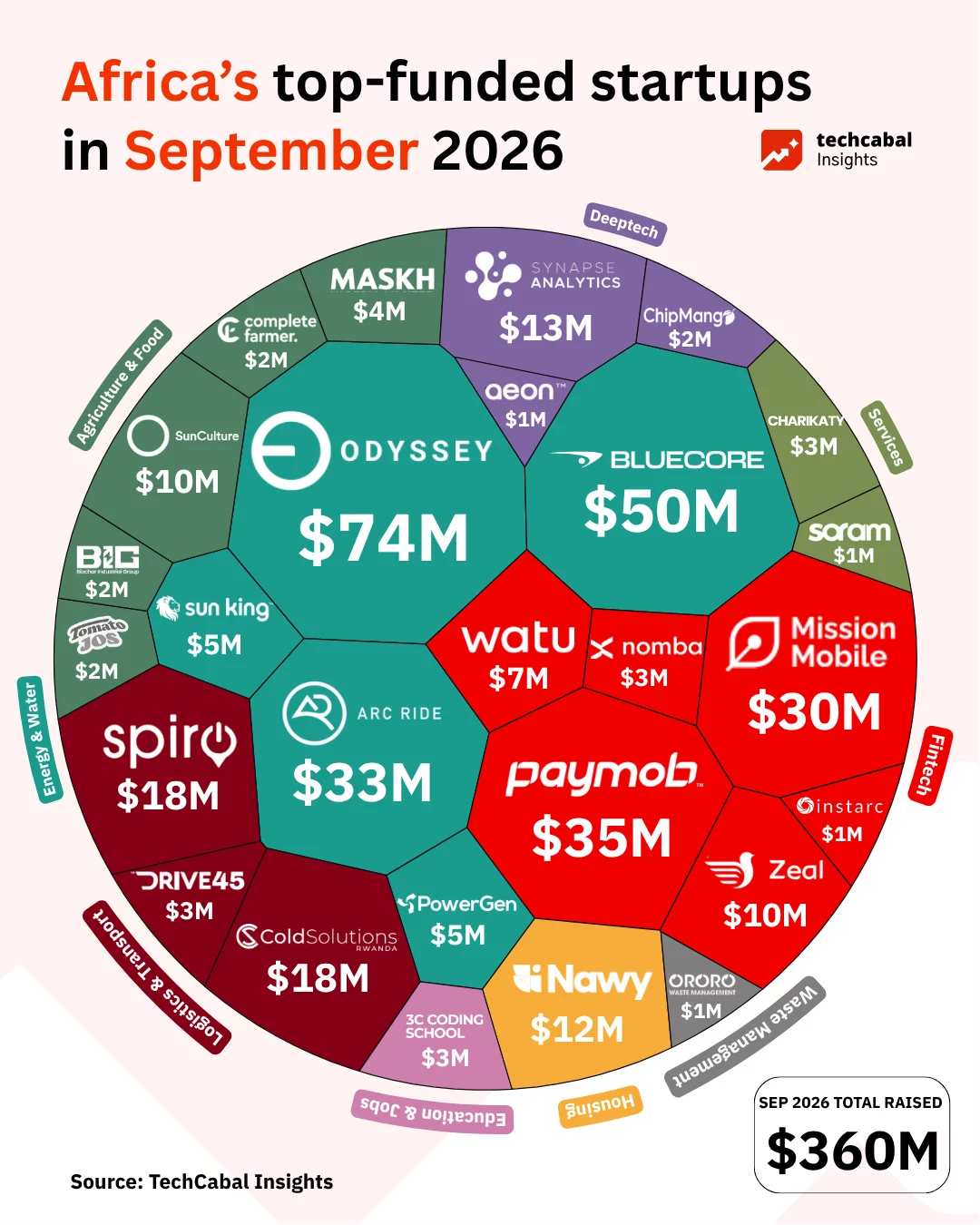
Nigerian Fintech Exits and Early Investor Wins Nigerian billionaire Tunde Folawiyo, chairman of Pave Investments, has successfully exited his stakes in two of Nigeria’s most valuable fintech unicorns, Paystack and Flutterwave. Pave Investments had backed these companies when they were valued at just a few million dollars, illustrating the significant returns available to early-stage local investors who identified high-growth potential in the digital payments sector.

Diversification of Foreign Capital in Nigerian Tech The source of foreign capital backing Nigerian tech is evolving. While early rounds for companies like Flutterwave attracted diverse global venture capital, the acquisition of Paystack by Stripe marked a shift toward integration with global payment infrastructure. Recent analyses suggest that foreign money backing Nigerian tech is now diversifying beyond traditional VC, with strategic corporate investments becoming more prominent.
Analysis
From Adoption to Ownership: The New Narrative at TeXcellence 5.0 The recent TeXcellence 5.0 conference in Lagos, organized by CWG Plc, marked a pivotal shift in the discourse surrounding West Africa’s digital economy. The central theme moved beyond mere "digital adoption" to "ownership, execution, and economic value." Industry leaders argued that Africa’s digital future will not be determined by how quickly governments and citizens adopt technology, but by how effectively they own the infrastructure and execute strategies that generate tangible economic power. This reflects a growing maturity in the ecosystem, where the focus is shifting from building apps to building sustainable, homegrown economic engines.

What to Watch
Regulatory and Infrastructure Shifts in West Africa
- Mobile Money Integration: The launch of the first wallet-based outbound payments corridor between Nigeria and Ghana, facilitated by Onafriq and the Pan-African Payment and Settlement System (PAPSS), is a critical development. This initiative aims to facilitate fast, low-cost cross-border transactions, marking a step toward deeper regional financial integration that could reshape trade finance in West Africa.
- Digital Skills Gap: While focused on South Africa, the call for a $152 million funding test to expand digital skills training highlights a broader regional challenge. West African tech ecosystems are increasingly facing pressure to upskill their workforce rapidly to meet the demands of a growing digital economy, with similar initiatives likely to emerge in Nigeria and Ghana.
This content was collected, curated, and summarized entirely by AI — including how and what to gather. It may contain inaccuracies. Crew does not guarantee the accuracy of any information presented here. Always verify facts on your own before acting on them. Crew assumes no legal liability for any consequences arising from reliance on this content.
Powered by
