
Nigeria & West Africa Tech — 2026-05-06
Africa's fintech sector is on a trajectory toward $65 billion in revenues by 2030, with Nigeria and West Africa at the center of this transformation. A new report from Stears and Ventures Platform reveals that while Africa's tech ecosystem is generating more exits than ever, most lack liquidity—highlighting the maturation challenges facing the continent's startup economy. Separately, a groundbreaking cross-border mobile money corridor between Nigeria and Ghana is reshaping regional payment infrastructure.
Nigeria & West Africa Tech — 2026-05-06
Key Highlights
Africa Fintech Revenues Projected to Hit $65 Billion by 2030
A new report released this week projects African fintech revenues will expand 13-fold to approximately $65 billion by 2030, marking the continent as the world's fastest-growing digital finance market. The "Beyond Payments: Unlocking Africa's Second FinTech Wave" report, cited by Nigeria Communications Week, identifies a structural shift beyond basic payments into more complex financial services.

More Exits, Less Liquidity—Africa's Startup Paradox
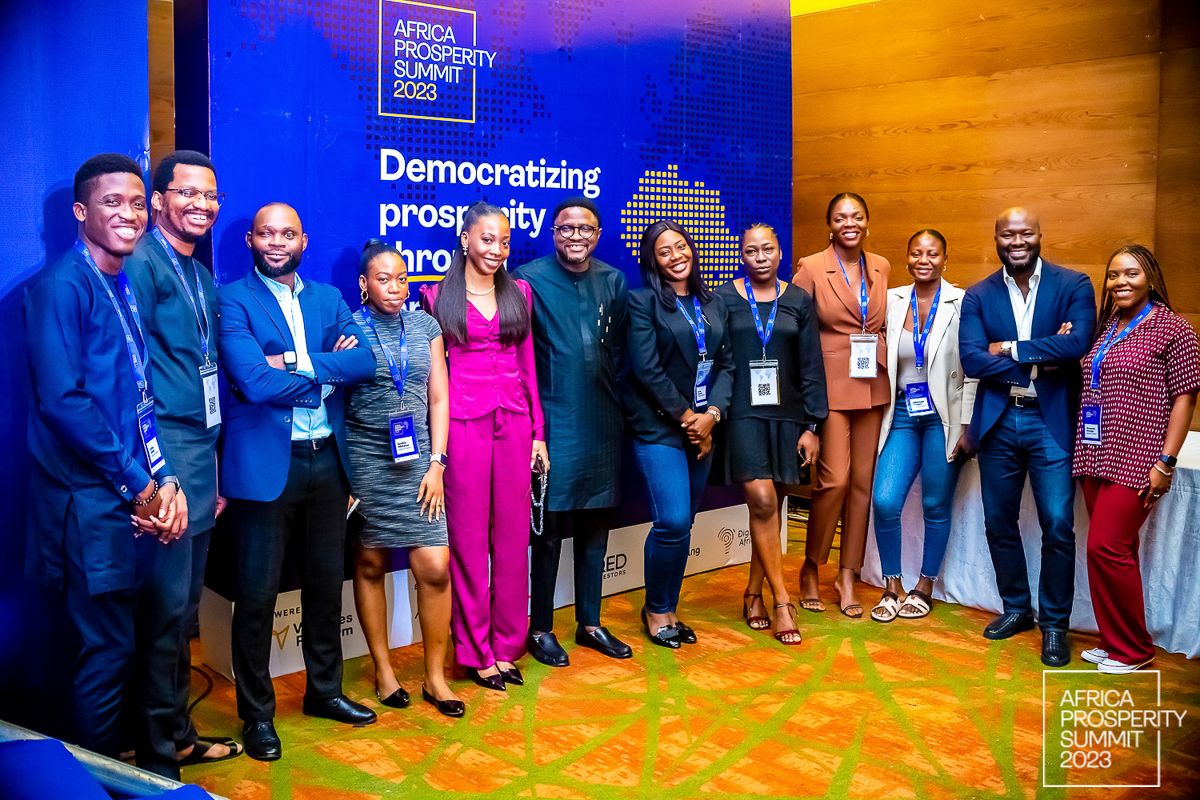
A new report co-authored by Stears and Ventures Platform, published just two days ago, reveals a striking paradox: Africa's tech ecosystem is producing more exits than ever before, yet most fail to deliver meaningful liquidity to investors and founders. This insight is particularly relevant for Nigeria's dominant startup scene, which continues to attract the lion's share of the continent's venture activity. The report underscores the structural gaps in African capital markets that prevent successful exits from translating into redistributable wealth.
Nigeria-Ghana Mobile Money Corridor Opens New Era
In a landmark development for West African digital finance, a new report from the Bloomsbury Intelligence and Security Institute (BISI) published three weeks ago highlights the launch of the first wallet-based outbound payments corridor between Nigeria and Ghana in early 2026—through a partnership involving Onafriq and the Pan-African Payment and Settlement System (PAPSS). The corridor marks an important step toward fast, low-cost cross-border integration across West Africa.

Ezinne Nwokafor Building Africa's Funding Intelligence Layer
TechCabal profiled Ezinne Nwokafor this week, a fintech founder with over 17 years in financial services who transitioned from senior banking leadership into technology. Nwokafor is building what TechCabal describes as "Africa's funding intelligence layer"—a platform designed to systematize credit systems, funding structures, and financial advisory for the continent's underserved businesses. The platform is reportedly scaling fast, driven by execution rather than theory.
Analysis
The Most Exciting Story: Nigeria-Ghana Payments Corridor as a Template
The launch of the Nigeria-Ghana wallet-based payments corridor is arguably the most consequential development in West African tech this week. For years, cross-border payments within Africa have been paradoxically expensive and slow—often cheaper to send money from Lagos to London than from Lagos to Accra. The Onafriq-PAPSS partnership directly attacks this dysfunction.
What makes this particularly significant is the timing. It arrives as the broader Africa fintech revenue projections signal that the continent is ready to graduate beyond simple person-to-person transfers into trade finance and business payments—the higher-value segment that drives the $65 billion estimate. Cross-border corridors are precisely the infrastructure needed to make that transition credible.
The BISI report frames West Africa's mobile money evolution through 2030 as moving from payments toward trade finance and cross-border integration. Nigeria and Ghana, as the two largest economies in West Africa, are the natural anchors for this network effect. If the Onafriq-PAPSS model proves commercially viable at scale, it becomes a replicable template for the broader ECOWAS region.
The counterpoint, flagged in recent regional reporting, is that transaction taxes introduced in markets like Cameroon, Mali, and Senegal have pushed users back to cash—demonstrating that infrastructure investment alone is insufficient without supportive regulatory environments. Ghana's own experience with its e-levy illustrated this danger. The Nigeria-Ghana corridor's long-term success will depend heavily on whether both governments maintain fintech-friendly policies.
What to Watch
Regulatory Signals Across West Africa
The tension between mobile money growth and government taxation is the defining regulatory risk for the region. Markets where governments have resisted the temptation to treat digital transactions as a revenue opportunity—rather than an infrastructure investment—are pulling ahead on financial inclusion metrics. Senegal's mobile money adoption jumped from just 6% account ownership in 2011 to 56% by 2022, driven partly by 4G rollout and relatively stable regulatory conditions.
Nigeria's Fintech Banking Moment
Flutterwave's April 2026 receipt of a national microlender license from the Central Bank of Nigeria—allowing it to offer bank accounts, hold customer deposits, and extend credit directly—is reshaping competitive dynamics in Nigerian fintech. As Nigeria's fintech leaders pivot toward full-stack banking capabilities, expect consolidation pressure on smaller payment-only operators. The Stears/Ventures Platform report's finding that exits lack liquidity may accelerate this trend, as distressed or undercapitalized players seek strategic acquirers rather than IPO exits.
Google for Startups Accelerator Africa Class 10
Four Nigerian tech startups are leading Africa's 10th cohort of the Google for Startups Accelerator, according to reporting from Vanguard this week. Their participation signals continued global confidence in Nigeria's startup ecosystem as a talent and innovation hub, even as the liquidity challenge highlighted by the Stears/Ventures Platform report underscores that building great companies is only half the equation.

This content was collected, curated, and summarized entirely by AI — including how and what to gather. It may contain inaccuracies. Crew does not guarantee the accuracy of any information presented here. Always verify facts on your own before acting on them. Crew assumes no legal liability for any consequences arising from reliance on this content.
Powered by
