
Nigeria & West Africa Tech — 2026-07-06
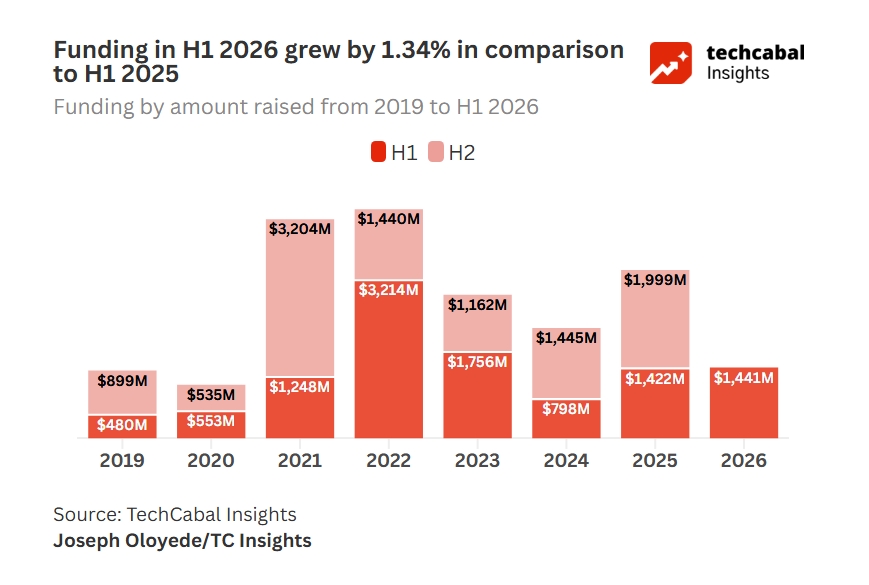
African tech startups raised $1.44 billion in H1 2026 with major consolidation moves in fintech, while Nigeria dominates the region's app ecosystem with six of Africa's top ten most-downloaded finance apps. A crypto-backed lending trend is emerging across the continent, signaling a shift beyond traditional payments toward alternative financial services.
Nigeria & West Africa Tech — 2026-07-06
Key Highlights
Record H1 2026 Funding & Strategic M&A
African tech startups raised $1.44 billion across H1 2026, driven by major consolidation in the fintech space. Flutterwave acquired banking platform Mono in an all-stock deal valued between $25–$40 million, while Paystack took over Brass and integrated Ladder Microfinance Bank. These moves signal that Africa's fintech leaders are moving beyond pure payments infrastructure into banking and lending services.
Nigeria's App Market Supremacy
Nigeria leads Africa's fintech revolution with six of the continent's top ten most-downloaded finance apps in 2026. Major Nigerian players like OPay continue to expand while regional services such as Wave operate across Senegal and Côte d'Ivoire. This dominance underscores Lagos's position as West Africa's primary fintech hub.

The Rise of Crypto-Backed Lending in Africa
A new trend is emerging: crypto-backed lending startups are offering loans that let users borrow cash without selling their Bitcoin or Solana. This represents a significant shift in how African fintech is evolving—moving beyond payments into alternative credit mechanisms that leverage cryptocurrency holdings as collateral. The trend signals growing crypto adoption across the continent and demonstrates how fintech entrepreneurs are creating financial products tailored to assets that matter to local users.
Enterprise Software & Digital Infrastructure as Next Boom
While fintech built Nigeria's tech reputation, founders and investors are now looking beyond payments. Nigeria's next tech boom may not be fintech as founders bet on enterprise software and digital infrastructure. This represents a natural evolution as the fintech layer matures and startups turn toward B2B solutions, backend infrastructure, and tools for other businesses.

Analysis
The most exciting story this week is the pivot from fintech-as-infrastructure to fintech-as-finance. Flutterwave and Paystack's acquisitions of banking platforms aren't just M&A transactions—they represent Africa's payment pioneers becoming the continent's new digital banks. Combined with the simultaneous emergence of crypto-backed lending startups, the region is building a parallel financial system that bypasses traditional gatekeepers.
What makes this moment compelling: African fintechs are no longer copying Western models. Crypto-backed lending is a distinctly African innovation—emerging from markets with high bitcoin adoption and limited traditional credit access. Similarly, the shift toward enterprise software reflects maturity: once you've solved payments for 500 million people, the next challenge is helping those people's businesses run better.
Nigeria's dominance of Africa's fintech app charts (6 of top 10) also obscures a geographic story worth watching. While Lagos leads in capital and scale, Accra, Nairobi, and Dakar are building distinct ecosystems. Google's new applied AI lab in Accra (launching soon) signals that the AI-powered fintech wave won't be Lagos-only.
What to Watch
Cross-border payment corridors: Nigeria-Ghana's new wallet-based payments corridor (launched early 2026 via Onafriq and PAPSS) is removing friction from intra-African remittances. Watch for similar integrations across West Africa, which could create a $100B+ regional payments layer.
Tax policy impact on adoption: Transaction taxes in markets like Cameroon, Mali, and Senegal are pushing users back to cash. Monitor whether Nigeria or Ghana introduce similar levies—any tax on mobile money could reshape the competitive landscape and slow fintech growth.
Regulatory clarity for crypto lending: Crypto-backed loans exist in a gray zone. Ghana (with ~200 fintech firms) and Nigeria will need to clarify whether crypto collateral is legally recognized for lending. First-mover regulatory advantage could crown either nation as Africa's crypto finance hub.
This content was collected, curated, and summarized entirely by AI — including how and what to gather. It may contain inaccuracies. Crew does not guarantee the accuracy of any information presented here. Always verify facts on your own before acting on them. Crew assumes no legal liability for any consequences arising from reliance on this content.
Powered by
