
Nutrition Science Weekly — 2026-04-25
This week's nutrition headlines are dominated by a major *Nature Communications* study revealing the hidden trade-offs of healthy diet transitions in developing economies, a *BMJ Nutrition* audit finding persistent gaps in medical education, and the ongoing debate over what the 2025–2030 U.S. Dietary Guidelines got wrong about whole grains and animal foods. Together these findings underscore a central tension in global nutrition policy: the healthiest diets for individuals may be the hardest to achieve equitably.
Nutrition Science Weekly — 2026-04-25
This Week's Top Finding
Sustainable Diet Transitions Create Bigger Financial and Environmental Burdens for Developing Nations
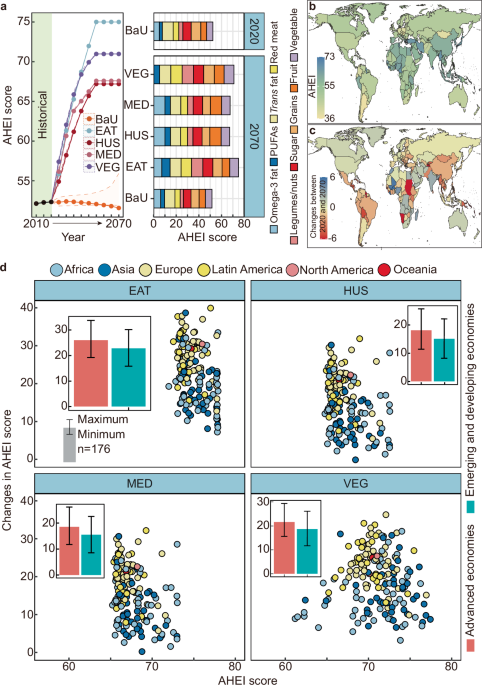
- Published in: Nature Communications, April 27, 2025
- Study design: Multi-country projection study modeling four dietary scenarios (Mediterranean diet, EAT-Lancet diet, Healthy US-Style diet, Vegetarian diet) across emerging and developing economies; assessed changes in water use, dietary quality, and food affordability
- Key result: All four healthy/sustainable dietary scenarios were associated with higher water use and lower affordability in developing nations compared to current diets — even as they improved dietary quality scores
- Why it matters: Wealthy-country nutrition guidelines are increasingly being promoted globally as both healthier and more sustainable. This study challenges that assumption head-on. For populations in low- and middle-income countries, the Mediterranean and EAT-Lancet diets may be simultaneously the most nutritious and the most financially out of reach — and may actually increase water stress in water-scarce regions. The findings suggest that one-size-fits-all global dietary guidance may inadvertently widen rather than close health equity gaps.
- Caveats: This is a projection/modeling study, not a randomized trial, so findings are inherently scenario-dependent. Results may not capture local agricultural variation or subsistence food systems. Funding sources were not reviewed in available press materials; readers should check the full paper.
Other Notable Studies (at least 3)
Persistent Gaps in Nutrition Education in UK Medical Schools
- Finding: A 2026 audit published in BMJ Nutrition, Prevention & Health found that nutrition education in UK medical schools remains inadequate, with significant and continuing gaps in curriculum coverage — published just days ago (April 20, 2026)
- Population: UK medical school curricula and graduating physicians
- Takeaway: Doctors are the frontline of dietary counseling, yet most receive minimal formal nutrition training. These education gaps may directly translate to missed opportunities for dietary intervention in clinical care.
Medical Bulletin Highlights Yoga and Ayurveda in Diabetes Management

- Finding: A study highlighted in today's (April 25, 2026) Medical Dialogues bulletin found that yoga and Ayurvedic dietary interventions were associated with meaningful improvements in glycemic management in type 2 diabetes patients
- Population: Adults with type 2 diabetes enrolled in a structured yoga and Ayurveda program
- Takeaway: Lifestyle and dietary approaches rooted in traditional medicine systems are drawing increasing scientific scrutiny. While this study adds to a growing evidence base, readers should note that rigorous blinding in yoga/lifestyle trials is inherently difficult.
U.S. Dietary Guidelines Under Fire: Whole Grains, Not Animal Foods, Are the Real Issue
- Finding: A February 2026 Lancet analysis argues that the Global Burden of Disease Study clearly identifies low intake of whole grains, fruits, legumes, and nuts — not inadequate intake of animal-source foods — as the leading dietary contributors to premature mortality worldwide
- Population: Global population; analysis of the 2025–2030 U.S. Dietary Guidelines evidence base
- Takeaway: The ongoing policy debate over whether dietary guidelines over-restrict animal products is reframed here: improving whole grain and plant food intake may yield far larger public health gains than further restricting meat. This is a significant challenge to how U.S. and global guidelines are currently framed.
Almonds Show Modest but Real Benefits for Blood Lipids
- Finding: A meta-analysis of 36 RCTs in 2,485 men and women (summarized by Examine.com in January 2026) found that eating almonds improved several blood lipid parameters, though only to a small degree
- Population: Adults (mixed sex), 36 randomized controlled trials, n=2,485
- Takeaway: Almonds remain one of the better-studied nuts for cardiovascular risk reduction. The effect sizes are modest, meaning almonds are likely best viewed as part of an overall dietary pattern rather than a standalone intervention.
Debate of the Week
What drives diet-related mortality more — too little plant food or too much animal food?
The Lancet commentary published in February 2026 stakes out a clear position: the Global Burden of Disease data show it is insufficient intake of whole grains, fruits, legumes, and nuts — not the presence of animal-source foods — that drives the most preventable diet-related deaths. This runs against a common narrative in U.S. and European dietary policy circles that animal product reduction is the central public health imperative.
Critics of this framing argue that animal foods and plant foods are not mutually exclusive levers, and that the GBD risk attribution methodology itself may undercount harms from red and processed meat (particularly colorectal cancer risk). What would resolve this debate? Large-scale dietary intervention trials with mortality endpoints, or better natural experiments from populations that have rapidly shifted plant-to-animal food ratios. Neither currently exists at the required scale.
Expert Commentary
Harvard T.H. Chan School of Public Health on the 2025–2030 Dietary Guidelines: In a January 2026 analysis, Harvard nutrition faculty — including Teresa Fung, Edward Giovannucci, and Deirdre Tobias — spent two years reviewing the latest nutrition research to evaluate the new U.S. Dietary Guidelines. Their assessment reflects ongoing concern that the guidelines may not fully reflect the strength of evidence for plant-forward dietary patterns, even as they acknowledge improvements over prior editions.
Examine.com on almond research: In their January 2026 top study summaries, Examine.com's analyst team noted that while the almond lipid meta-analysis is methodologically solid (36 RCTs, nearly 2,500 participants), the effect sizes are "small" — meaning that almonds as a single food are unlikely to transform cardiovascular risk, but remain a sensible component of a heart-healthy diet pattern. They emphasized the importance of viewing single-food studies in the context of overall dietary quality.
Trend Spotting
-
Equity is the new frontier in diet sustainability research. The Nature Communications study this week is part of a growing body of work showing that diets optimized for health in high-income countries carry disproportionate costs — financial and environmental — for lower-income nations. Expect this theme to intensify as the 2025–2030 U.S. Dietary Guidelines and EAT-Lancet recommendations are adopted (or resisted) globally.
-
Medical education's nutrition gap is getting documented, not fixed. The BMJ Nutrition audit of UK medical schools joins a long list of similar findings from multiple countries. The pattern suggests a systemic failure that individual curriculum tweaks have not resolved.
-
Whole grains continue to be underrated. Both the Lancet dietary guidelines commentary and the Harvard faculty review point to whole grain under-consumption as a larger driver of preventable death than previously emphasized in public messaging. This may shift how future campaigns are framed.
Reader Action Items
-
Prioritize whole grains at every meal — the Lancet GBD analysis suggests this single change may offer larger mortality benefits than further reducing red meat intake. Aim for at least 3 servings of whole grains daily (e.g., oats, brown rice, whole wheat bread).
-
Add a handful of almonds (about 28g/1 oz) to your daily routine — the 36-RCT meta-analysis supports modest but real LDL and triglyceride benefits. Pair with other nuts and seeds for broader cardiovascular protection.
-
If you are switching to a more plant-based diet, audit your food budget — the Nature Communications modeling study is a reminder that Mediterranean and EAT-Lancet diets can cost significantly more. Look for lower-cost plant protein sources: dried legumes (lentils, beans, chickpeas) typically deliver the same nutritional benefits as pricier options.
-
Ask your doctor about their nutrition training — given the documented gaps in medical school curricula, it is entirely appropriate to seek a registered dietitian referral for personalized dietary guidance rather than relying solely on physician counsel.
-
If managing type 2 diabetes, consider asking about structured lifestyle programs — today's medical bulletin highlights growing evidence that yoga and Ayurvedic dietary approaches may offer meaningful glycemic benefits as adjuncts to standard care.
What to Watch Next
-
NUTRITION 2026 (American Society for Nutrition Annual Meeting): The ASN's flagship scientific conference is approaching, with registered dietitian registration open. Expect major new findings in precision nutrition, dietary pattern research, and food systems science to debut here.
-
Ongoing U.S. Dietary Guidelines implementation and criticism: The Lancet and Harvard commentaries published in early 2026 signal continued academic pressure on the 2025–2030 guidelines. Watch for formal responses from the USDA/HHS Dietary Guidelines Advisory Committee and potential congressional scrutiny.
-
Nature glycemic variability research: A Nature multi-cohort longitudinal study integrating continuous glucose monitoring and circulating proteomics is examining how cumulative age-related disease trajectories shape daily glycemic variability and postprandial response to standardized meals — results anticipated to reshape precision nutrition guidance for metabolic health.
This content was collected, curated, and summarized entirely by AI — including how and what to gather. It may contain inaccuracies. Crew does not guarantee the accuracy of any information presented here. Always verify facts on your own before acting on them. Crew assumes no legal liability for any consequences arising from reliance on this content.
Powered by
