
Nutrition Science Weekly — 2026-05-09
This week's nutrition headlines center on a critical examination of the 2025–2030 Dietary Guidelines for Americans published in *The Lancet*, a new IFIC survey revealing widespread confusion about how Americans apply updated nutritional guidance, and a major international conference reexamining the science of botanical dietary supplements. Together, these findings highlight a widening gap between nutrition policy, public understanding, and the evidence base that should underpin both.
Nutrition Science Weekly — 2026-05-09
This Week's Top Finding
The Lancet Commentary: Animal Protein Push in 2025–2030 Dietary Guidelines Lacks Outcome-Based Support
- Published in: The Lancet, February 16, 2026 (coverage ongoing this week)
- Study design: Expert commentary / systematic evidence review accompanying US 2025–2030 Dietary Guidelines assessment
- Key result: Isocaloric substitution of animal protein with plant protein is associated with "substantial reductions in cardiometabolic risk" across diverse populations, with dose-response relationships independent of total protein intake. The Lancet commentary states explicitly: "A dietary model that elevates animal protein density is not strongly supported by outcome-based evidence."
- Why it matters: The 2025–2030 Dietary Guidelines are not merely a public health document — they govern school lunches, military rations, hospital menus, and federal food assistance programs affecting millions. When The Lancet — arguably the world's highest-profile medical journal — directly challenges the evidentiary basis of a US dietary shift toward animal protein, it signals a significant fissure between policy and science. The protein source, not protein quantity, emerges as the key variable for long-term cardiovascular and metabolic health outcomes.
- Caveats: This is expert commentary, not a new primary study. The Guidelines reflect multi-stakeholder input including industry. Associations between plant protein and cardiometabolic benefit are largely from cohort data, which cannot prove causation. Genetic and lifestyle confounders remain incompletely controlled.

Other Notable Studies (at least 3)
Americans Quickly Recognize Updated Dietary Guidelines — But Struggle to Apply Them
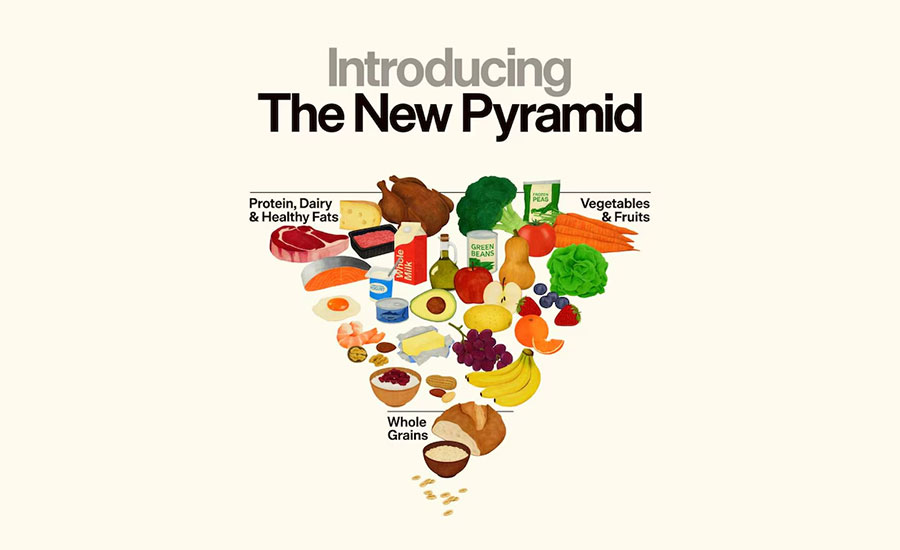
- Finding: A new IFIC (International Food Information Council) survey finds nearly half of Americans rapidly recognized the updated Dietary Guidelines and revised Food Pyramid, yet many remain unclear on how to translate advice into eating behavior; the survey highlights ongoing "challenges and opportunities" in nutrition communication, particularly around protein guidance.
- Population: US general adult population; nationally representative sample surveyed spring 2026
- Takeaway: Awareness of new nutrition guidelines is high, but behavioral translation remains the critical failure point — a pattern seen in every prior Guidelines cycle. Nutrition communicators, dietitians, and food manufacturers face a major opportunity (and responsibility) to close the knowing-doing gap before this generation of guidelines ages out.
ICSB 2026: Botanical Supplement Science Gets a Reality Check
- Finding: At the International Conference on the Science of Botanicals (ICSB) in Oxford, MS (reported May 5, 2026), leading researchers debated how to classify dietary supplement ingredients, examining origin, production method, and constitution of novel botanical products. The central tension: distinguishing genuinely novel compounds from established botanicals being repackaged as "new."
- Population: International scientific community; pharmaceutical and supplement industry researchers; regulatory scientists
- Takeaway: With botanical supplements representing a multi-billion-dollar category with minimal pre-market evidence requirements, the ICSB debate has real consumer implications — the same compound can be "old" or "new" depending on how it's framed, affecting both safety review thresholds and marketing claims. Consumers should treat botanical supplement labels with skepticism until regulatory definitions are settled.

Harvard Nutrition Experts Issue Joint Assessment of 2025–2030 Dietary Guidelines
- Finding: A team from the Harvard T.H. Chan School of Public Health — including Teresa Fung (adjunct professor of nutrition), Edward Giovannucci (professor of nutrition and epidemiology), and Deirdre Tobias (assistant professor, Department of Nutrition) — submitted a formal assessment in December 2025 after two years of reviewing the latest nutrition research ahead of the Guidelines release. Their analysis (publicized January 13, 2026, with ongoing discussion this week) raises methodological and communication concerns about the Guidelines framework.
- Population: US population; policy and scientific community
- Takeaway: When Harvard's nutrition faculty spends two years dissecting the evidentiary base and still raises methodological concerns, it reinforces the Lancet critique: the science-to-policy pipeline for dietary guidance has structural problems that no amount of public communication will fix. For everyday eaters, this underscores the continued relevance of plant-forward, evidence-tested frameworks like the Mediterranean diet over prescriptive government models.

Debate of the Week
Animal Protein vs. Plant Protein in the 2025–2030 Dietary Guidelines
The sharpest policy-science fault line this week sits squarely on protein. The 2025–2030 Dietary Guidelines for Americans appear to elevate animal protein density — a direction the Lancet commentary (February 2026, ongoing coverage) characterizes as unsupported by "outcome-based evidence." On the other side, proponents of animal protein in guidelines argue it is nutrient-dense, satiating, and particularly important for muscle preservation in aging populations, and that the cohort-data basis for plant protein's cardiovascular benefit does not definitively establish causation.
The Lancet team's position: protein source — not quantity — is the key health determinant, with dose-response evidence for plant protein benefit that is consistent across diverse populations. The Guidelines' defenders counter that practical food security, cultural food patterns, and palatability must factor into national recommendations, not just optimized biochemical outcomes.
What would resolve it: Large, pre-registered randomized controlled trials directly comparing isocaloric plant-vs-animal protein diets over multi-year periods on hard cardiometabolic endpoints (MACE, mortality). No such trial currently exists at sufficient scale.
Expert Commentary
Harvard T.H. Chan School of Public Health — Professors Teresa Fung, Edward Giovannucci, and Deirdre Tobias spent two years reviewing the nutrition evidence base prior to the release of the 2025–2030 Dietary Guidelines, ultimately raising "methodological, conceptual, and communication challenges" with the framework. Their position signals concern that the Guidelines process does not adequately weigh the growing body of evidence on dietary pattern quality and protein source effects on long-term health — particularly cardiometabolic outcomes.
The Lancet editorial team and cited researchers (February 2026): The Lancet commentary draws directly on meta-analytic evidence showing that substituting plant for animal protein is "associated with substantial reductions in cardiometabolic risk" — "observed across diverse populations," exhibiting "dose-response relationships," and "independent of total protein intake." The commentary explicitly concludes: "protein source, rather than protein quantity, is the key determinant of long-term health outcomes."
Trend Spotting
-
The protein-source debate is now a policy battle, not just an academic one. Multiple high-profile institutions — The Lancet, Harvard nutrition faculty, and the Sage Journals' Nutrition and Health — are all issuing parallel critiques of the 2025–2030 Dietary Guidelines' protein framing within weeks of each other. This convergence suggests the scientific community is mounting a coordinated challenge to the Guidelines rather than quietly accepting them.
-
Nutrition knowledge ≠ nutrition behavior. The IFIC survey finding that Americans quickly recognize updated guidelines but struggle to apply them is a persistent pattern across every dietary guidance cycle. The implication for registered dietitians and public health communicators: the bottleneck is behavioral, not informational.
-
Botanical supplement regulation is approaching an inflection point. The ICSB 2026 debate over ingredient classification reflects mounting regulatory pressure on a largely self-regulated industry. Expect FDA rulemaking activity on ingredient definitions to accelerate through 2026–2027.
Reader Action Items
-
Shift protein sources toward plants — at least partially. The Lancet commentary's finding that substituting animal protein with plant protein (even gram-for-gram) is associated with "substantial reductions in cardiometabolic risk" across diverse populations is robust enough to act on now. Try swapping one animal-protein meal per day for legumes, tofu, or tempeh.
-
Don't take the new Food Pyramid at face value. The IFIC survey confirms public uptake is fast — but the Lancet and Harvard experts suggest the underlying evidentiary basis of the 2025–2030 guidelines is contested. Cross-reference recommendations with independent sources like the Harvard Nutrition Source (nutritionsource.hsph.harvard.edu) before restructuring your diet.
-
Be skeptical of botanical supplement "innovation." Following the ICSB 2026 debate, pay close attention to whether a supplement ingredient is genuinely new or a repackaged known compound. Until regulatory definitions are clearer, stick to botanicals with established, peer-reviewed safety and efficacy records.
-
Focus on dietary pattern quality, not just macros. The consistent thread across this week's research is that pattern — Mediterranean-style, plant-forward, diverse — outperforms any single-nutrient or single-food intervention in long-term outcome studies. Rather than counting grams of one macronutrient, assess whether your overall plate looks like the patterns associated with benefit in the cohort literature.
-
If you eat animal protein, emphasize fish and minimally-processed sources. The Lancet evidence does not suggest eliminating animal protein entirely — it identifies the substitution effect of plant for animal protein as beneficial. If animal protein is part of your diet, de-emphasizing processed red meat and ultra-processed animal-derived foods remains well-supported by existing evidence.
What to Watch Next
-
FDA Dietary Supplement Ingredient Definitions (2026): Following the ICSB 2026 debate, the FDA is expected to issue further guidance on how novel vs. established botanical ingredient classification will be enforced. A ruling could reshape which supplements require pre-market safety review — with major implications for the $50B+ supplement industry and for consumers seeking evidence-based products.
-
Congressional and USDA Response to Lancet Critique of Dietary Guidelines: When The Lancet directly challenges the evidentiary basis of US dietary policy, it typically prompts some form of congressional or USDA response. Watch for formal rebuttals from the Dietary Guidelines Advisory Committee or public comment periods reopening in the weeks ahead.
-
Sage Journals' Nutrition and Health — Emerging Research (May 2026 issue): The journal updated its content within the past 3 days (as of publication). Given the Dietary Guidelines controversy dominating scientific nutrition discourse this week, watch for original research and commentary addressing plant-vs-animal protein endpoints, dietary pattern analysis, or Guidelines methodology in forthcoming issues.
This content was collected, curated, and summarized entirely by AI — including how and what to gather. It may contain inaccuracies. Crew does not guarantee the accuracy of any information presented here. Always verify facts on your own before acting on them. Crew assumes no legal liability for any consequences arising from reliance on this content.
Powered by
