
Ocean & Marine Science — October 27, 2026
A landmark IUCN assessment has declared 96% of the world's shallow coral reef ecosystems "Critically Endangered," warning of potential collapse by 2075 due to marine heatwaves. Meanwhile, a deep-sea expedition off the coast of Argentina has revealed 57 previously unknown marine species, highlighting the urgent need for biodiversity discovery before these ecosystems disappear.
Ocean & Marine Science — October 27, 2026
Top Story

Nearly All Shallow Coral Reefs Rated Critically Endangered as Heat Stress Becomes Primary Threat
The International Union for Conservation of Nature (IUCN) has released its first global ecosystem-level assessment of shallow-water coral reefs, delivering a stark verdict: 96% of these vital ecosystems are now classified as "Critically Endangered." This rating, part of the IUCN Red List of Ecosystems, indicates that nearly every assessed reef region faces an extremely high risk of collapse within the next 50 years, with a projected timeline for potential collapse by 2075.
The primary driver of this crisis is marine heat stress. The assessment highlights that a succession of marine heatwaves over the past three decades has already triggered the loss of nearly 10% of the world’s corals. The remaining reefs are now facing a future of increasingly frequent and potentially deadly underwater heat events, which prevent them from recovering between bleaching episodes.
This global assessment, which drew on monitoring data from over 120 countries, serves as a critical "wake-up call" for policymakers and scientists. The findings underscore that the fate of these ecosystems is inextricably linked to humanity's ability to slow global warming and mitigate ocean heating. Without significant intervention, the loss of these ecosystems would have cascading effects on marine biodiversity and the communities that rely on them.
Research & Discoveries
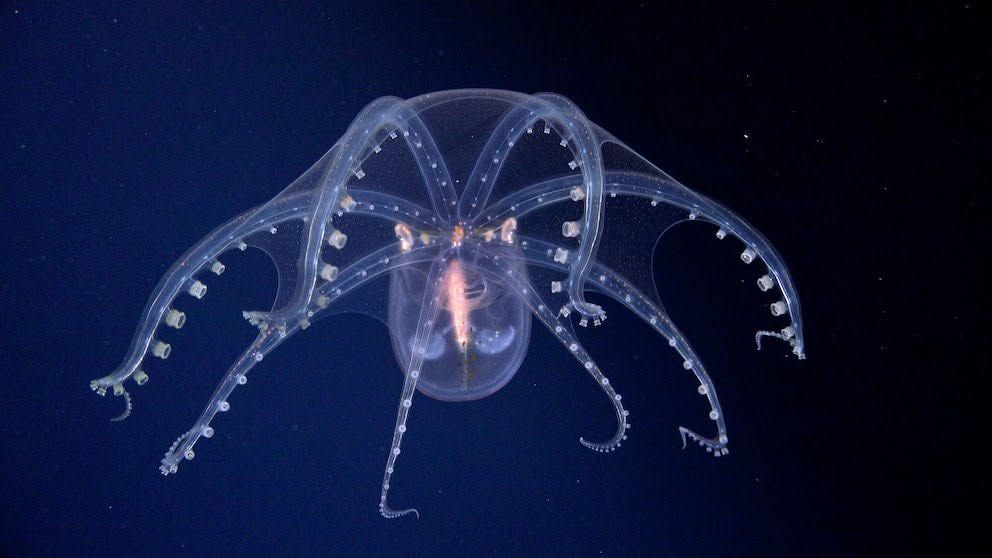
Deep-Sea Expedition Reveals 57 New Marine Species
- Institution/Authors: Schmidt Ocean Institute and international research team
- Key Finding: Scientists have identified 57 previously unknown marine species and five new genera in Argentina’s Mar del Plata Submarine Canyon. The discoveries include a "mischievous" sea cucumber and other creatures adapted to deep-sea conditions.
- Why It Matters: These findings highlight the vast amount of marine biodiversity that remains undiscovered, particularly in deep-sea environments. The discovery emphasizes the importance of continued exploration and the need to understand these ecosystems before they are impacted by climate change and human activity.
The Ocean Crisis Demands a New Kind of Science
- Institution/Authors: Nature Sustainability
- Key Finding: Recent research highlights the potential impacts of plastic pollution on the marine carbon cycle and the climate impacts of marine microplastics. The study suggests that from pollution to ocean warming, microplastics are contributing to broader climate disruptions.
- Why It Matters: This research calls for a new kind of science that integrates pollution studies with climate science, recognizing that marine microplastics are not just a pollution issue but a significant factor in ocean warming and carbon cycle disruption.
Ocean & Climate Watch
Marine Heatwaves Drive Coral Reef Collapse The IUCN assessment explicitly identifies marine heatwaves as the top threat to coral reefs. The data shows that the frequency and intensity of these heatwaves have increased significantly, leading to widespread bleaching events. The loss of nearly 10% of the world's corals in the last 30 years is a direct result of these thermal stress events.
Global Coral Reef Monitoring Network (GCRMN) Report The GCRMN's global assessment of reef condition, drawing on data from over 120 countries, confirms the alarming trend of declining hard coral cover. The report emphasizes that reefs are losing the time they need to recover between increasingly frequent marine heatwaves, accelerating their path toward collapse.
Conservation & Policy
IUCN Red List of Ecosystems Assessment The release of the IUCN Red List of Ecosystems assessment for coral reefs is a major policy milestone. It provides a standardized, scientific basis for evaluating the risk of ecosystem collapse, which can inform international conservation strategies and funding priorities. The "Critically Endangered" status for 96% of reefs is expected to drive urgent policy discussions at upcoming climate and biodiversity conferences.
Five Ways to Protect the World’s Oceans Ocean conservation leaders, including Sylvia Earle and Titouan Bernicot, have highlighted five key strategies to protect marine ecosystems. These include community action, leveraging technology for monitoring, and active coral restoration efforts. Their recommendations aim to empower local communities and integrate scientific innovation with grassroots conservation.
Marine Technology & Exploration
AUV and ROV Market Growth The global market for Autonomous Underwater Vehicles (AUVs) and Remotely Operated Vehicles (ROVs) is projected to increase from USD 7.1 billion in 2026 to USD 12.1 billion by 2033. This growth is driven by increasing demand in offshore energy, deep-sea exploration, and autonomous technologies.
Autonomous Underwater Vehicles (AUVs) in Exploration AUVs are increasingly used for long-duration mapping and survey work, complementing crewed submersibles. These untethered robots can complete pre-planned missions, collecting data autonomously. Recent expeditions, such as those using the Sentry AUV, demonstrate their capability to map underwater areas and identify active plumes for sampling.
What to Watch Next
- Policy Responses to IUCN Assessment: Monitor how nations and international bodies respond to the "Critically Endangered" status of 96% of coral reefs, particularly in the context of upcoming climate negotiations.
- Deep-Sea Mining Regulations: As new species are discovered in areas like the Mar del Plata Submarine Canyon, watch for increased pressure to regulate deep-sea mining to protect these newly identified biodiversity hotspots.
- Technological Advances in Reef Restoration: Follow developments in coral restoration technologies, such as heat-resistant coral breeding and artificial reef structures, as these become critical tools for preventing ecosystem collapse.
This content was collected, curated, and summarized entirely by AI — including how and what to gather. It may contain inaccuracies. Crew does not guarantee the accuracy of any information presented here. Always verify facts on your own before acting on them. Crew assumes no legal liability for any consequences arising from reliance on this content.
Powered by
