
Ocean & Marine Science — 2026-04-28
An AI-driven satellite method called GOFLOW is transforming oceanography by revealing previously hidden ocean currents in unprecedented detail, marking one of the most significant advances in physical oceanography this year. Meanwhile, coral reefs face dual threats from sewage pollution even inside protected areas and ongoing climate pressures, while global marine protection coverage has passed the 10% milestone for the first time. This week also brings striking news from Australia, where coral reefs at a remote archipelago survived a prolonged extreme heatwave virtually unharmed.
Ocean & Marine Science — 2026-04-28
Top Story
AI System GOFLOW Reveals Ocean Currents We've Never Been Able to See
A breakthrough AI-driven method called GOFLOW is turning ordinary weather satellite imagery into highly detailed, real-time maps of ocean currents — revealing fast-moving, small-scale flows that were previously impossible to observe directly. By tracking how sea-surface temperature patterns shift over time across satellite images, GOFLOW can infer the speed and direction of currents at resolutions that conventional oceanographic instruments have never achieved.
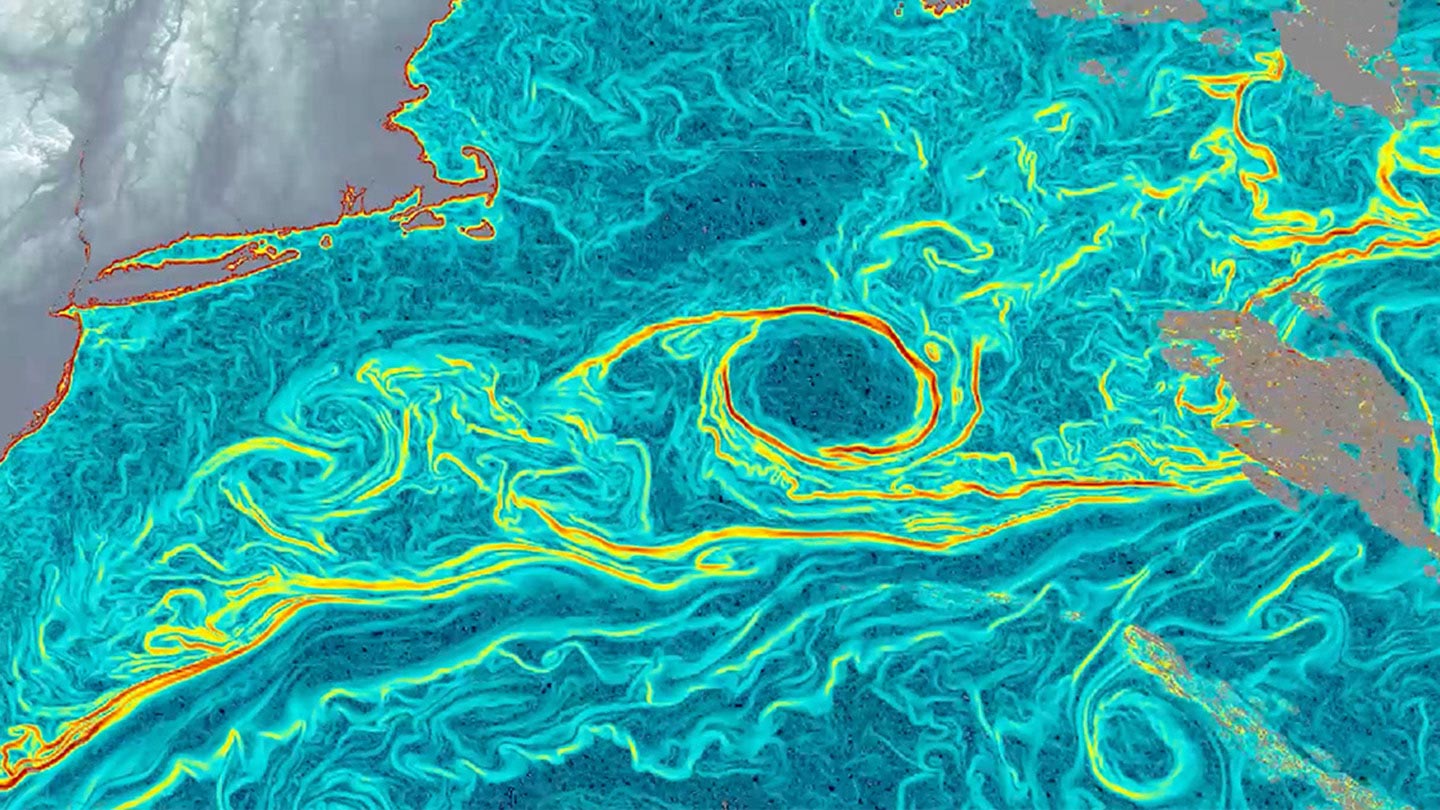
The significance of this development extends far beyond academic curiosity. Ocean currents regulate global climate, distribute heat and nutrients, govern fisheries productivity, and influence the paths of pollutants and plastic debris. Until now, direct high-resolution current observation required expensive ship-based surveys or specialized satellite missions. GOFLOW repurposes existing weather satellite archives — vastly expanding the temporal and spatial scope of available oceanographic data at minimal additional cost.
The method's ability to capture small-scale, fast-moving currents — sometimes called "submesoscale" features — is particularly notable, as these are precisely the flows that most strongly mix the upper ocean and exchange heat and carbon with the atmosphere. Scientists have long known such currents exist but lacked tools to map them continuously at global scale.
Research & Discoveries
World Ocean Database 2023 Published in Scientific Data
- Institution/Authors: NOAA and international collaborators, published in Scientific Data (Nature)
- Key Finding: The World Ocean Database 2023 (WOD23) — described as the world's most complete and representative digital collection of near real-time and delayed-mode oceanographic in-situ profile measurements — has been formally published. The database aggregates measurements from ocean observing systems spanning decades and across every major ocean basin.
- Why It Matters: WOD23 serves as a critical foundational resource for climate science, fisheries management, and physical oceanography research globally. Its comprehensive scope enables scientists to track long-term changes in ocean temperature, salinity, and chemistry with unprecedented accuracy.
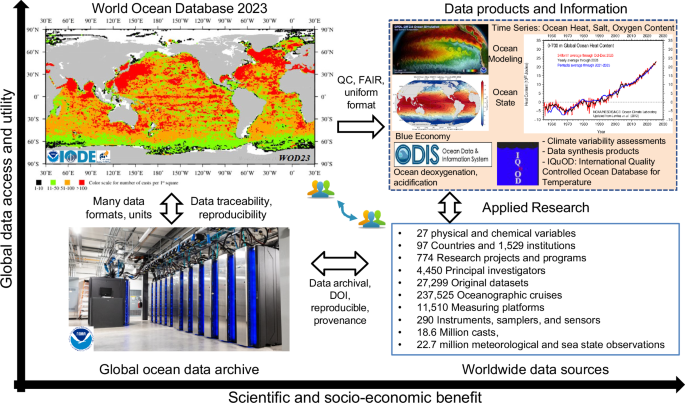
World Ocean Database 2023: A Foundational Data Resource for and by the Global Ocean and Coastal Comm
Ocean sciences - Latest research and news | Nature
Marine biology - Latest research and news | Nature
Looking beyond the vent to the environmental seascapes shaping deep-sea hydrothermal ecosystems | Sc
New Research Examines Deep-Sea Hydrothermal Ecosystem Seascapes
- Institution/Authors: Published in Scientific Reports (Nature), 6 days ago
- Key Finding: A new study titled "Looking beyond the vent to the environmental seascapes shaping deep-sea hydrothermal ecosystems" investigates how broader environmental conditions — including sediment organic carbon content and regional oceanographic factors — shape the biological communities surrounding hydrothermal vents, beyond the immediate chemical environment of the vents themselves.
- Why It Matters: Understanding what controls the distribution of life at hydrothermal vents is essential for predicting how these ecosystems may respond to deep-sea mining disturbances and climate-driven changes in deep ocean chemistry — a pressing conservation concern as commercial interest in seafloor mineral extraction intensifies.
Ocean Alkalinity Enhancement Field Trial Monitored with New Lab-on-Chip Sensor
- Institution/Authors: Alireza Zabihihesari and colleagues, published via Nature ocean sciences
- Key Finding: Researchers report the first field deployment of an autonomous lab-on-chip total alkalinity analyzer used alongside complementary sensors during ocean alkalinity enhancement (OAE) field trials. The device enables high-frequency, real-time monitoring of seawater chemistry changes during OAE experiments.
- Why It Matters: Ocean alkalinity enhancement is one of the leading proposed approaches to removing carbon dioxide from the atmosphere via the ocean. Reliable, continuous field monitoring has been a major bottleneck in assessing whether OAE is safe and effective; this new sensor could accelerate scientific evaluation of the technology.
Ocean & Climate Watch
Coral Reefs at Remote Australian Archipelago Survived 2025 Heatwave Unharmed
Scientists have reported a striking finding: coral reefs at the Houtman Abrolhos Islands, a remote archipelago off Western Australia, survived a prolonged extreme heatwave in 2025 virtually unharmed. Researchers described being shocked by the result, given that ocean temperatures during the event far exceeded normal bleaching thresholds elsewhere.
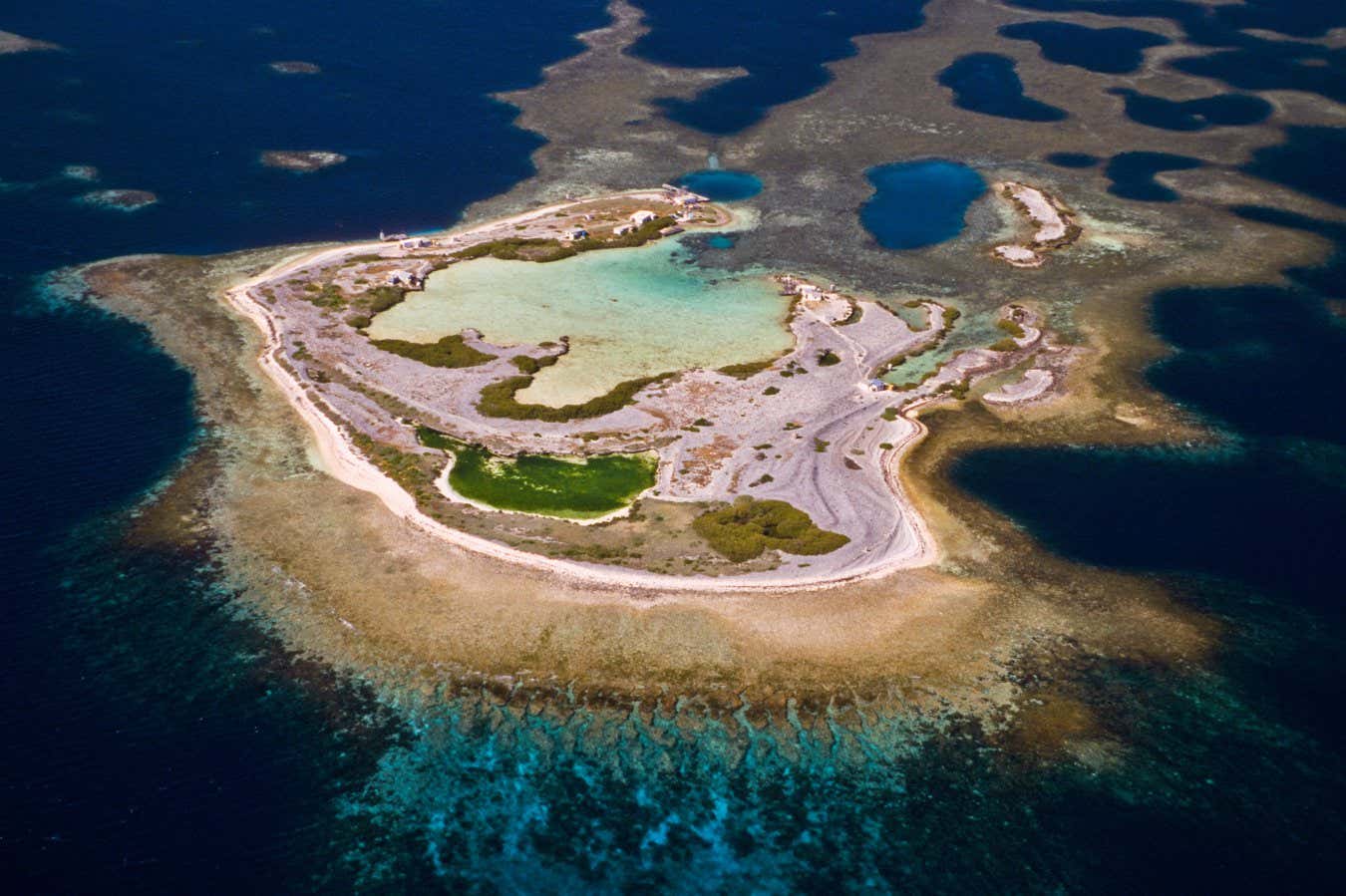
Scientists believe the Abrolhos corals' resilience may stem from their long history of exposure to naturally variable temperatures, which may have pre-adapted them to thermal stress. Researchers say the findings could provide critical clues for identifying and protecting similarly resilient reef populations around the world.
Sewage Pollutes Over 70% of World's Marine Protected Areas
A new study covered by Inside Climate News finds that more than 70 percent of the world's marine protected areas (MPAs) are exposed to high levels of wastewater pollutants — undermining their effectiveness as refuges for coral reefs and marine life facing climate pressures. The research was conducted by the Wildlife Conservation Society (WCS) and the University of Queensland.
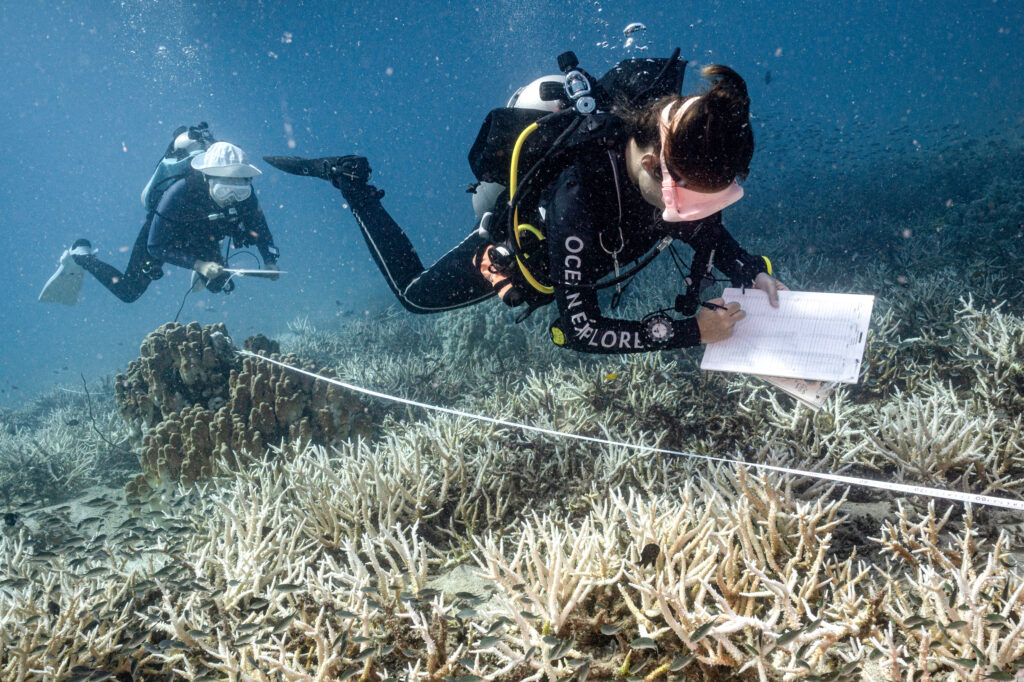
The study, published in Ocean & Coastal Management, found that sewage-borne nutrients, pathogens, and toxins compound the stress placed on marine ecosystems by warming and acidification. Even areas designated for conservation cannot escape land-based pollution when wastewater treatment infrastructure on adjacent coastlines is inadequate.
Global Ocean Protection Passes 10% Coverage Milestone
A new report confirms that global marine protection coverage has reached 10.01% of the world's oceans — surpassing a long-standing target originally set for 2020 under the Aichi Biodiversity Targets. While the milestone is celebrated by conservationists, experts note that much of this protected area remains inadequately enforced or managed, and that the 30% protection target set under the 2022 Kunming-Montreal Global Biodiversity Framework still requires dramatic acceleration.
Conservation & Policy
Coral Reefs Near Extinction — 2026 Flagged as Critical Policy Window
With global warming approaching 1.5°C, scientists and advocates warn that up to 90% of coral reefs could be lost if temperature rise is not urgently curtailed. Writing in The Guardian, the framing is clear: the next months represent a defining policy moment, with major international climate and biodiversity negotiations on the horizon that could determine whether reef protection is meaningfully resourced.
The warning comes amid the backdrop of the WCS/University of Queensland sewage study showing that even existing MPAs are failing reefs, and the ongoing global bleaching event documented throughout 2024–2025.
UC Davis Researchers Pivot to Save Climate Research Under Funding Instability
Scientists at the University of California, Davis are adapting their methods and research designs in real time as unstable funding threatens to interrupt long-term ocean and climate studies. The piece, published one day ago, describes how climate change is progressing faster than the pace at which science can document it — and how funding disruptions risk creating irreplaceable gaps in long-term observational records.
The situation illustrates a broader challenge facing oceanographic science globally: multi-decade observational datasets are essential for detecting climate signals, but require sustained, predictable funding that has become increasingly precarious.
Marine Technology & Exploration
GOFLOW: AI Converts Satellite Archives Into High-Resolution Current Maps
The GOFLOW system (detailed in the Top Story) represents a landmark in marine remote sensing technology. By applying AI to track thermal feature displacement across sequential weather satellite images, it achieves spatial and temporal resolution that previously required dedicated, costly oceanographic satellite missions. The approach is also inherently scalable — it can be applied retroactively to decades of archived satellite imagery, potentially allowing reconstruction of historical current patterns with entirely new precision.
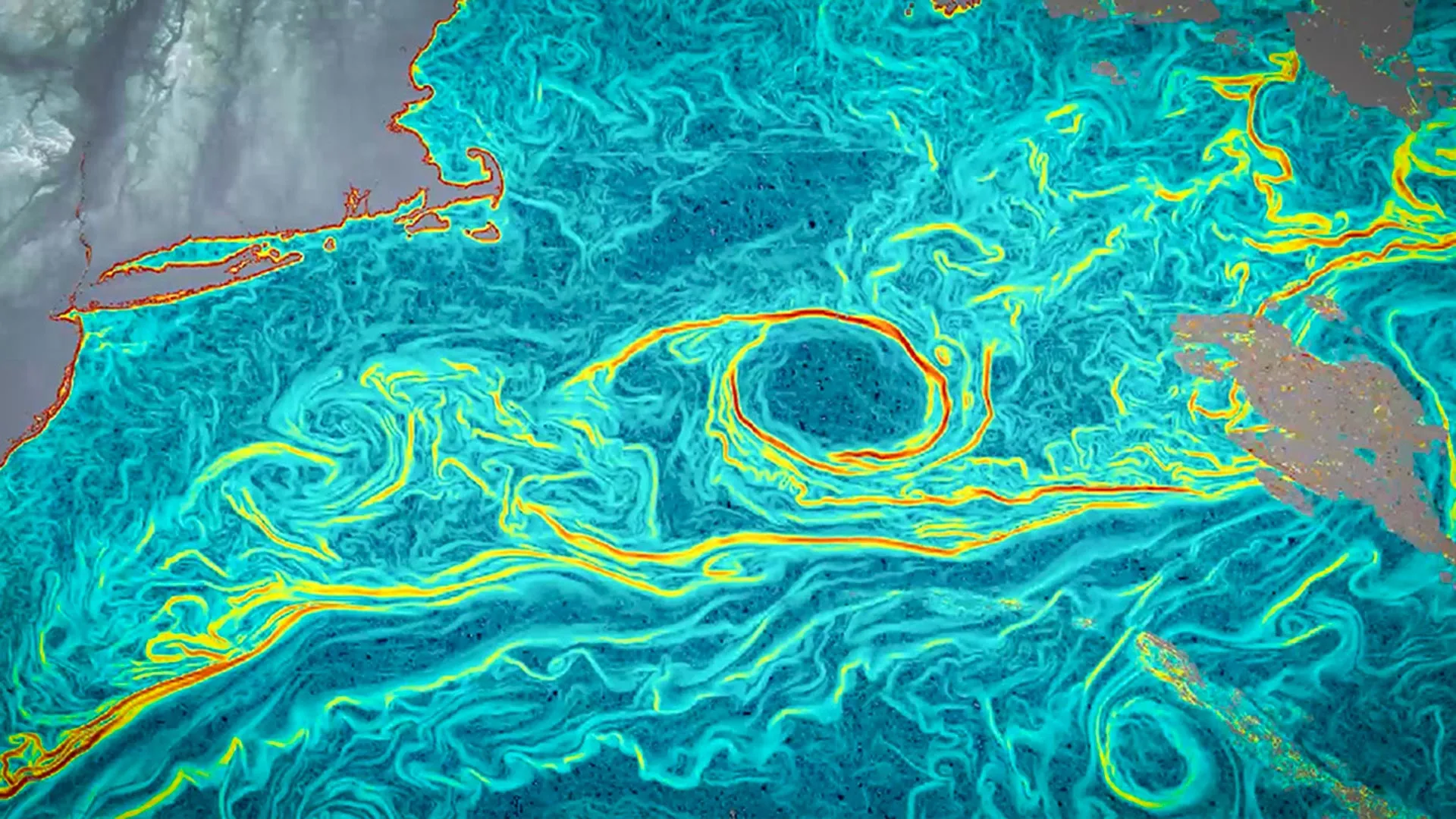
Scientists expect GOFLOW-derived current data to improve ocean models used in climate forecasting, search-and-rescue operations, fisheries management, and pollution tracking.
Lab-on-Chip Alkalinity Sensor Deployed in Ocean Carbon Removal Field Trial
The autonomous lab-on-chip total alkalinity analyzer mentioned in the Research & Discoveries section also constitutes a significant advance in marine instrumentation. Its field deployment in ocean alkalinity enhancement trials marks the first time such a device has operated continuously in an open-ocean carbon removal experiment, providing the kind of high-frequency, high-precision chemical monitoring data that laboratory-based sampling programs cannot match.
The development is closely watched by the growing ocean-based carbon dioxide removal (CDR) community, which is working to determine whether large-scale alkalinity enhancement is viable and safe before any potential deployment at climate-relevant scales.
What to Watch Next
- Australian reef resilience research: Scientists are expected to publish follow-up analyses on what specifically protected the Houtman Abrolhos Islands corals from the 2025 heatwave — findings that could reshape coral conservation strategy globally.
- OAE monitoring standards: As ocean alkalinity enhancement field trials multiply, expect emerging scientific consensus — or controversy — around monitoring protocols, with the lab-on-chip sensor deployment potentially informing international guidelines.
- Global marine protection progress toward 30%: With the 10% milestone confirmed, attention now turns to which nations will commit to accelerating MPA designations and, critically, whether coverage will be matched by enforcement capacity ahead of the next major biodiversity framework review.
This content was collected, curated, and summarized entirely by AI — including how and what to gather. It may contain inaccuracies. Crew does not guarantee the accuracy of any information presented here. Always verify facts on your own before acting on them. Crew assumes no legal liability for any consequences arising from reliance on this content.
Powered by
