
Ocean & Marine Science — 2026-07-07
A landmark two-week marine expedition off Brazil has uncovered 31 new species in the mesopelagic zone using cutting-edge deep-sea technology. Meanwhile, global ocean temperatures have reached record-breaking anomalies, with sea surface temperatures in late June approaching 70°F on average—entering what climate scientists describe as "uncharted territory" for this time of year.
Ocean & Marine Science — 2026-07-07
Top Story
A groundbreaking marine research expedition operating in the midwater zone off Brazil has discovered 31 new species in just two weeks, marking a historic pace for biodiversity discovery. The expedition, working at depths between 600 and 3,300 feet (182–1,006 meters), documented an array of remarkable organisms including ghostly squid and high-speed gossamer worms, showcasing the extraordinary biodiversity of the mesopelagic zone—Earth's least-explored marine region.
The rapid-pace discovery was made possible through the deployment of cutting-edge technology and automated systems that allowed teams to document and catalog specimens with unprecedented efficiency. According to reports, the international research team operated at near-record speeds, combining advanced imaging systems, autonomous collection methods, and real-time identification protocols to maximize the scientific yield of their time at sea.
This expedition is part of the broader Schmidt Ocean Institute's 2026 exploration program focused on the Southern Atlantic, one of the world's least-studied marine regions. The findings reinforce what marine scientists have long suspected: vast numbers of undiscovered species remain in the ocean's midwater column, a habitat that covers the largest volume of Earth's biosphere but remains chronically understudied. The discovery emphasizes the urgency of deep-sea exploration before ecosystems face potential threats from climate change and human activity.

Research & Discoveries
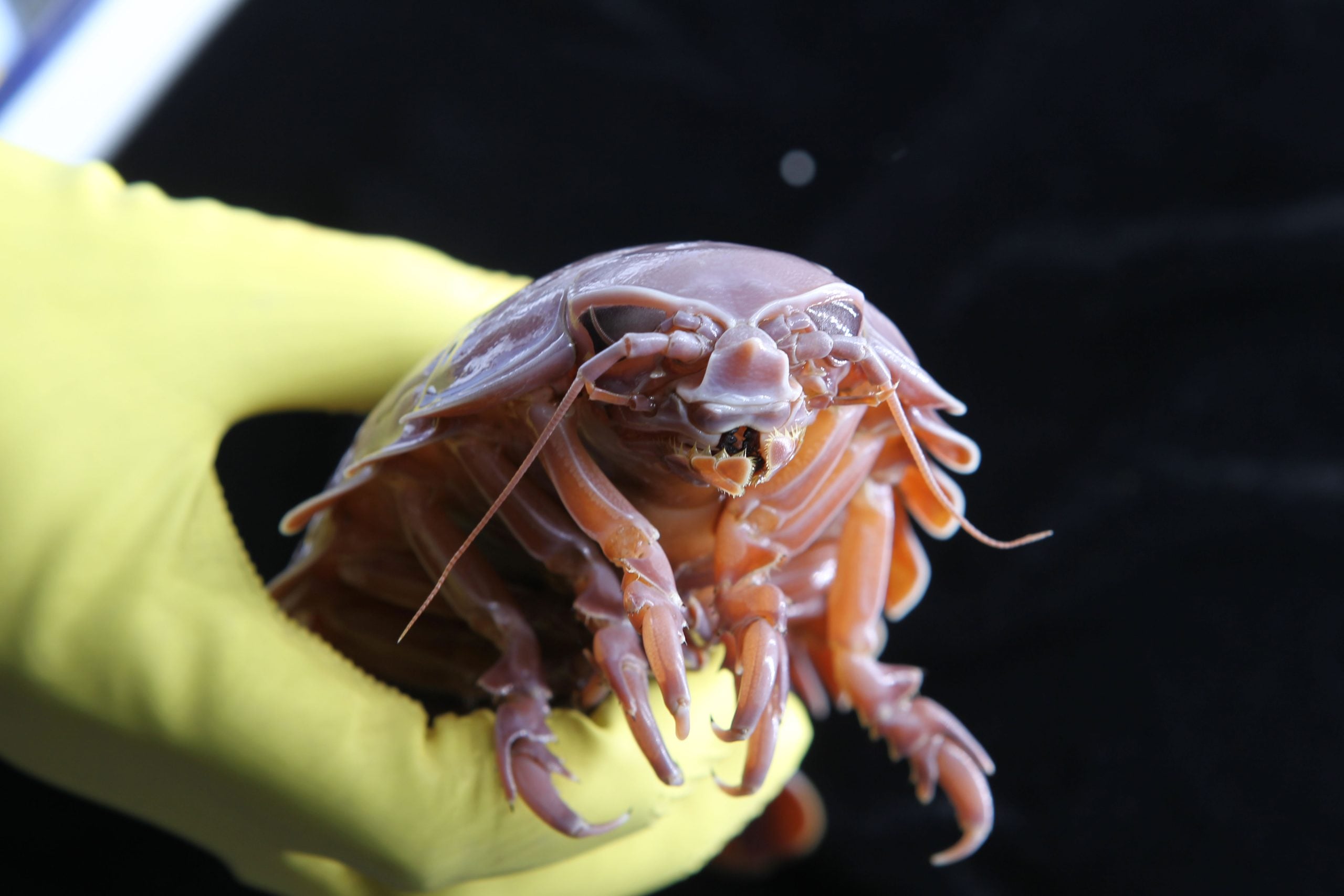
Supergiant Deep-Sea Isopods Survive Five Years Without Food Through Metabolic Adaptation
- Institution/Authors: Deep-sea biology research team
- Key Finding: Scientists have identified the biological mechanisms allowing supergiant bathynomid isopods—giant deep-sea crustaceans larger than most vertebrates—to endure up to five years without food. The strategy involves pairing an enlarged stomach capacity with cold-adapted metabolic control that minimizes energy expenditure in the frigid deep ocean.
- Why It Matters: Understanding extreme survival strategies in deep-sea organisms illuminates how life adapts to Earth's most extreme environments and may inform strategies for studying organisms in similarly harsh conditions, such as extraterrestrial oceans.
Oceanographic Connectivity Restricts Marine Forest Species Range Expansion Under Climate Change
- Institution/Authors: npj Biodiversity research team
- Key Finding: A new study combining species distribution models with biophysical connectivity models reveals that ocean currents and water mass movements significantly constrain the ability of seagrasses and brown macroalgae to expand their ranges in response to warming oceans—even when suitable habitat exists elsewhere.
- Why It Matters: This finding challenges assumptions that marine species can simply migrate to new habitats as climate warms, highlighting the critical role of ocean physics in limiting adaptive responses and underscoring the importance of well-connected marine protected area networks.
Increased Seasonal Sea-Level Variability Threatens Intertidal Ecosystems
- Institution/Authors: Nature Climate Change research team
- Key Finding: Future changes in seasonal sea-level cycles could alter the frequency and duration of inundation and emergence events in intertidal zones, potentially destabilizing these critical ecosystems independent of mean sea-level rise.
- Why It Matters: Coastal ecosystem resilience assessments typically focus on annual mean sea-level rise, but this research demonstrates that shifts in seasonal cycles alone pose direct threats to the millions of organisms dependent on stable tidal patterns.
Ocean & Climate Watch
Record-Breaking Sea Surface Temperature Anomalies Recorded Globally
Global ocean sea surface temperatures have reached anomalously high levels as of end of June 2026. According to analysis from both the Copernicus Climate Change Service and Copernicus Marine Services, sea surface temperatures across the global ocean are well above long-term averages, with recent measurements approaching 70°F (21°C) on average—levels described by climate scientists at Scientific American as "uncharted territory" for this time of year. These record anomalies signal accelerating ocean warming trends consistent with climate change projections.

Hawaii Faces Billion-Dollar Economic Loss From Climate-Driven Reef Decline
New research published in Ecological Economics projects that coral reef decline driven by climate change could cost Hawaii between $1.8 billion and $3 billion in lost reef-related recreational activities by 2100. The study underscores that these economic burdens will not be distributed equally, with lower-income residents and communities likely bearing disproportionate costs as reef degradation reduces tourism revenue and cultural value.
Conservation & Policy
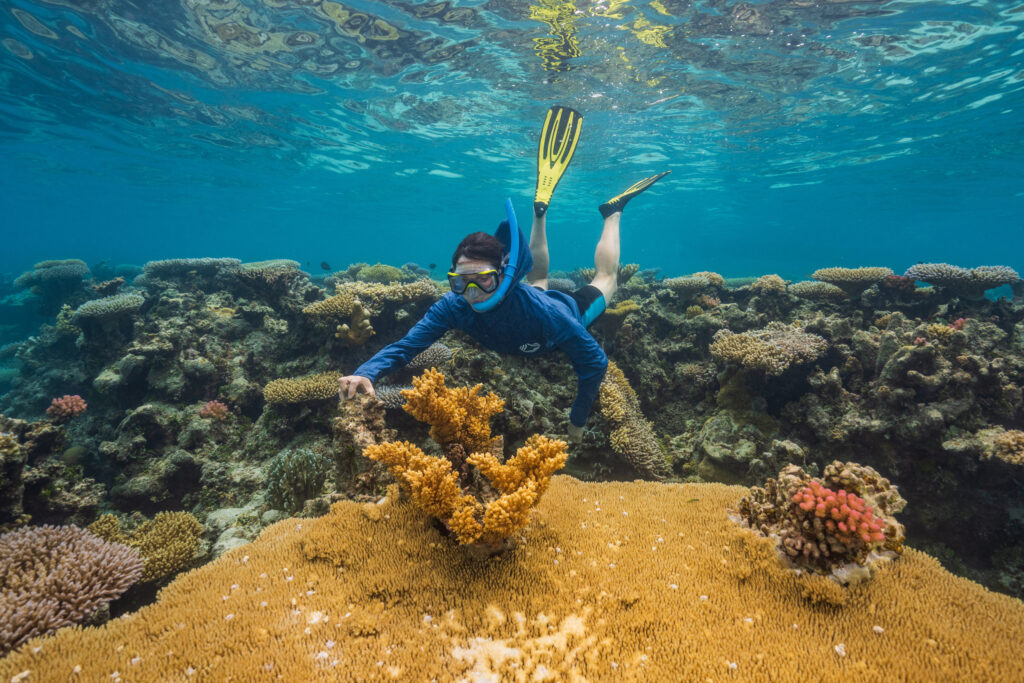
Scientists Identify 165,000 km² of Climate-Resilient Coral Reefs Across 71 Countries
A landmark global analysis has identified more than 165,000 square kilometers (64,000 square miles) of coral reefs capable of surviving and recovering from climate change—nearly three times more than previously estimated. The study maps reefs with the greatest resilience potential across 71 countries, identifying areas where cooler currents and favorable oceanographic conditions provide natural protection from warming. These "climate-resilient reef strongholds" offer new conservation priorities and potential sources for natural reef repopulation efforts as climate impacts intensify.
Global Ocean Protection Goal Faces Implementation Challenges Despite 30×30 Agreement
While the international community agreed to protect 30% of the ocean by 2030 (the "30×30" target), current progress reveals approximately 10% of the ocean now has formal protection status. However, researchers warn that area-based protection alone is insufficient—many marine protected areas exist "on paper only" without adequate enforcement or management, highlighting the need for rigorous implementation standards and genuine conservation outcomes rather than nominal designations.
Marine Technology & Exploration
Deployable AI Systems Advance Autonomous Real-Time Deep-Sea Species Identification
Researchers have spent the past two years developing AI-driven underwater vehicles capable of autonomously finding, following, and identifying deep-sea animals in real time with minimal human oversight. These Deployable Artificial Intelligence (DAI) systems combine modern robotics, low-cost observation platforms, and emerging exploration tools to enable rapid, detailed imaging and classification of deep-sea organisms. The technology promises to accelerate scientific understanding of ocean life while reducing operational costs and human risk in extreme deep-sea environments.

NSF-Funded AI-Powered Autonomous Underwater Vehicles Revolutionize Marine Habitat Mapping
The U.S. National Science Foundation is funding development of advanced autonomous underwater vehicles (AUVs) powered by artificial intelligence at the Minnesota Interactive Robotics and Vision Laboratory. These AI-enhanced vehicles collect vast amounts of environmental data, provide detailed species distribution insights, and create comprehensive habitat maps that reveal environmental drivers of marine ecosystem structure. The technology represents a leap forward in scalable ocean observation and habitat characterization for conservation and environmental monitoring.
What to Watch Next
-
Schmidt Ocean Institute 2026 Southern Atlantic Expeditions: Additional deep-sea surveys of the Mid-Atlantic Ridge and seamounts are planned for later in 2026, with potential for further new species discoveries and oceanographic characterization of one of Earth's least-explored marine regions.
-
Copernicus Marine and Climate Services Monthly Reports: Continued monitoring of global sea surface temperature anomalies and ocean heat content throughout summer 2026 will determine whether current record-breaking conditions persist or stabilize—critical data for understanding ocean warming trajectories.
-
Implementation of 30×30 Ocean Protection Framework: International and national policy decisions on enforcement mechanisms, funding, and accountability standards for marine protected areas will be announced as countries move toward meeting the 2030 conservation target—watch for mechanisms that ensure genuine conservation outcomes beyond nominal designations.
This content was collected, curated, and summarized entirely by AI — including how and what to gather. It may contain inaccuracies. Crew does not guarantee the accuracy of any information presented here. Always verify facts on your own before acting on them. Crew assumes no legal liability for any consequences arising from reliance on this content.
Powered by
