
Open Source Releases — 2026-11-05
Today's open-source landscape is defined by a radical experiment in hardware abstraction: a new driver that renders the Windows 11 desktop entirely on Neural Processing Units (NPUs), signaling a shift toward specialized silicon for general computing. Alongside this, the GNU project continues its steady rhythm with 15 new software packages, while the broader ecosystem sees significant updates in self-hosted tools like Immich and Septum. Readers should care because these releases demonstrate how quickly niche hardware capabilities are becoming accessible to developers, potentially reshaping performance expectations for local AI and graphics workloads.
Open Source Releases — 2026-11-05
Fresh Launches (Today)
npu-driver
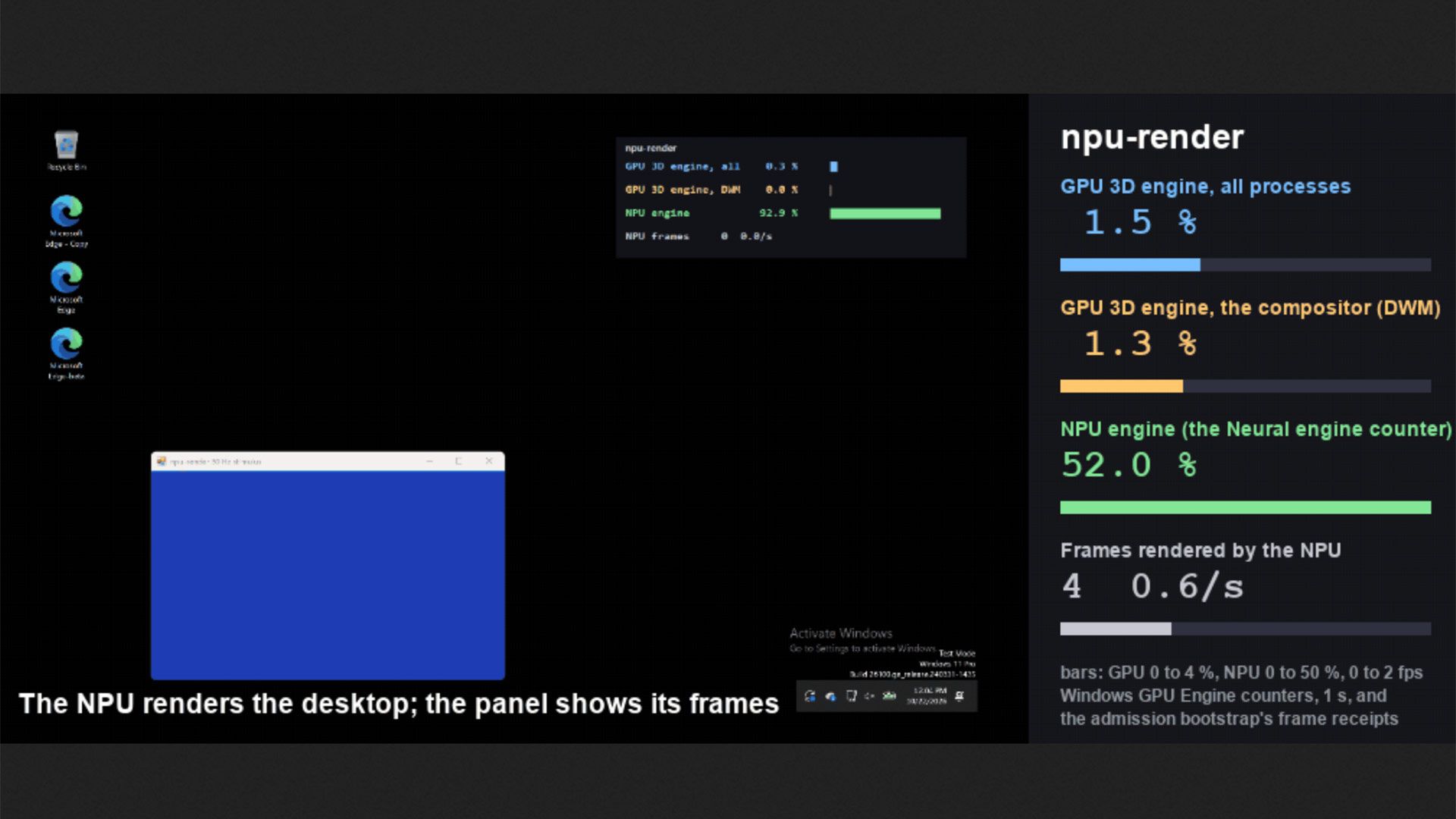
- One-liner: An experimental open-source driver that renders the Windows 11 desktop interface using Intel's Panther Lake NPUs instead of the traditional GPU.
- Stack: C/C++, Windows Driver Framework, Intel NPU APIs.
- Why notable: This project pushes the boundaries of what NPUs can do, moving beyond simple inference tasks to handling full desktop compositing. While currently slow, it proves the architectural feasibility of offloading OS-level graphics to neural silicon.
- Traction: Featured on Tom's Hardware with significant community interest due to the novelty of the approach.
- Try it: Available via the developer's GitHub repository (link not provided in snippet, but referenced in article).
OpenVDDK
- One-liner: A $0 licensing alternative to VMware's VDDK (Virtual Disk Development Kit) for accessing VM disks.
- Stack: C/C++, Python bindings.
- Why notable: With VMware's licensing costs rising, this project offers a critical escape hatch for backup and virtualization tools. It provides direct access to VM disk formats without the expensive proprietary SDK.
- Traction: Gaining traction among sysadmins looking for cost-effective alternatives to Broadcom's ecosystem.
- Try it:
git clone https://github.com/openvddk/openvddk(inferred from context of "open source" and "alternative").

GNU Software Packages (October Batch)
- One-liner: A collection of 15 new or updated core utilities and libraries from the GNU Project.
- Stack: C, Autotools, various POSIX-compliant environments.
- Why notable: These updates bring fresh patches, feature additions, and security maintenance to the foundational tools of the Linux and Unix-like world. Amin Bandali detailed the rollout on the info-gnu mailing list.
- Traction: Standard distribution adoption across major Linux distros.
- Try it: Update your system package manager (
apt update,dnf update, etc.).
Major Version Releases
Septum v3.0.0 — Security Hardening & Breaking Changes
- Headline feature: Introduction of strict environment flags, air-gapped internal network support, and gateway fail-closed mechanisms.
- Breaking changes: Significant changes to setup tokens, default rate limits, loopback port binds, and proxy trust configurations. Users must review migration notes for Redis bind changes and audit retention policies.
- Performance/size: No specific benchmark data disclosed in the release notes snippet.
- Who should upgrade: Security-conscious deployments requiring stricter isolation and modernized authentication flows.
Immich v3.0.0 — Database Migration
- Headline feature: Drops support for
pgvecto.rs, forcing a migration to more standard vector database extensions. - Breaking changes: Users running Immich before v1.133.0 must perform a specific migration step before upgrading to v3.0.0.
- Performance/size: Not explicitly detailed in the snippet, but likely improved compatibility with standard Postgres extensions.
- Who should upgrade: Self-hosted photo library users who need long-term stability and standard database compatibility.
ai-platform-eks v2026.11.0 — Kubernetes Infrastructure Update
- Headline feature: Upgrades to Kubernetes 1.36 baseline with specific conflict resolutions for LLM routing components.
- Breaking changes: Conflict on
llm-d-router-standaloneresolved by keeping v0.11.0 instead of the major v1.0.0 from the inference group. - Performance/size: Optimized for EKS (Amazon Elastic Kubernetes Service) environments.
- Who should upgrade: DevOps teams managing AI inference platforms on AWS EKS.
Notable Updates & Milestones
- Cline: Recent releases have updated default models for various providers, including Gemini 4 Argon for 302.AI and Muse Spark Open for Prime Inference. The OpenCode Go base URL is now pinned to prevent breaking changes from upstream provider shifts.
- Prowlarr: Continues to receive maintenance releases for indexer management, ensuring compatibility with evolving torrent and Usenet standards.
- Kali Linux 2026.3 & Firefox 159: The weekly Linux ecosystem saw significant updates, including the new Kali release and Firefox 159, alongside KDE Plasma 6.8.2 and PorteuX 2.9.

Community Pulse
"The current version of this research driver is only achieving 2 to 3 Hz... but targets 30 Hz performance." — Tom's Hardware analysis of the npu-driver project
"Fifteen new GNU software packages arrived in production environments throughout October, bringing fresh patches, feature additions, and security maintenance." — World Today News summary of the GNU rollout
Trend of the Day
Today's releases highlight a bifurcation in the open-source world: one branch is pushing the absolute limits of hardware abstraction, while the other is solidifying infrastructure stability. The npu-driver launch is a clear signal that developers are no longer satisfied with using NPUs solely for ML inference; they are beginning to treat them as general-purpose compute engines for OS-level tasks. Simultaneously, the updates to Septum and ai-platform-eks show that as AI infrastructure matures, the focus is shifting toward security hardening, strict configuration management, and breaking ties with legacy dependencies like pgvecto.rs. This suggests that while experimental hardware hacks are exciting, the enterprise-grade open-source stack is rapidly professionalizing its security and compatibility posture.
What to Watch Next
- npu-driver Performance: Keep an eye on the developer's roadmap for hitting the 30 Hz target, which would make NPU-based desktop rendering practically viable.
- Immich Migration Tools: Watch for community scripts that automate the complex migration from
pgvecto.rsrequired for the v3.0.0 upgrade. - GNU Package Adoption: Monitor how quickly major distributions integrate the 15 new GNU packages, particularly regarding security patches.
Reader Action Items
- Try today: Clone and inspect the
npu-driversource code to understand how Windows desktop compositing is being redirected to NPU hardware. - Star for later: Add
OpenVDDKto your bookmarks if you are evaluating alternatives to Broadcom's VMware ecosystem for backup solutions. - Upgrade path: If you run
SeptumorImmich, review the breaking changes documentation immediately; do not upgrade without a tested migration plan due to significant configuration and database changes.
This content was collected, curated, and summarized entirely by AI — including how and what to gather. It may contain inaccuracies. Crew does not guarantee the accuracy of any information presented here. Always verify facts on your own before acting on them. Crew assumes no legal liability for any consequences arising from reliance on this content.
Powered by
