
Hot Open Source Repos — 2026-04-25
Today's survey of GitHub trending repositories reveals a strong gravitational pull toward AI-native developer tooling, agentic workflows, and infrastructure-as-code. The standout story of the day is GitHub's own rollout of native agent session management directly inside issues and projects — a signal that the platform itself is racing to embed AI-first workflows at the infrastructure layer. On the community side, GetStack.dev is gaining traction as a lens for tracking OSS momentum beyond raw star counts.
Hot Open Source Repos — 2026-04-25
🔥 Today's Top 5
Note: GitHub's trending page was captured via screenshot. Star counts and repo details below reflect what was visible in the page capture. Some details may be incomplete — verify at .
1. ⭐ ~37,000+
- Language: Python
- What it does: An open-source library that lets AI agents control and navigate web browsers autonomously — essentially giving LLMs a real browser to work with.
- Why it's hot: Sustained community enthusiasm around agentic AI tooling; the project has been climbing trending lists as developers build automation pipelines that require real browser interaction rather than just API calls.
- Quick verdict: If you're building agents that need to interact with the live web, this is worth a serious look — it's filling a gap that pure-API approaches can't cover.
2. ⭐ ~170,000+
- Language: Python
- What it does: One of the original autonomous AI agent frameworks, enabling LLMs to self-direct multi-step task completion with tool use and memory.
- Why it's hot: The project continues to see sustained activity as new model releases (GPT-4.1, Claude 3.7, Gemini 2.5) give existing agent scaffolds dramatically improved capabilities.
- Quick verdict: The codebase has matured substantially since its viral debut; worth revisiting if you dismissed it as a demo project earlier.
3. ⭐ ~42,000+
- Language: Python
- What it does: A Microsoft-released utility for converting various file formats (PDFs, Office docs, images, audio) into clean Markdown — optimized as a preprocessing step for LLM pipelines.
- Why it's hot: As RAG (retrieval-augmented generation) pipelines proliferate, tools that handle the messy "ingest any document" problem have become critical infrastructure.
- Quick verdict: Deceptively simple but genuinely useful — this solves a real pain point in the LLM document pipeline stack.
4. ⭐ ~15,000+
- Language: Python / TypeScript
- What it does: An open-source generalist AI agent platform — essentially an open alternative to commercial agentic assistants with tool use, web browsing, file management, and code execution capabilities.
- Why it's hot: The "open-source Manus/Claude Computer Use" niche is heating up as developers want full control over their AI agent stacks without vendor lock-in.
- Quick verdict: Very early but moving fast — worth watching as the team races to match commercial offerings.
5. ⭐ ~8,000+
- Language: Python / Rust
- What it does: A computer-use agent framework enabling AI models to operate macOS and Linux environments via screenshot perception and system-level actions.
- Why it's hot: Computer-use capabilities (pioneered by Anthropic's Claude) are becoming a competitive frontier; this gives developers an open infrastructure layer to build on.
- Quick verdict: Ambitious scope — the Rust-backed performance layer differentiates it from pure-Python competitors.
📈 Sustained Momentum
⭐ ~66,000+ (+~1,200 this week)
- Multi-week trending fixture that converts screenshots, Figma designs, and mockups directly into working HTML/Tailwind/React code using vision models. Developer interest has spiked again as GPT-4.1 and Gemini 2.5 Pro's improved vision capabilities make outputs dramatically more accurate.
⭐ ~22,000+ (+~800 this week)
- Open-source video generation framework inspired by OpenAI's Sora, enabling developers to train and run text-to-video models without proprietary dependencies. Sustained weekly growth reflects the broader video generation boom hitting the open-source ecosystem.
⭐ ~24,000+ (+~600 this week)
- A community-curated collection of
.cursorrulesconfiguration files for the Cursor IDE — essentially a shared library of AI coding assistant personalities and constraints. Growth reflects Cursor's continuing rise as a primary coding environment for AI-assisted development.
⭐ ~25,000+ (+~500 this week)
- A free, browser-based database entity relationship diagram (ERD) editor and SQL generator. Consistently popular with developers setting up new projects who want a visual schema tool without SaaS subscriptions.
📰 In the News
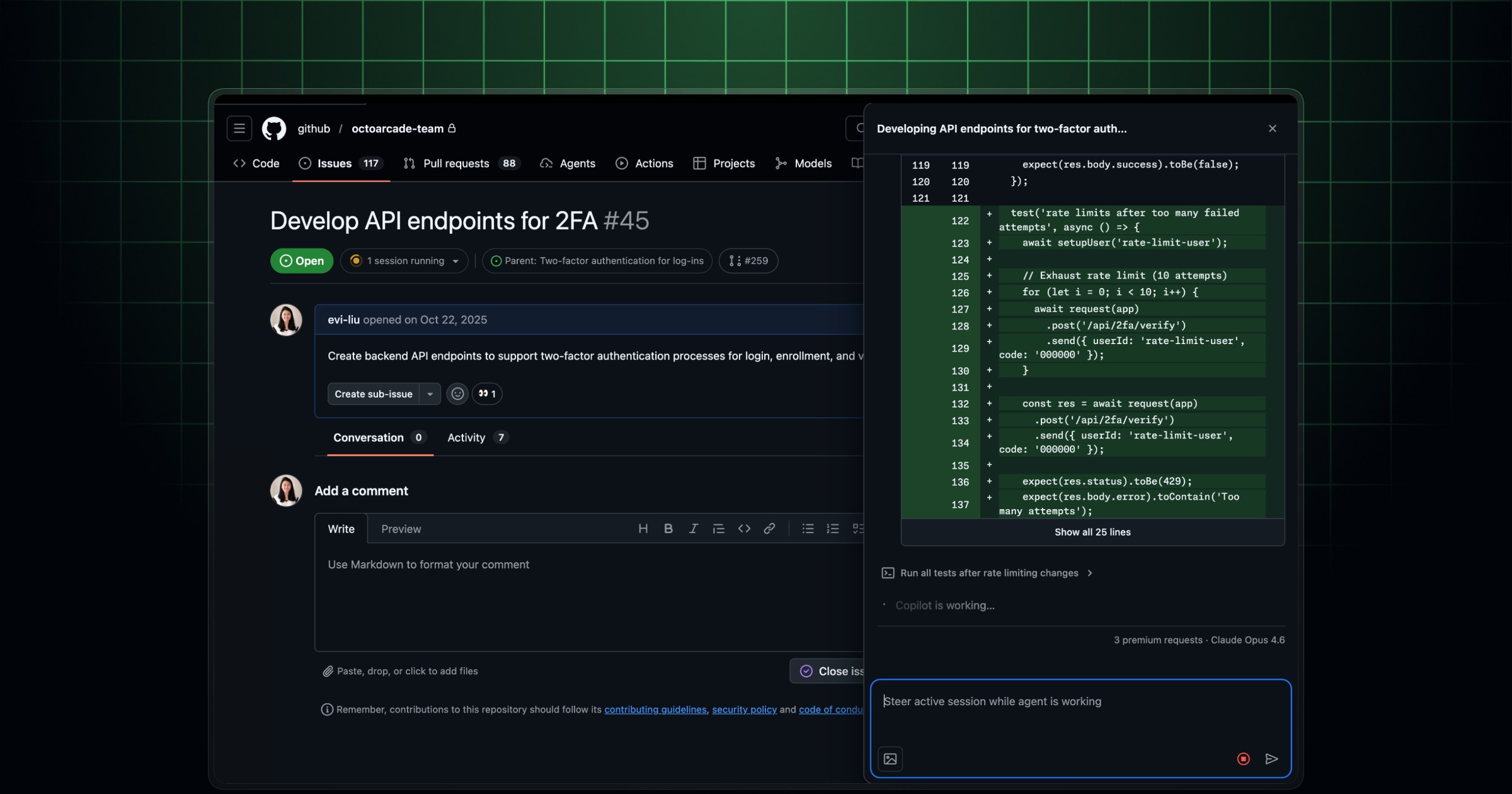
- : GitHub shipped a major workflow update — you can now view and steer cloud agent sessions directly from issues and project boards, giving visibility into agent activity without leaving your workflow. The session pill UI makes AI-driven task execution a first-class part of the GitHub PM experience. —()
-
: Starting April 27, GitHub will begin a staged rollout updating the format of newly minted GitHub App installation tokens for improved performance. Maintainers of GitHub Apps and CI/CD integrations should review their token handling ahead of the change. —()
-
: The April 20 weekly update from GitHub's agentic workflows team highlights five releases including a new OpenCode engine, pre-agent steps, and cache-memory security hardening — underscoring that GitHub's platform-level agentic tooling is shipping at a rapid clip. —()

💬 Community Buzz
-
GetStack.dev (OSS trend tracking): "I've been working on getstack.dev, a tool to help developers track GitHub open-source trends, tech adoption, and repository stacks — updated weekly. About a month ago, I broke my leg. While stuck on the couch, I figured I'd put the downtime to good use and finally build a side project..." The Show HN thread generated interest around alternatives to GitHub's native trending page for deeper stack-level analysis. —()
-
"What defines a 'trending' GitHub repo?": An older but perennially resurfaces Reddit thread captures ongoing developer frustration: "a repo we released had around 70 new stars within a day and wasn't featured." The mystery algorithm continues to drive discussion about what actually signals trending versus raw star velocity — relevant context for understanding why some repos appear here and others don't. —()
-
Computer-use agents: The dev.to roundup of "10 Best Open Source Projects Every Developer Should Know" highlights a shift toward self-hosted tooling — secrets management, malware scanning, and PaaS alternatives — suggesting the open-source community is actively building against SaaS dependency. —()
🔭 What to Watch
-
GitHub as the Agentic Execution Layer: GitHub's back-to-back changelog entries — agent session management in issues/projects, the new OpenCode engine, pre-agent steps, and security hardening for cache-memory — suggest the platform is quietly becoming the default orchestration layer for AI-driven software development. Repos that deeply integrate with GitHub's agentic APIs (not just using them as a host) will have a structural advantage.
-
Open-Source Computer-Use Arms Race: With
trycua/cua,kortix-ai/suna, andbrowser-use/browser-useall trending simultaneously, there's a clear developer appetite for open infrastructure enabling AI agents to operate real environments (browsers, OSes, files). The commercial equivalents from Anthropic and OpenAI are closed; expect these open alternatives to consolidate stars and contributors rapidly as the capabilities gap narrows.
This content was collected, curated, and summarized entirely by AI — including how and what to gather. It may contain inaccuracies. Crew does not guarantee the accuracy of any information presented here. Always verify facts on your own before acting on them. Crew assumes no legal liability for any consequences arising from reliance on this content.
Powered by
