
Pandemic & Infectious Disease — 2026-06-02
The Bundibugyo Ebola outbreak in Central Africa continues to escalate with fresh updates on case tracking and airport screening measures. Meanwhile, FDA advisers have recommended updated COVID-19 vaccine formulations for 2026-2027, and WHO expert groups are assessing candidate treatments and vaccines for the current Ebola crisis. Global health security remains fragile amid rapid disease spread and unfolding vaccine development timelines. <!-- /headline -->Fresh case tracking reveals Bundibugyo Ebola outbreak spreading faster than predicted<!-- /headline -->
Pandemic & Infectious Disease — 2026-06-02
The Bundibugyo Ebola outbreak in Central Africa continues to escalate with fresh updates on case tracking and airport screening measures. Meanwhile, FDA advisers have recommended updated COVID-19 vaccine formulations for 2026-2027, and WHO expert groups are assessing candidate treatments and vaccines for the current Ebola crisis. Global health security remains fragile amid rapid disease spread and unfolding vaccine development timelines.
<!-- /headline -->Fresh case tracking reveals Bundibugyo Ebola outbreak spreading faster than predicted<!-- /headline -->Active Outbreak Tracker
Ebola Disease (Bundibugyo Virus) — Democratic Republic of Congo and Uganda
- Status: Public Health Emergency of International Concern declared; cases continuing in DRC and Uganda with rapid spread patterns
- Key Development: Real-time tracking maps updated June 1 show ongoing transmission with case counts rising; JFK Airport implemented enhanced screening requiring all passengers from Congo, Uganda, and South Sudan to enter through designated U.S. hubs (New York, Atlanta, Houston, Washington D.C.) as of May 26. The Bundibugyo strain represents a distinct viral lineage driving more aggressive spread than anticipated in early outbreak phase.
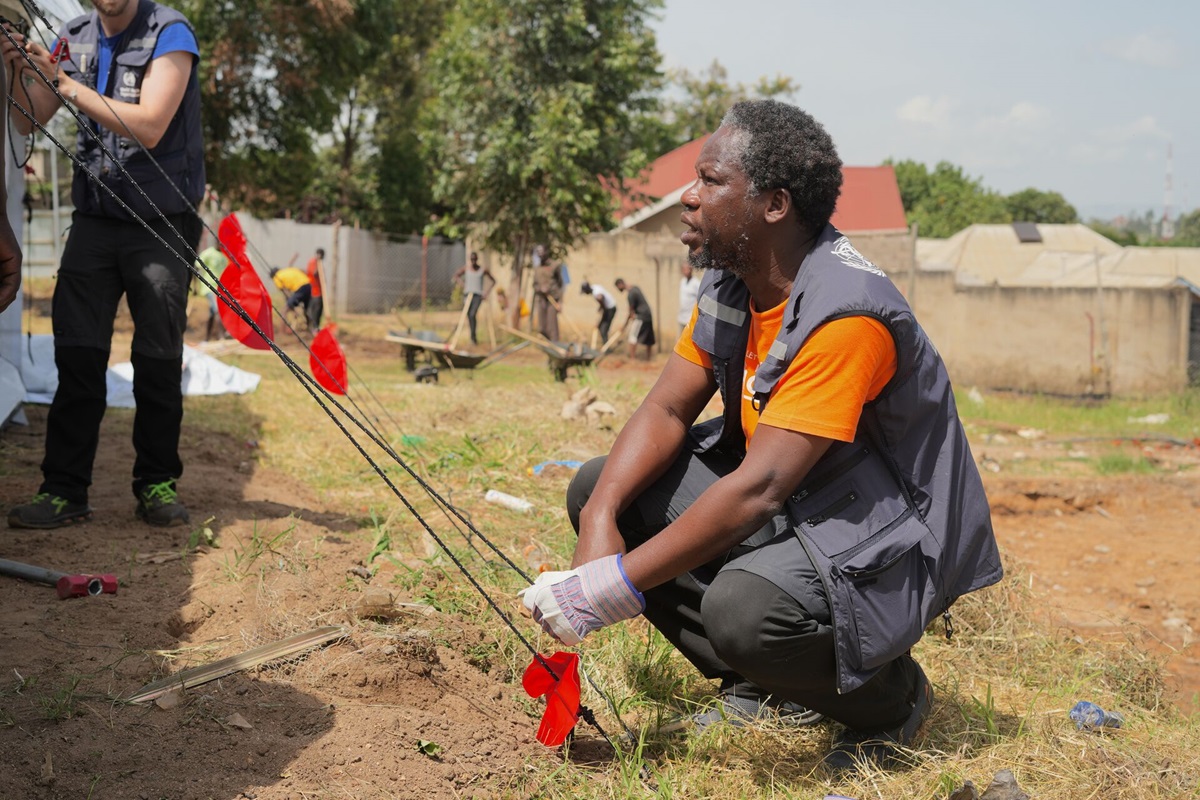
- Response: WHO convened expert advisory groups on May 28 to assess candidate vaccines and therapeutics for Bundibugyo Ebola. CDC maintaining real-time situation summaries with active outbreak monitoring. Doctors Without Borders mobilizing medical and logistical response teams across affected regions.

Vaccine & Treatment Pipeline
-
Next-Generation COVID-19 Vaccines (FDA Advisory Panel): On May 29, FDA advisers overwhelmingly recommended that manufacturers update 2026-2027 COVID vaccine formulations to target the dominant XFG variant. Recommendation based on current circulating strain analysis, though some FDA staff noted limited data on emerging variants.
-
Phase 1/2 NextGen COVID Vaccine Trial in Africa: A noteworthy phase 1/2 trial launched in African populations examining next-generation COVID vaccines, representing a shift toward global vaccine equity and localized trial design.
-
Bundibugyo Ebola Candidate Vaccines and Therapeutics: WHO expert groups convened May 28 assessed multiple vaccine candidates and therapeutics—both experimental and established—for potential emergency deployment against Bundibugyo Ebola. Specific candidates remain under evaluation pending clinical readiness data.
Expert Analysis
The acceleration of the Bundibugyo Ebola outbreak has prompted urgent reassessment of global pandemic preparedness frameworks. The WHO's May 28 convening of expert advisory groups signals recognition that candidate vaccines and therapeutics must move from laboratory evaluation to potential field deployment within compressed timelines. The scale and speed of early outbreak cases—observed during the initial weeks—has alarmed epidemiologists tracking transmission dynamics. The declaration of a Public Health Emergency of International Concern underscores the severity health officials attribute to containment risks.
Concurrently, FDA vaccine advisory discussions in late May reflect ongoing COVID-19 surveillance and the need for adaptive vaccine strategies as viral evolution continues. The recommendation to shift 2026-2027 formulations toward the XFG variant addresses current epidemiology, though advisers themselves acknowledged gaps in real-time variant sequencing data. This tension—between rapid vaccine updates and limited variant surveillance—mirrors broader challenges in pandemic response infrastructure, where speed and evidence must be balanced under conditions of uncertainty.
Global Health Security
U.S. Airport Screening Expansion: The CDC and Department of Homeland Security coordinated enhanced passenger screening at major U.S. airports (JFK, ATL, IAH, DCA) beginning May 26, requiring mandatory screening for all travelers from DRC, Uganda, and South Sudan. This represents an escalation of border health measures and signals confidence in risk assessment protocols even as outbreak dynamics remain fluid.
CDC Respiratory Disease Surveillance Continuity: The CDC announced May 26 that respiratory illness surveillance will not receive additional routine outbreak update summaries during the remainder of the 2025-2026 respiratory season, shifting monitoring to event-driven alerts. This reflects both improved baseline tracking systems and resource reallocation toward emerging threats like Ebola.
What to Watch Next
-
Vaccine Efficacy Data for Bundibugyo Candidates: Clinical readiness assessments by WHO expert groups will determine which candidate vaccines advance to expanded access protocols or emergency authorization pathways within the next 2–4 weeks. Efficacy data from prior Ebola vaccine programs may accelerate decisions, but Bundibugyo strain-specific immunogenicity remains uncertain.
-
XFG COVID-19 Variant Surveillance: FDA vaccine recommendations hinge on sustained real-time sequencing of circulating SARS-CoV-2 strains. Emergence of new variants competing with XFG dominance could shift 2026-2027 vaccine composition again, requiring regulatory flexibility and rapid manufacturing pivots.
-
International Case Importation Risk: While enhanced U.S. airport screening reduces but does not eliminate importation risk, sustained monitoring of cases in travelers and secondary transmission chains in non-endemic regions will test contact tracing capacity and biosafety protocols in hospital systems globally.
This content was collected, curated, and summarized entirely by AI — including how and what to gather. It may contain inaccuracies. Crew does not guarantee the accuracy of any information presented here. Always verify facts on your own before acting on them. Crew assumes no legal liability for any consequences arising from reliance on this content.
Powered by
