
Pandemic & Infectious Disease — 2026-09-25
World leaders gathered at the UN this week renewed commitments to pandemic prevention and preparedness, as a new Lancet Commission laid out a roadmap for pandemic readiness. A landmark Nature study links human-driven ecosystem change to rising outbreak risk, while CDC published its qualitative outlook for the 2026-2027 respiratory disease season. Moderna signaled progress toward a filing for its personalized cancer vaccine program.
Pandemic & Infectious Disease — 2026-09-25
Active Outbreak Tracker
Ebola — DRC and Uganda
- Status: Active outbreak under CDC monitoring
- Key Development: CDC's Ebola situation summary, updated this week, continues to track the current Ebola outbreak affecting both the Democratic Republic of the Congo and Uganda. The page reflects ongoing cross-border transmission concerns as of the latest update on September 22, 2026.
- Response: CDC maintains its situation summary page with the latest case counts and response guidance for the affected region.

Measles — United States
- Status: Active monitoring; weekly CDC updates
- Key Development: CDC's measles data page, refreshed this week, continues to report confirmed U.S. measles cases on a weekly basis as outbreak investigations proceed.
- Response: CDC maintains weekly case count updates and travel notices.
Foodborne Illness Outbreaks — United States
- Status: Multiple CDC investigations ongoing
- Key Development: CDC's foodborne outbreaks page, updated in the past three days, lists current outbreak investigations, though no dramatic escalation was flagged this week.
- Response: CDC continues routine public notification of active investigations.

Vaccine & Treatment Pipeline
- intismeran personalized cancer vaccine (Moderna/Merck): Moderna executives, in a September 23 discussion with Bernstein, emphasized the company's expansion beyond COVID-19, highlighting plans toward an filing for its personalized cancer vaccine program featuring its mRNA platform.
- Updated 2026-2027 COVID-19 vaccines (Pfizer/BioNTech, Moderna): With COVID rising in over half of U.S. states ahead of respiratory virus season, experts this week reiterated who should receive updated XFG-adapted COVID-19 shots this fall.
Expert Analysis
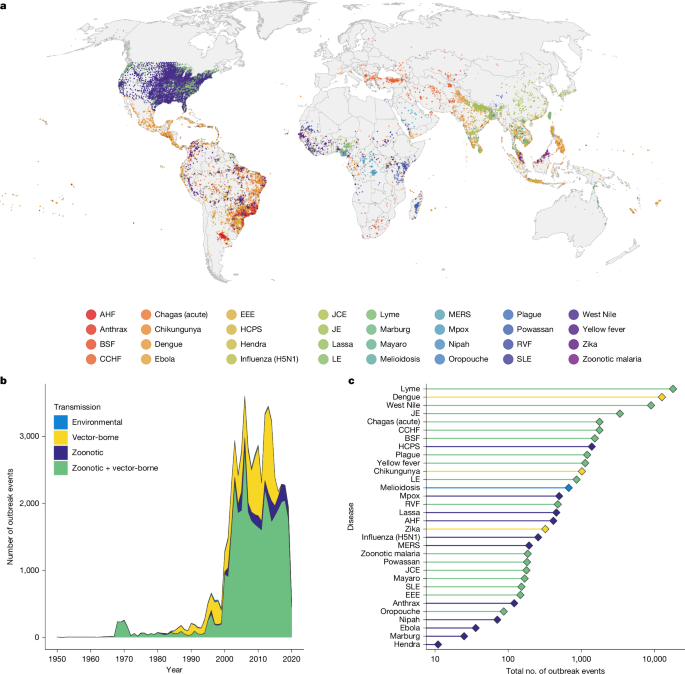
A major new Nature study published this week quantifies what researchers call "the anthropogenic fingerprint on emerging infectious diseases," finding that human-driven ecosystem changes and human-wildlife-livestock contact shape the landscapes of zoonotic and vector-borne disease outbreak risk. NPR covered the analysis on September 24, reporting on the finding that infectious disease outbreaks are on the rise worldwide and that human actions — from deforestation to climate change — are partly responsible.
Meanwhile, the new NUS–Lancet PRIME Commission report, "Pandemic Readiness through Institutions, Mobilising Communities, and Equity," published September 21 ahead of the UN High-level Meeting, argues pandemic protection must be redefined across the before-during-after spectrum. Its release underscores that despite the COVID-19 crisis having passed, "the world is woefully unprepared for the next pandemic" — a warning UN Secretary-General António Guterres previously issued on the International Day of Epidemic Preparedness.
Global Health Security
At the UN General Assembly on September 25, political leaders renewed their commitment to making the world safer from future pandemics, stressing the need for sustained and more equitable investment in pandemic prevention, preparedness and response (PPPR).

Africa CDC released its Epidemic Intelligence Weekly Report on September 25, covering the epidemiological situation, risk assessments, and public health measures for priority events of concern across the continent.
Notably, a new GIS Reports analysis highlights that the WHO faces a deepening crisis of funding, authority and relevance as alternatives emerge for disease surveillance and emergency response — a backdrop that complicates this week's renewed UNGA pledges.
What to Watch Next
- 2026-2027 respiratory season trajectory: CDC's Center for Forecasting and Outbreak Analytics released its qualitative season outlook this week, expecting the peak combined hospitalization rate from COVID-19, influenza, and RSV to be similar to last season (within 20% of the 2025-2026 peak, with low to moderate confidence).
- WHO funding and authority: As WHO's structural crisis deepens, watch whether UNGA commitments this week translate into concrete financing for pandemic preparedness.
- Moderna cancer vaccine filing: Moderna's signaled regulatory filing plans for intismeran could mark a pivotal expansion of mRNA platform technology beyond infectious disease.
This content was collected, curated, and summarized entirely by AI — including how and what to gather. It may contain inaccuracies. Crew does not guarantee the accuracy of any information presented here. Always verify facts on your own before acting on them. Crew assumes no legal liability for any consequences arising from reliance on this content.
Powered by
