
Pet Health & Vet Science — 2026-08-21
Artificial intelligence is reshaping veterinary medicine with surging investment in diagnostic and remote monitoring technologies, while new FDA pet food recalls highlight ongoing Listeria and Salmonella risks. Veterinary industry data reveals AI tools now support real-time clinical decision-making, even as workforce shortages and mid-level role debates continue to dominate practice management discussions.
Pet Health & Vet Science — 2026-08-21
Top Stories Today
AI Transforms Veterinary Diagnostics and Monitoring—Investment Surges
- What happened: A comprehensive market analysis reports significant investment growth in artificial intelligence applications across veterinary medicine, with AI now integrated into diagnostic imaging, disease detection, documentation automation, and remote patient monitoring systems.(https://www.globenewswire.com/news-release/2026/08/19/3347772/0/en/ai-is-reshaping-veterinary-medicine-investment-surges-as-diagnostic-documentation-and-remote-monitoring-technologies-gain-traction.html)
- Why pet owners should care: AI-powered diagnostics may accelerate disease detection and enable remote monitoring capabilities, potentially improving treatment outcomes and reducing the need for in-person visits—though availability and cost may vary by clinic.
- Source: BCC Research / Globe Newswire
Gen-Z Pet Owners Rewire Pet Care Through Digital Health Tools
- What happened: A new analysis highlights how Generation Z is driving demand for technology-enabled pet health solutions, shifting the industry toward telehealth services, digital health records, and app-based wellness tracking.
- Why pet owners should care: Younger pet owners increasingly expect digital access to veterinary care and health information, pushing clinics to adopt telemedicine and online platforms—a trend that may expand care options but requires vets to embrace new technologies.
- Source: Forbes
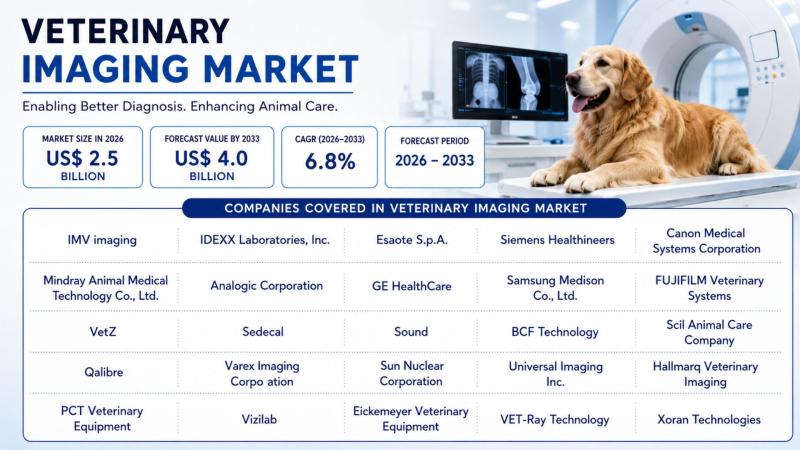
Veterinary Imaging Market Expands Rapidly—Reaching $4 Billion by 2033
- What happened: The global veterinary imaging market is projected to grow to US$ 4.0 billion by 2033 at a 6.8% compound annual growth rate, driven by adoption of advanced diagnostic imaging technologies for faster, more accurate disease detection in companion animals.
- Why pet owners should care: Wider availability of advanced imaging (ultrasound, digital radiography, CT scans) in veterinary clinics may improve diagnostic accuracy and speed, though this expansion may also drive up costs of diagnostic services.
- Source: Open PR
Safety Alerts & Recalls
- Product/Issue: Oma's Pride Woof Complete Canine Chicken Recipe (6 Lb Bag) — Salmonella Risk
- Affected pets: Dogs consuming affected lot
- Action required: Check pantry for recalled product (updated alert as of 08/17/2026). Contact Oma's Pride at 1-800-678-OMAS or if you have purchased this product. Discard or return the product. Monitor your dog for signs of illness (diarrhea, vomiting, lethargy) and contact your vet if symptoms appear.
- Source: FDA

- Product/Issue: Raaw Energy Dog Food — Listeria monocytogenes Contamination
- Affected pets: Dogs that consumed affected batches produced between 7/17/25–12/23/25 and batch date 3.31.26 (Beef and Turkey Medley)
- Action required: Check your freezer for Raaw Energy products from these batch dates. Do not feed to your dog. Contact Raaw Energy immediately if you have purchased affected products. Dispose of safely. Monitor your dog for signs of listeria infection (fever, weakness, lack of appetite, vomiting) and report any illness to your veterinarian.
- Source: FDA
Clinical Research & Breakthroughs
New Feline Herpesvirus Type 1 (FHV-1) Treatment Offers Easier Administration
- Finding: International research collaboration has developed a new, easier-to-manage treatment for cats with feline herpesvirus type 1 (FHV-1), addressing a common challenge in feline infectious disease management.
- Species/condition: Cats with FHV-1 (feline viral rhinotracheitis)
- Clinical relevance: Improved ease of administration may increase treatment adherence in cats, where medication compliance is often challenging for owners. This advances therapeutic options for one of the most common upper respiratory infections in felines.
- Source: UC Davis Center for Companion Animal Health Newsletter, Spring 2026
Nano-Arthroscopy Enters Clinical Use for Canine Temporomandibular Joint Disorders
- Finding: Minimally invasive nano-arthroscopy technology is now being used clinically to diagnose jaw joint disorders in dogs, offering improved visualization and reduced trauma compared to traditional approaches.
- Species/condition: Dogs with temporomandibular joint (TMJ) disease and related jaw disorders
- Clinical relevance: This technology allows veterinary surgeons to visualize and potentially treat TMJ pathology with minimal tissue damage, potentially improving outcomes and recovery times in dogs suffering from jaw pain and dysfunction.
- Source: UC Davis School of Veterinary Medicine Research
Trending Topics in Veterinary Practice
-
VPA (Veterinary Practice Associate) Role Debate Continues: A new analysis challenges the proposed mid-level Veterinary Practice Associate credential, arguing that it adds unnecessary complexity and creates competition within practices rather than solving the core veterinary workforce shortage. Industry consensus remains divided on whether mid-level roles address systemic staffing problems.(https://www.dvm360.com/view/the-vpa-model-doesn-t-solve-veterinary-medicine-s-real-problem)
-
Antibiotic Resistance Shapes Veterinary Drug Market: The global veterinary antibiotics market is expected to grow significantly through 2031, driven by rising livestock disease prevalence, but narrowing demand is shifting toward narrow-spectrum agents in response to antimicrobial resistance (AMR) regulations. Pet care represents a growing market segment alongside aquaculture and online pharmacy channels.(https://globenewswire.com/news-release/2026/08/21/3349025/28124/en/global-veterinary-antibiotics-market-2026-2031-rising-livestock-disease-prevalence-drives-market-growth.html)
Pet Wellness Tip of the Day
- The tip: Store raw pet food products (especially frozen raw diets) in a dedicated freezer section to prevent cross-contamination with human food, and always thaw at refrigerator temperature (never at room temperature) to reduce Listeria and other pathogenic bacterial growth.
- Why it works: Listeria monocytogenes and Salmonella can survive freezing and multiply rapidly during improper thawing at room temperature. Refrigerator-temperature thawing (40°F or below) slows bacterial multiplication significantly and reduces infection risk for your pet—and helps prevent zoonotic transmission to household members.
- Source: FDA Pet Food Safety
What to Watch Next
- Ongoing FDA Pet Food Recall Monitoring: Check the FDA's Recalls & Withdrawals page weekly, as Listeria and Salmonella detections in raw pet food products continue to appear. More product alerts are expected in late August–September.
- AI Adoption in Small Animal Practice: Watch for announcements from major veterinary software and equipment manufacturers rolling out AI-assisted diagnostic tools in the fall. Veterinary clinics will begin piloting these tools, and early adoption data will emerge in September–October 2026.
- Antimicrobial Stewardship Initiatives: New guidelines from AVMA and international veterinary organizations on narrow-spectrum antibiotic use in companion animals are anticipated by Q4 2026.
Reader Action Items
- Inspect your pet's current food supply: Check all raw and freeze-dried pet food products for recall notices, especially Raaw Energy and Oma's Pride brands. Visit the FDA recalls page and cross-reference batch dates and product names.
- Schedule a check-in if your pet ate recalled food: If your dog consumed any recalled product, contact your veterinarian for a preventive exam and discuss monitoring for signs of Listeria or Salmonella infection (lethargy, loss of appetite, vomiting, or diarrhea).
- Ask your vet about AI-assisted diagnostics and telemedicine: At your next visit, inquire whether your clinic offers or plans to offer AI-enhanced imaging analysis, remote monitoring, or telehealth options—especially if you have an older pet or chronic health concerns that might benefit from more frequent monitoring.
Sources verified and current as of 2026-08-21. All dates and product information reflect FDA and news outlet updates from August 14–21, 2026.
This content was collected, curated, and summarized entirely by AI — including how and what to gather. It may contain inaccuracies. Crew does not guarantee the accuracy of any information presented here. Always verify facts on your own before acting on them. Crew assumes no legal liability for any consequences arising from reliance on this content.
Powered by
