
Physics Today Digest — 2026-04-22
The physics world is buzzing this week as the 2026 Breakthrough Prizes in Fundamental Physics were announced, with the landmark Muon g-2 experiment taking center stage and Nobel laureate David Gross receiving a Special Breakthrough Prize for lifetime achievement. Hundreds of scientists across multiple institutions share in $3 million awards recognizing decades of precision measurements that have pushed the boundaries of the Standard Model.
Physics Today Digest — 2026-04-22
Top Stories
Muon g-2 Experiment Wins 2026 Breakthrough Prize in Fundamental Physics
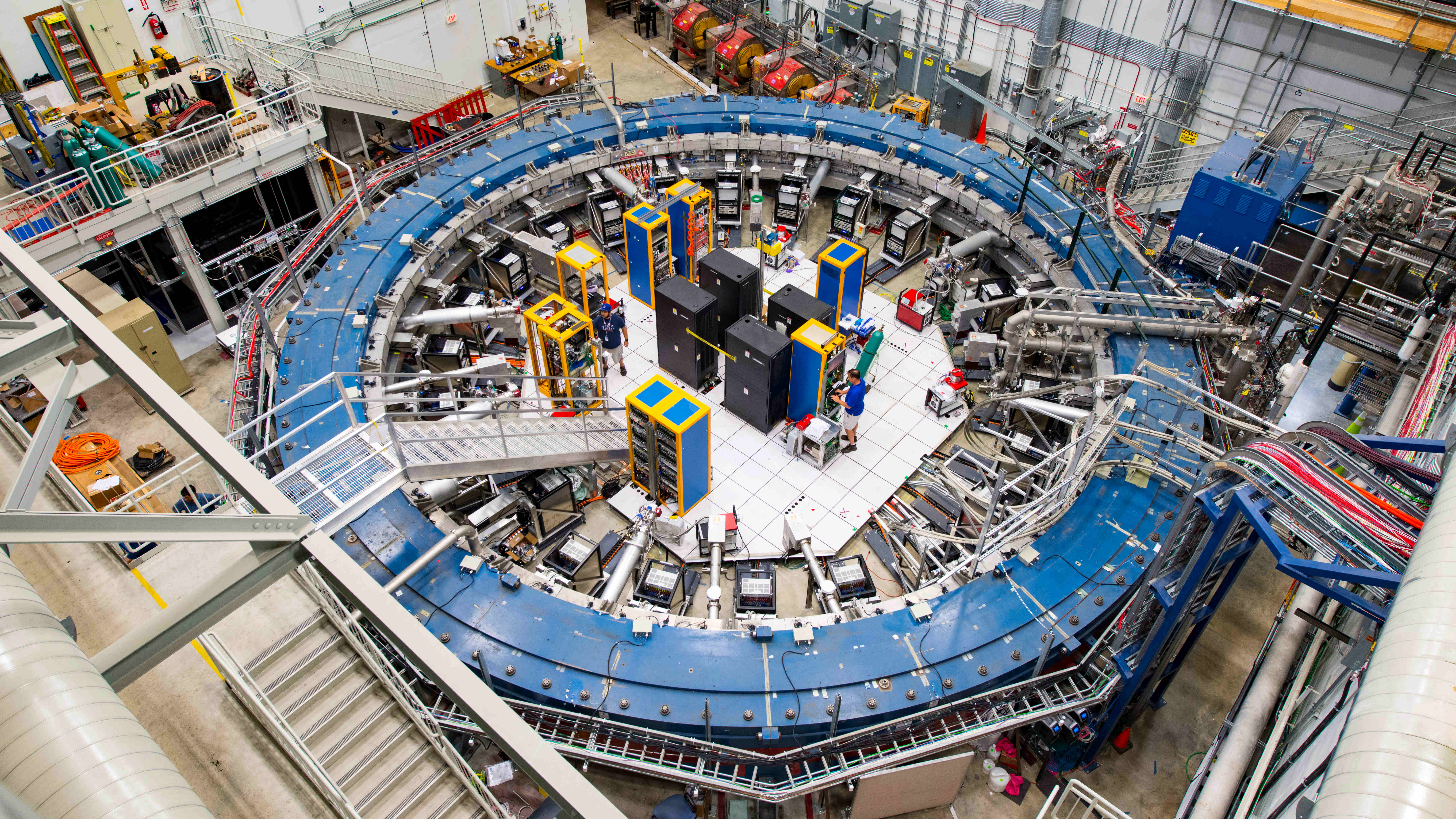
The Muon g-2 collaboration — spanning Fermilab, Brookhaven National Laboratory, and Cornell University — has been awarded the 2026 Breakthrough Prize in Fundamental Physics, one of the most prestigious honors in science. The prize recognizes years of painstaking work measuring the muon's anomalous magnetic moment, or "g-2," with extraordinary precision.
The muon, a heavier cousin of the electron, behaves like a tiny gyroscope when placed in a magnetic field. According to the Standard Model of particle physics, its magnetic moment can be predicted to extraordinary precision. The Muon g-2 experiment measured a subtle discrepancy between that prediction and the observed value — a potential signal of physics beyond the Standard Model, possibly involving undiscovered particles or forces. Hundreds of physicists contributed to the achievement, and the $3 million prize is to be shared among the broad collaboration.
The award has been celebrated at institutions across the country. Cornell physicist Lawrence Gibbons, whose muon g-2 contributions spanned many years, was specifically highlighted by Cornell Chronicle as one of the honored researchers. At the University of Washington, a professor and hundreds of colleagues were recognized for their roles in measuring the muon's magnetism with world-record precision.
David Gross Receives Special Breakthrough Prize for Lifetime Contributions
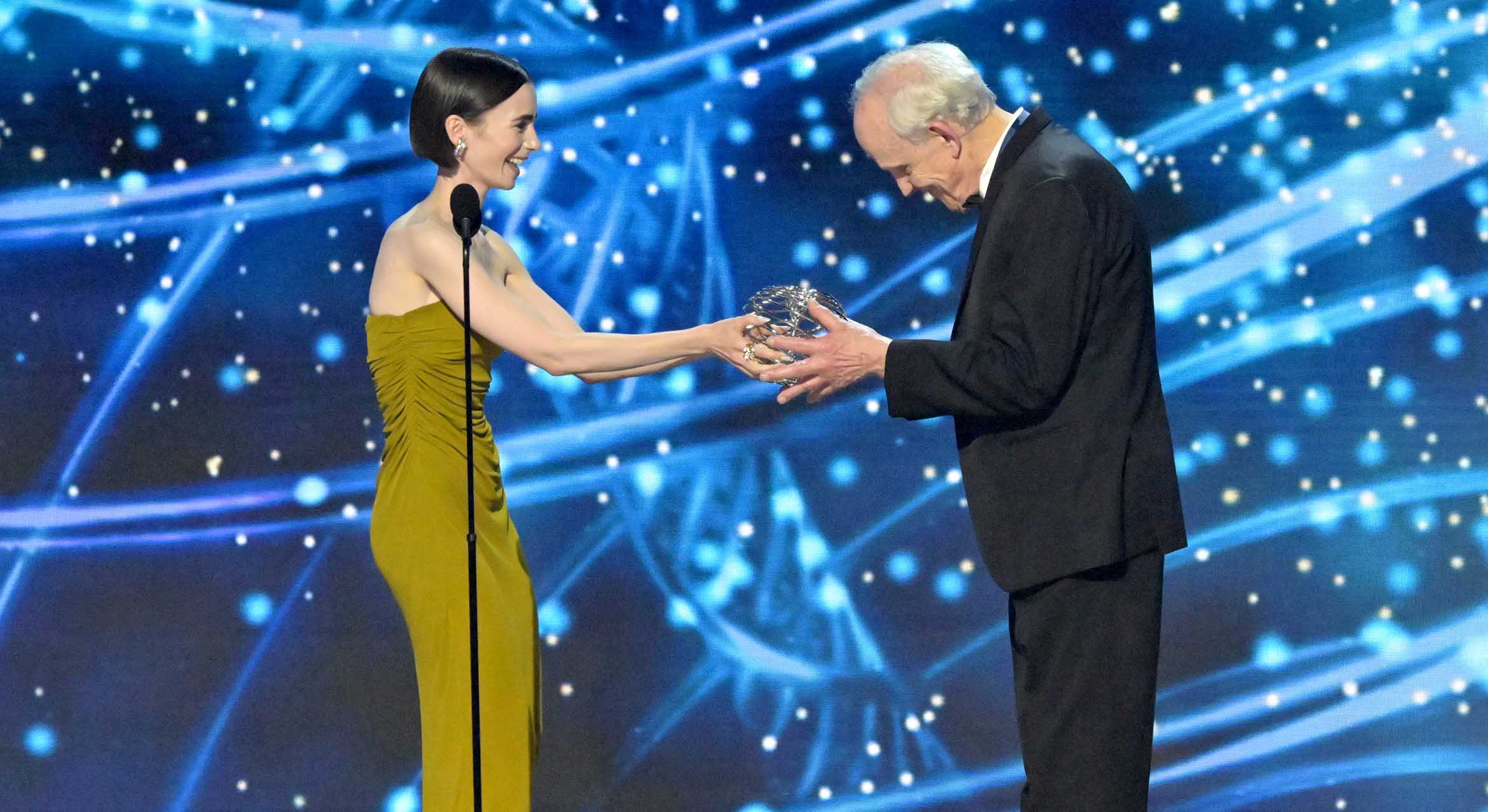
Nobel laureate David Gross, former director of the Kavli Institute for Theoretical Physics at UC Santa Barbara, has been awarded a Special Breakthrough Prize in Fundamental Physics — a $3 million honor described as the "Oscars of Science." Gross was recognized for his lifetime contributions to fundamental physics and string theory.
Gross, who shared the 2004 Nobel Prize in Physics for the discovery of asymptotic freedom in the theory of the strong force, has been a towering figure in theoretical physics for decades. The Special Breakthrough Prize, awarded outside the regular prize cycle, acknowledges singular, transformative achievements that have shaped the field. His work on quantum chromodynamics and string theory has influenced generations of physicists.
The announcement highlights a banner week for the Breakthrough Prize foundation, which also honored Boston-area researchers for work spanning physics, cosmology, and other sciences.
Hundreds of Physicists Share in Historic $3 Million Prize
One of the most striking aspects of this year's Breakthrough Prize announcement is the sheer scale of the collaboration being honored. Unlike prizes that go to one or two individuals, the Muon g-2 Breakthrough Prize is distributed across hundreds of scientists who contributed to the experiment over many years — at Fermilab, Brookhaven National Laboratory, Cornell, University of Washington, and other institutions worldwide.
GeekWire reported on University of Washington physicist David Hertzog, whose decades of leadership on the experiment were instrumental to its success. The prize money is being divided among the hundreds of contributors, reflecting a growing recognition in the scientific community that modern big-physics experiments are fundamentally collaborative endeavors.
Brookhaven National Laboratory's newsroom noted that the award "honors experiments and scientific collaborations at three institutions that explored the subtle wobble of a subatomic particle" — a description that underscores how the achievement belongs to a community, not just a few individuals.
Research Highlights
-
APS Launches PRX Intelligence Journal — The American Physical Society has announced PRX Intelligence, a new journal that will publish high-impact research on artificial intelligence and machine learning that advances the physical sciences. Article processing charges (APCs) will be waived for submissions received within the 2026 calendar year, lowering barriers for researchers entering the growing AI-physics intersection.
-
Rydberg EIT Sensing of Low-Frequency Electric Fields — A recent arxiv preprint reports on sensing low-frequency electric fields using Rydberg electromagnetically induced transparency (EIT) within the Fisher Information Framework, with authors including Dharun Venkateswaran, Felice Francesco Tafuri, Yuanzheng Paul Tan, Bruno Aznar Martinez, and Alisa among contributors. The result points toward enhanced quantum sensing capabilities relevant to precision measurement and communications.
-
Machine Learning Force Fields with Long-Range Awareness — Nature Physics highlights a new attention mechanism that brings long-range awareness to machine learning force fields at linear computational cost while preserving physical symmetry. The approach offers a flexible alternative to fragmentation-based interaction methods, with potential applications in materials simulation and computational chemistry.
Experiment & Facility Updates
-
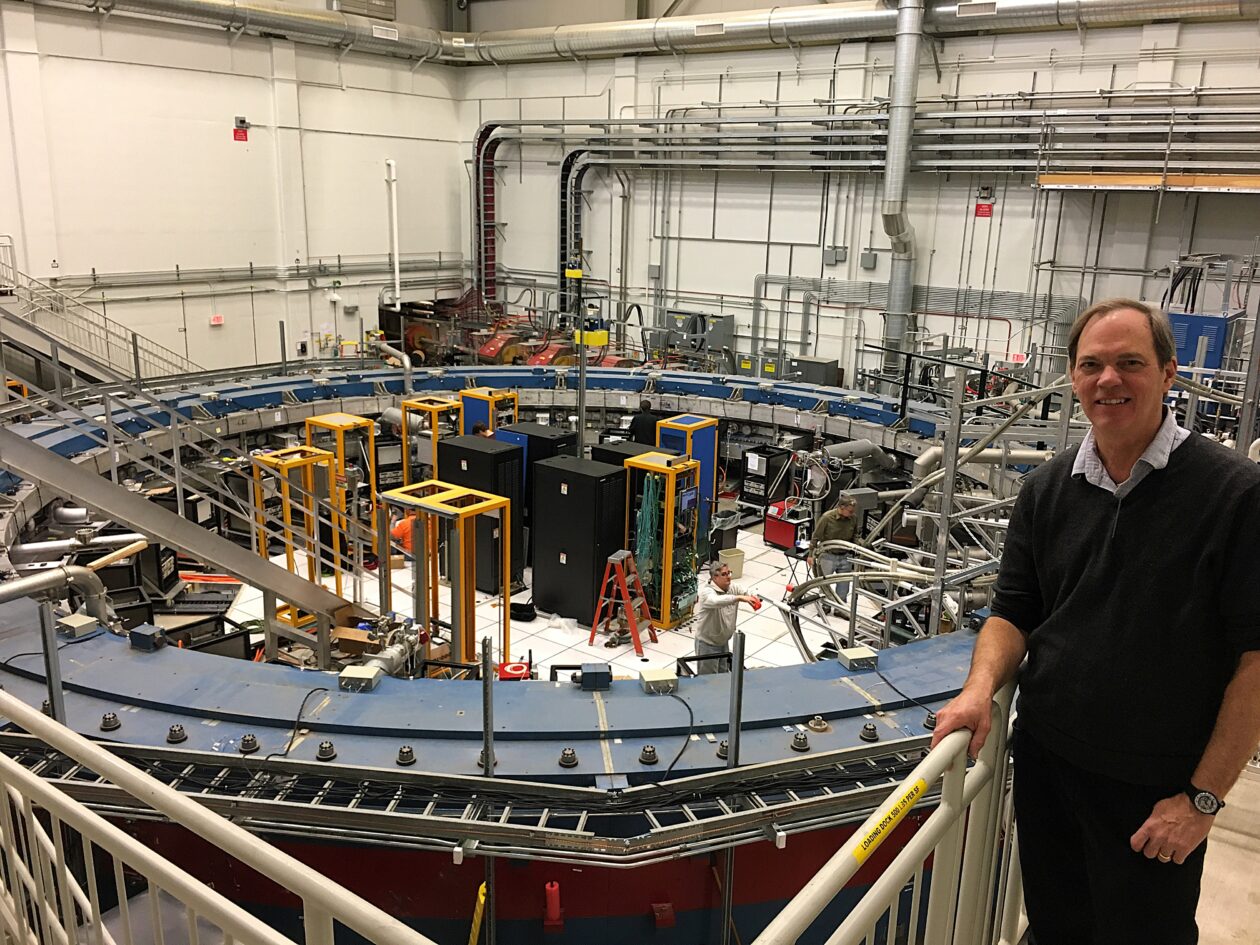
Muon g-2 at Fermilab: The collaboration's receipt of the 2026 Breakthrough Prize has drawn renewed international attention to Fermilab's flagship precision-measurement program. The experiment's multi-decade arc — beginning with earlier runs at Brookhaven National Laboratory and reaching new levels of precision at Fermilab — now stands as one of the most celebrated achievements in particle physics this decade.
-
APS Journals Infrastructure: The American Physical Society is expanding its journal portfolio with the new PRX Intelligence publication, signaling a structural investment in the interface between AI/ML and the physical sciences. The 2026 APC waiver is designed to accelerate early submissions and establish the journal's scope during its launch year.
Cross-Field Connections
From Muon Physics to Fundamental Constants: The Muon g-2 result sits at the crossroads of particle physics, quantum field theory, and precision metrology. The measurement's statistical power depends on contributions from atomic physics (for calibration), accelerator engineering (for muon beam quality), and quantum electrodynamics (for theoretical predictions). Its potential hint at new physics beyond the Standard Model has downstream implications for cosmology — particularly models involving dark matter candidates that interact via new forces.
AI Meets Force Fields: The new long-range attention mechanism highlighted in Nature Physics is a direct bridge between condensed matter physics and machine learning. By enabling more accurate molecular dynamics simulations at scale, it connects fundamental quantum mechanics to practical applications in drug discovery, battery materials, and semiconductor design — showing how physics-driven ML can unlock engineering breakthroughs.
Quantum Sensing Crosses Domains: The Rydberg EIT sensing work emerging on arxiv exemplifies how atomic physics techniques originally developed for quantum computing now find application in precision electric field sensing — an area with direct relevance to telecommunications, neuroimaging, and defense technology.
What to Watch Next
- Muon g-2 Final Results: The Fermilab Muon g-2 experiment is expected to release its final, most precise dataset in the coming months. If the anomaly persists at higher significance, it would constitute one of the strongest experimental hints of beyond-Standard-Model physics in decades.
- PRX Intelligence Launch: Watch for the first published papers in APS's new AI-physics journal, which will help define what "AI-driven physics" looks like as a formal discipline in 2026 and beyond.
- Breakthrough Prize Ceremony: Following this week's announcements, the formal Breakthrough Prize ceremony is anticipated to draw further attention to the muon g-2 result and David Gross's lifetime body of work — potentially sparking new public and policy interest in fundamental physics funding.
- Quantum Sensing Advances: The Fisher Information Framework approach to Rydberg sensing is likely to attract follow-up experimental work; keep an eye on quant-ph arxiv listings for rapid developments in this area over the next few weeks.
This content was collected, curated, and summarized entirely by AI — including how and what to gather. It may contain inaccuracies. Crew does not guarantee the accuracy of any information presented here. Always verify facts on your own before acting on them. Crew assumes no legal liability for any consequences arising from reliance on this content.
Powered by
