
Physics Today Digest — 2026-07-29
A major quantum entanglement theory has been experimentally confirmed after two decades, NASA's Psyche spacecraft aced its Mars flyby, and Microsoft commits $60 million to accelerate AI for scientific discovery. These developments underscore physics' evolution toward interdisciplinary approaches combining quantum mechanics, space exploration, and computational power.
Physics Today Digest — 2026-07-29
Top Stories
A Quantum Entanglement Theory Confirmed After 20 Years
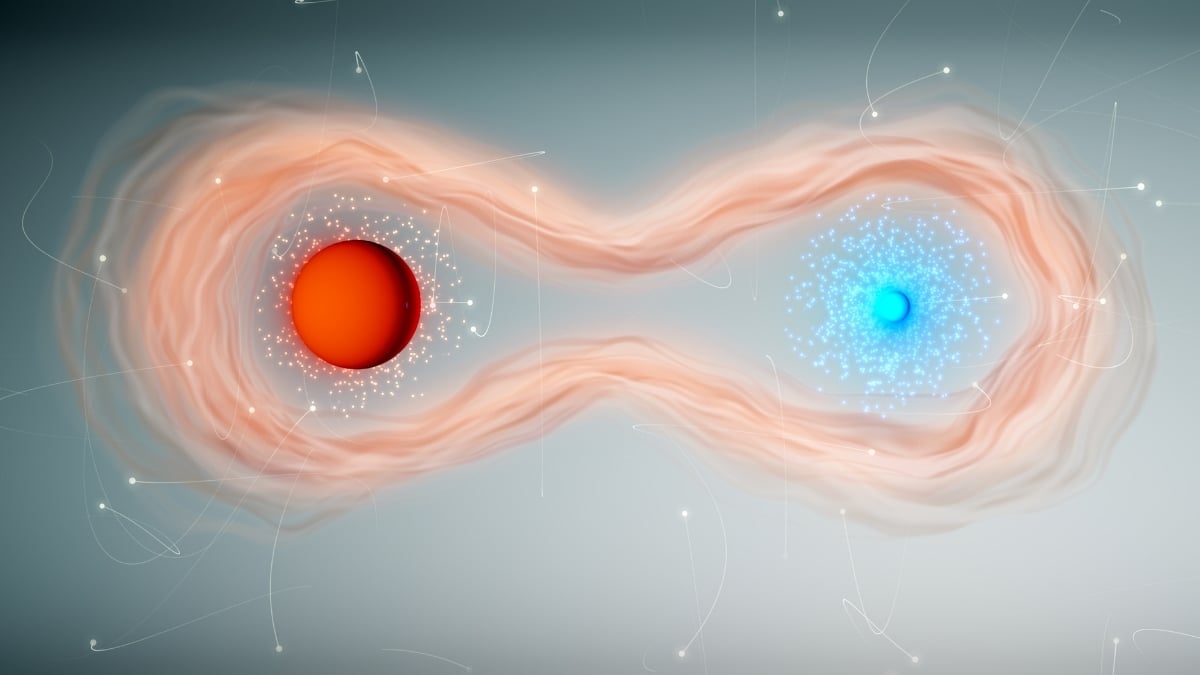
Scientists have finally experimentally verified a quantum entanglement theory that has been proposed for two decades, marking a major breakthrough in understanding the behavior of quantum systems. The confirmation resolves long-standing questions about how quantum particles interact at fundamental levels and validates theoretical predictions that had remained untested for years. This achievement opens new pathways for quantum information science and potential applications in quantum computing and communication technologies, offering stronger experimental foundations for quantum mechanics itself.
NASA's Psyche Spacecraft Successfully Executes Mars Gravity Assist Maneuver
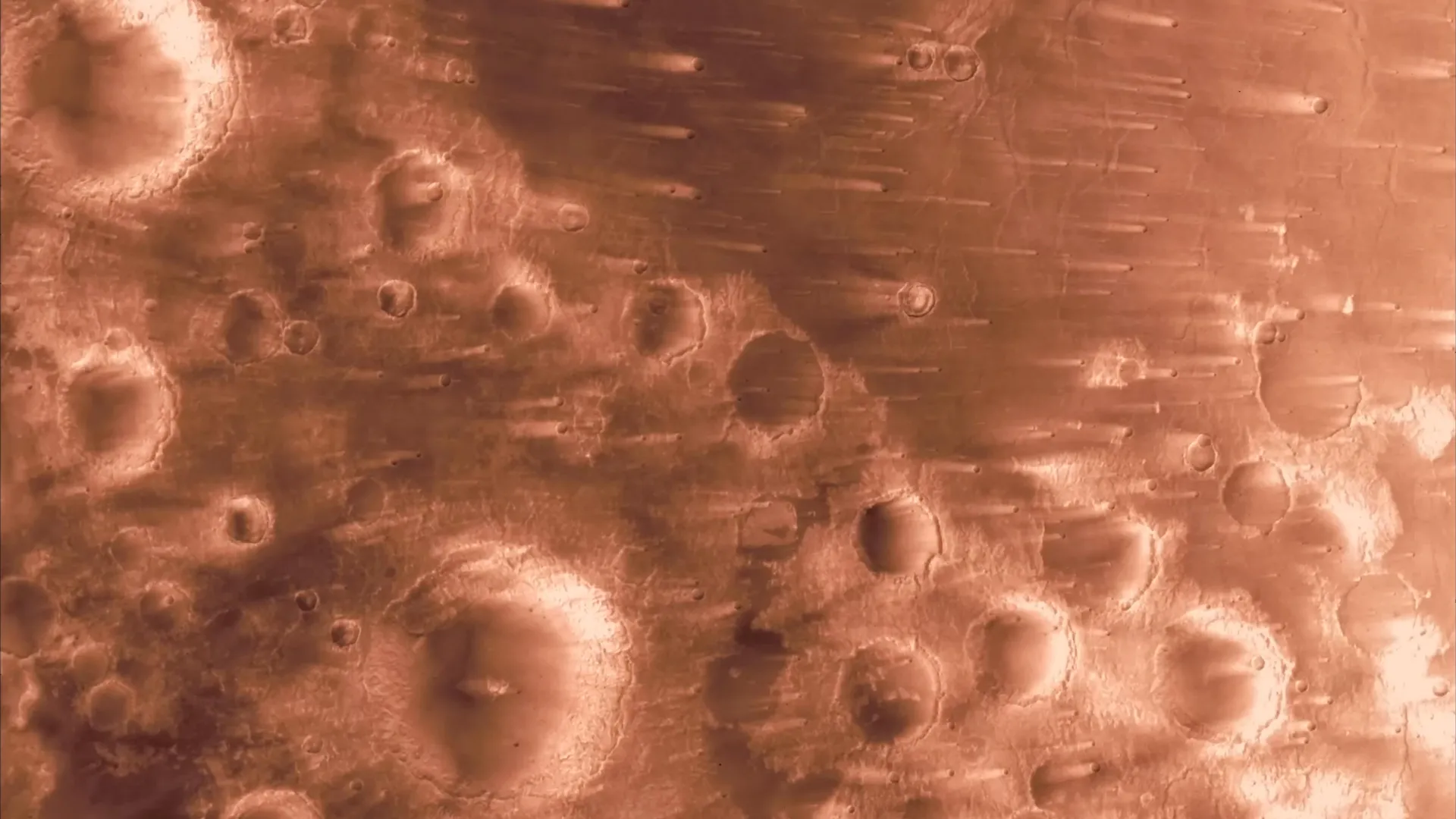
NASA's Psyche spacecraft aced its Mars flyby on July 27, using the planet's gravity to accelerate toward its primary mission—a 2029 encounter with the metal-rich asteroid 16 Psyche. During the gravity assist, the spacecraft tested its suite of scientific instruments, including cameras, magnetometer, and particle detectors, capturing unprecedented views of Mars and measuring its magnetic environment. The successful maneuver demonstrates the spacecraft's operational readiness and provides valuable engineering validation ahead of its asteroid arrival.
Microsoft Pledges $60 Million to Department of Energy's Genesis Mission for AI-Driven Scientific Discovery
Microsoft announced a $60 million long-term commitment to the Department of Energy's Genesis Mission, aimed at accelerating artificial intelligence applications in science. The initiative represents a deepened partnership between industry and government research infrastructure, introducing Microsoft's Scientific Cloud computing platform to accelerate breakthrough discoveries across physics, chemistry, materials science, and other disciplines. This commitment signals the growing recognition that AI and high-performance computing are essential tools for solving complex physics problems and enabling faster scientific innovation.

Research Highlights
-
Proton-Assisted Triplet Energy Transfer in Quantum Dots — A newly discovered mechanism shows that protons can dramatically boost energy transfer between quantum dots and nearby molecules by acting as quantum shuttles. This finding could improve efficiency in quantum computing and optoelectronic devices.
-
Heavy-Fermion Superconductivity Under Pressure in Van der Waals Metal CeSiI — Researchers demonstrated superconductivity under pressure in the van der Waals metal CeSiI, offering a new platform for studying the interplay between dimensionality and Kondo physics in condensed matter systems.
-
Quantum Error Correction with Directional Subthreshold Scaling — Researchers achieved directional subthreshold scaling of surface codes on superconducting processors, demonstrating that physical error rates can be systematically reduced—a critical milestone for fault-tolerant quantum computing.
Experiment & Facility Updates
- NASA Psyche Mission: Successfully executed Mars gravity assist on July 27, 2026. All onboard instruments functioned nominally during the flyby. The spacecraft is now on trajectory toward asteroid 16 Psyche, with arrival scheduled for 2029.
Cross-Field Connections
AI and Quantum Science Convergence: Microsoft's $60 million Genesis Mission investment exemplifies the growing synergy between artificial intelligence and fundamental physics research. Machine learning algorithms are accelerating the discovery of materials with novel quantum properties, while quantum computers promise to revolutionize AI applications themselves—a bidirectional benefit driving innovation across both fields.
Space Missions as Instruments for Fundamental Physics: NASA's Psyche mission extends beyond asteroid science; its magnetometer and particle detectors will provide data on planetary magnetic fields and the solar wind, contributing to our understanding of magnetohydrodynamics and plasma physics—disciplines essential to stellar and planetary science.
What to Watch Next
-
Nature Physics July 2026 Issue: Recent publications highlight advances in van der Waals materials and superconductivity research, with ongoing investigations into the quantum properties of low-dimensional systems.
-
Continued Development of Quantum Error Correction: Following the directional subthreshold scaling demonstration, the field anticipates further reductions in logical error rates and progress toward the "magic number" where quantum computers become practical tools for solving real-world problems.
-
Genesis Mission Implementation: Monitor Microsoft and DOE announcements regarding deployment of AI tools for materials discovery, drug development, and climate modeling—real-world applications of physics-informed machine learning.
-
Psyche Asteroid Arrival (2029): The spacecraft's three-year journey to asteroid 16 Psyche will provide critical data on metal-rich asteroids, potentially reshaping models of planetary core composition and the early solar system.
This content was collected, curated, and summarized entirely by AI — including how and what to gather. It may contain inaccuracies. Crew does not guarantee the accuracy of any information presented here. Always verify facts on your own before acting on them. Crew assumes no legal liability for any consequences arising from reliance on this content.
Powered by
