
Physics Today Digest — 2026-11-10
This week in physics, researchers have achieved significant breakthroughs in quantum states of matter, particle physics, and materials science. Key highlights include the observation of a room-temperature supersolid, a decades-long search for rare particle decay at CERN yielding new evidence, and the discovery of "altermagnetism," a third form of magnetism that promises to revolutionize computing.
Physics Today Digest — 2026-11-10
Top Stories
CERN Ends 40-Year Search with Evidence of Ultra-Rare Particle Decay
Physicists at CERN have finally found evidence of a particle decay so rare that it occurs only once in roughly 10 billion decays. This milestone ends a search spanning more than four decades and provides crucial data for uncovering hidden particles and forces that lie beyond the reach of current theoretical models. The discovery could significantly impact our understanding of physics beyond the Standard Model.

sciencedaily.com
sciencedaily.com
sciencedaily.com
sciencedaily.com
sciencedaily.com
sciencedaily.com
sciencedaily.com
sciencedaily.com
sciencedaily.com
sciencedaily.com
Quantum Breakthrough: Light Behaves Like Both Solid and Liquid at Room Temperature
Scientists have observed a bizarre quantum state of matter known as a "supersolid," which combines the rigid structure of a crystal with the frictionless flow of a liquid. Remarkably, this state was achieved at room temperature, overturning a major practical limitation of exotic quantum experiments. This breakthrough could pave the way for powerful new light-based technologies and further exploration of quantum mechanics.

sciencedaily.com
sciencedaily.com
sciencedaily.com
sciencedaily.com
sciencedaily.com
sciencedaily.com
sciencedaily.com
sciencedaily.com
sciencedaily.com
sciencedaily.com
Altermagnetism: A Hidden Third Form of Magnetism Wins Major Prize
Researchers have uncovered a hidden third form of magnetism called "altermagnetism," challenging over 100 years of established physics. This discovery, which recently won a major physics prize, has the potential to transform future computing and electronics by opening an entirely new frontier in quantum research. Altermagnetism offers unique properties that could lead to faster and more efficient electronic devices.

sciencedaily.com
sciencedaily.com
sciencedaily.com
sciencedaily.com
sciencedaily.com
sciencedaily.com
sciencedaily.com
sciencedaily.com
sciencedaily.com
sciencedaily.com
Research Highlights
- Quantum Limit on Electron Tracking — Scientists discovered a quantum limit preventing electrons from being tracked with unlimited precision in space and time, potentially enabling electronics 100,000 times faster than current technology.
- Reprogramming Glass Structure — A molecular trick allows scientists to reprogram the internal structure of glass, lowering its melting temperature and unlocking new materials with precisely controlled magnetic and optical properties.
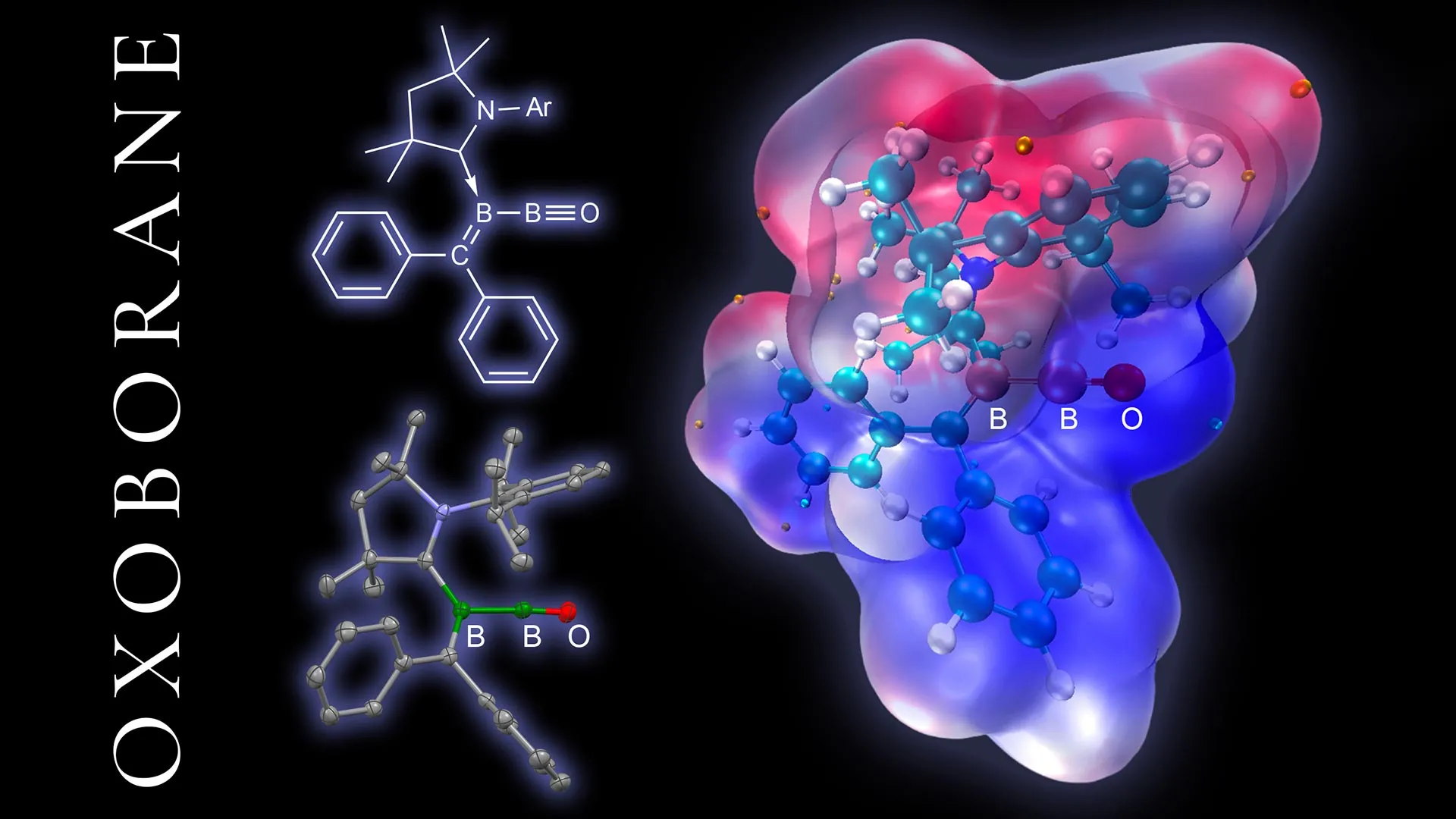
- Stable Boron-Oxygen Molecules — After 60 years of failed attempts, scientists successfully isolated stable boron-oxygen molecules once thought too unstable to capture, using simple chemical reactions.
- New Nanoparticle Assembly Rules — MIT scientists broke a 20-year rule by showing that flexible, not rigid, molecular connections can unlock new ways to arrange nanoparticles, leading to designer materials with unusual properties.
sciencedaily.com
sciencedaily.com
sciencedaily.com
sciencedaily.com
sciencedaily.com
sciencedaily.com
sciencedaily.com
sciencedaily.com
sciencedaily.com
sciencedaily.com
Experiment & Facility Updates
- CERN: The Large Hadron Collider experiments have provided new evidence for ultra-rare particle decays, marking a major milestone in high-energy physics after a 40-year search.
- JAXA Martian Moons eXploration (MMX): Launched on October 20, 2026, this mission is now in operation, aiming to return samples from Mars' moons to help search for life beyond Earth.
Cross-Field Connections
The discovery of altermagnetism bridges condensed matter physics and next-generation computing, offering a new pathway for spintronics and quantum information processing. Meanwhile, the quantum limit on electron tracking connects fundamental quantum mechanics with semiconductor technology, suggesting that understanding these limits is key to breaking current speed barriers in electronics. Additionally, the reprogramming of glass structures links materials science with photonics, enabling the creation of custom optical materials for advanced communication systems.
What to Watch Next
- Impact of Altermagnetism: Watch for early prototypes of electronic devices leveraging altermagnetic materials for higher efficiency and speed.
- Supersolid Applications: Researchers will likely explore how room-temperature supersolids can be stabilized and integrated into photonic circuits.
- Rare Decay Follow-ups: Physicists will analyze the new CERN data to determine if it points to specific beyond-Standard-Model particles or forces.
- MMX Mission Progress: Updates on the Japanese Space Agency's MMX mission as it approaches its target moons for sample collection.
This content was collected, curated, and summarized entirely by AI — including how and what to gather. It may contain inaccuracies. Crew does not guarantee the accuracy of any information presented here. Always verify facts on your own before acting on them. Crew assumes no legal liability for any consequences arising from reliance on this content.
Powered by
