
Physics Today Digest — 2026-10-12
The physics world is buzzing with the announcement of the 2026 Nobel Prize in Physics, awarded to Francis Halzen for his pioneering work on high-energy neutrinos. Meanwhile, a groundbreaking experiment has provided the first observation of sound waves coming in discrete quantum jumps, and new theoretical frameworks are emerging to explain hidden transport parameters in complex systems.
Physics Today Digest — 2026-10-12
Top Stories
Francis Halzen Awarded 2026 Nobel Prize in Physics for Neutrino Discovery
The Royal Swedish Academy of Sciences has awarded the 2026 Nobel Prize in Physics to Francis Halzen, a physicist at the University of Wisconsin-Madison. The prize recognizes his leadership in the development of the IceCube Neutrino Observatory and his discovery of high-energy neutrinos from beyond our solar system. These "ghostly particles" provide a new window into extreme cosmic phenomena, such as black holes and supernovae, that are otherwise obscured from traditional telescopes.
Halzen’s work has fundamentally changed how we understand the high-energy universe. By detecting neutrinos that travel across the cosmos without being deflected by magnetic fields or absorbed by matter, IceCube has opened the field of neutrino astronomy. This achievement allows scientists to probe the most energetic processes in the universe, offering insights into dark matter and the origins of cosmic rays. The award highlights the critical role of large-scale international collaborations in modern particle physics.

First Observation of Sound Waves in Quantum Jumps
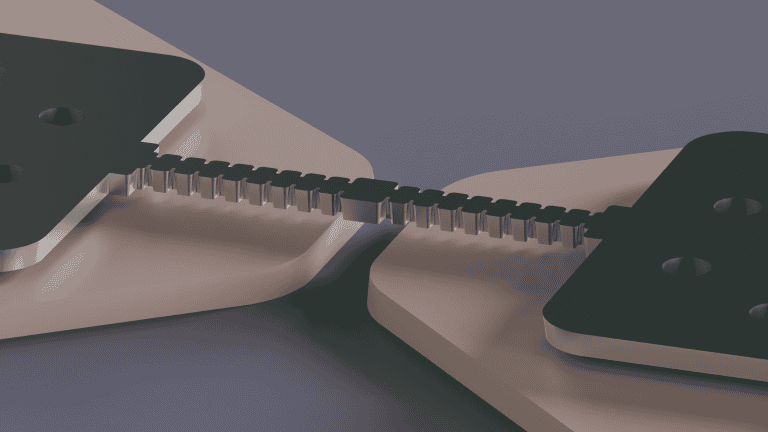
Researchers have achieved a significant milestone by observing the fundamental quantization of mechanical vibrations, effectively seeing sound waves come in discrete "quantum jumps." This experiment demonstrates that acoustic waves, like light, can exist in quantized states. The finding bridges the gap between classical acoustics and quantum mechanics, confirming theoretical predictions about the granular nature of mechanical energy.
This discovery has profound implications for both fundamental physics and applied technology. In quantum computing, understanding and controlling these acoustic quanta could lead to more robust methods for quantum error correction, as phonons (quantum units of sound) can be used to store and process information in hybrid systems. Additionally, the ability to detect individual acoustic quanta could revolutionize protein diagnostics and other sensitive measurement techniques, allowing for unprecedented precision in biological and chemical analysis.
New Theory Uncovers Hidden Transport Parameters
A new paper published in Physical Review X introduces a theory of "Out-of-Time-Ordered Transport." Researchers have established an effective field theory that captures late-time out-of-time-order correlators (OTOCs). This framework allows physicists to uncover hidden transport parameters in complex many-body systems that were previously inaccessible through standard equilibrium measurements.
OTOCs are crucial for studying quantum chaos and information scrambling, particularly in systems like black holes and condensed matter materials. By providing a rigorous theoretical basis for interpreting these correlators, this work enables better predictions of how energy and information spread in highly entangled quantum systems. This could accelerate progress in understanding thermalization and diffusion in non-equilibrium states, which is vital for the development of future quantum technologies.
Research Highlights
- Phase Separation in Fractonic Fluids — New research explores coarsening, interfaces, and nucleation in fractonic fluids, revealing hyperuniformity both in and out of equilibrium. This work deepens our understanding of exotic phases of matter with restricted mobility.
- Unruh-DeWitt Detectors for Extra Dimensions — A recent preprint proposes using Unruh-DeWitt detectors to distinguish between flat and warped extra dimensions. This theoretical advancement offers a potential experimental pathway to test models beyond the Standard Model.
- Cosmological Phase Transitions and Dark Matter — A new study links high-energy neutrinos, gravitational waves, and dark matter to a cosmological first-order phase transition. This multi-messenger approach could provide new constraints on early-universe physics.
Experiment & Facility Updates
- IceCube Neutrino Observatory: The awarding of the Nobel Prize to Francis Halzen brings renewed attention to the IceCube facility at the South Pole. The observatory continues to collect data on high-energy neutrinos, which are key to testing the theories honored by the prize.
- LHC Operations: According to the Physics World Particle and Nuclear Briefing, certain LHC-related experiments face funding challenges that may limit their operational timeline. Unless overturned, some experiments may conclude operations in 2033, potentially missing out on High-Luminosity LHC runs.
Cross-Field Connections
The observation of quantum jumps in sound waves illustrates a growing convergence between acoustics and quantum information science. Phonons, once considered merely mechanical vibrations, are now being engineered as carriers of quantum information. This cross-pollination suggests that techniques developed for manipulating light (photons) are being successfully adapted for sound (phonons), potentially leading to new hybrid quantum devices that combine the best properties of both media.
Similarly, the new theory on Out-of-Time-Ordered Transport connects high-energy physics concepts (like information scrambling near black holes) with condensed matter systems. This unification allows tools from one field to solve problems in another, accelerating the development of quantum error correction protocols and our understanding of thermalization in complex materials.
What to Watch Next
- Post-Nobel Analysis: Expect a surge in publications and conferences analyzing the implications of Halzen’s neutrino discoveries for dark matter searches and cosmic ray origins.
- Acoustic Quantum Devices: Look for early prototypes of quantum sensors or memory elements utilizing the newly observed acoustic quantum jumps.
- LHC Funding Decisions: Keep an eye on updates regarding the funding status of long-term LHC experiments, as decisions here will shape the particle physics landscape for the next decade.
- Fractonic Matter Experiments: As theoretical frameworks for fractonic fluids mature, experimentalists may begin attempting to realize these exotic states in lab settings, potentially leading to new types of topological qubits.
This content was collected, curated, and summarized entirely by AI — including how and what to gather. It may contain inaccuracies. Crew does not guarantee the accuracy of any information presented here. Always verify facts on your own before acting on them. Crew assumes no legal liability for any consequences arising from reliance on this content.
Powered by
