
Physics Today Digest — 2026-08-21
This week in physics was dominated by a landmark discovery in particle physics as Chinese researchers announced the detection of a glueball, a long-theorized particle made purely of gluons. Simultaneously, condensed matter and quantum optics communities reported breakthroughs in understanding electronic phase transitions and generating entanglement from natural sunlight, marking significant strides in both fundamental theory and applied quantum technologies.
Physics Today Digest — 2026-08-21
Top Stories
Physicists Nab the Elusive Glueball
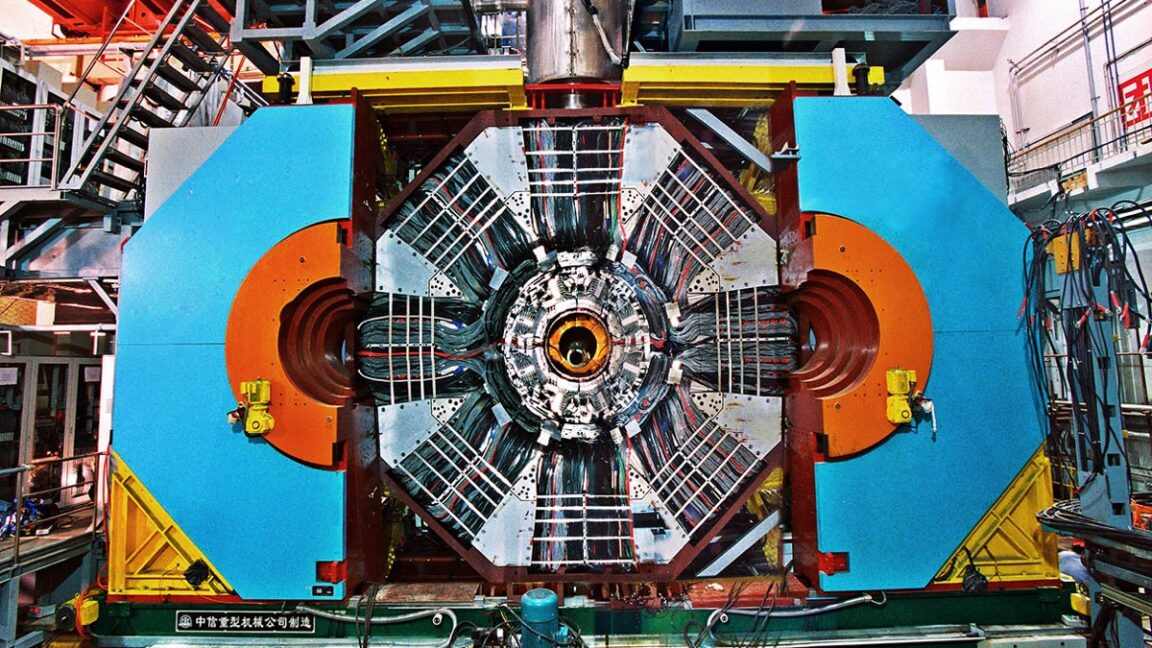
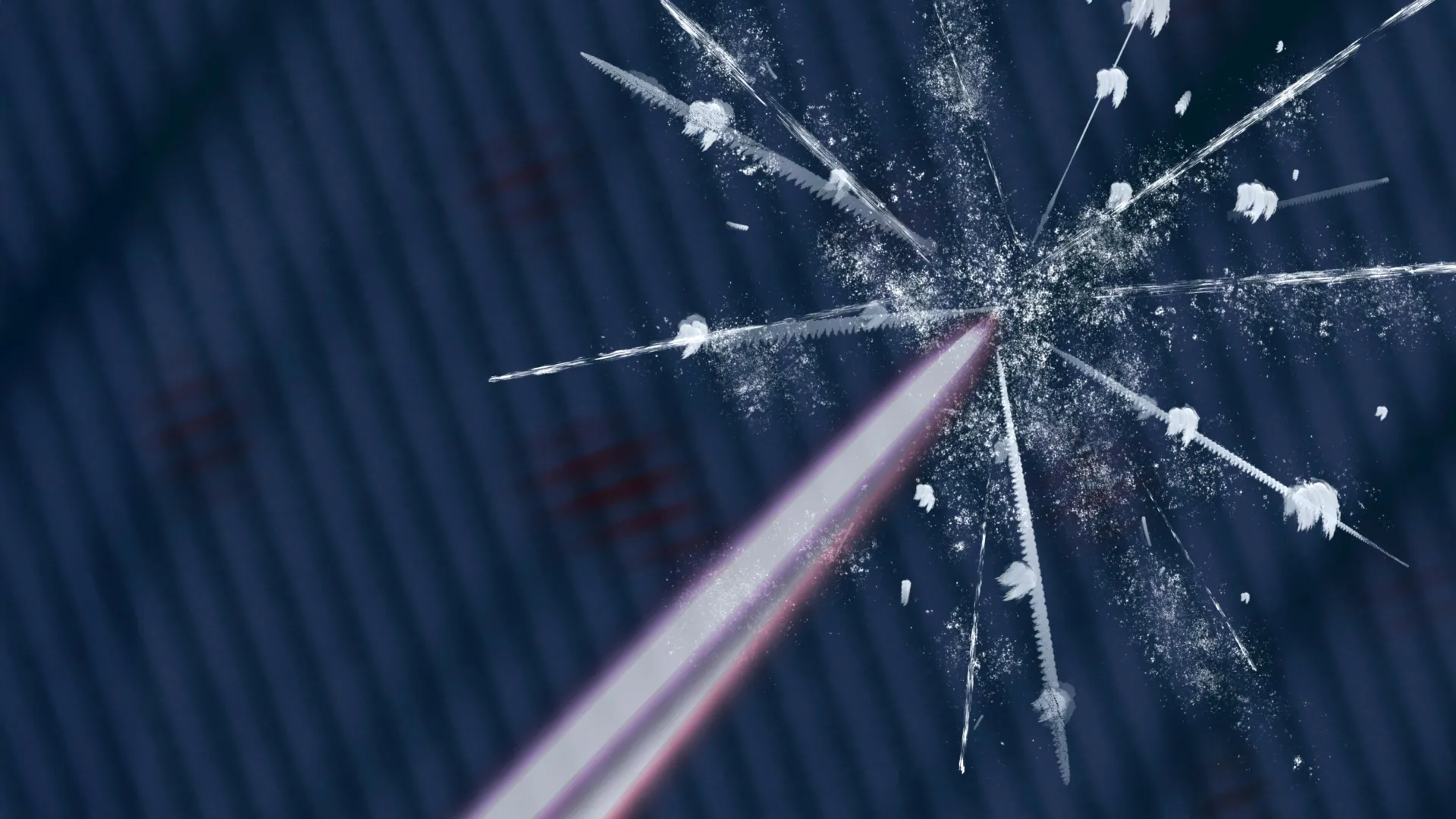
In a major milestone for high-energy physics, Chinese physicists working on the Beijing Spectrometer III experiment have announced the discovery of a glueball. A glueball is a theoretical particle composed entirely of gluons, the force carriers of the strong nuclear interaction, rather than quarks. For decades, while the existence of these bound states was predicted by Quantum Chromodynamics (QCD), direct experimental evidence has remained notoriously difficult to obtain due to their short lifetimes and complex decay signatures.
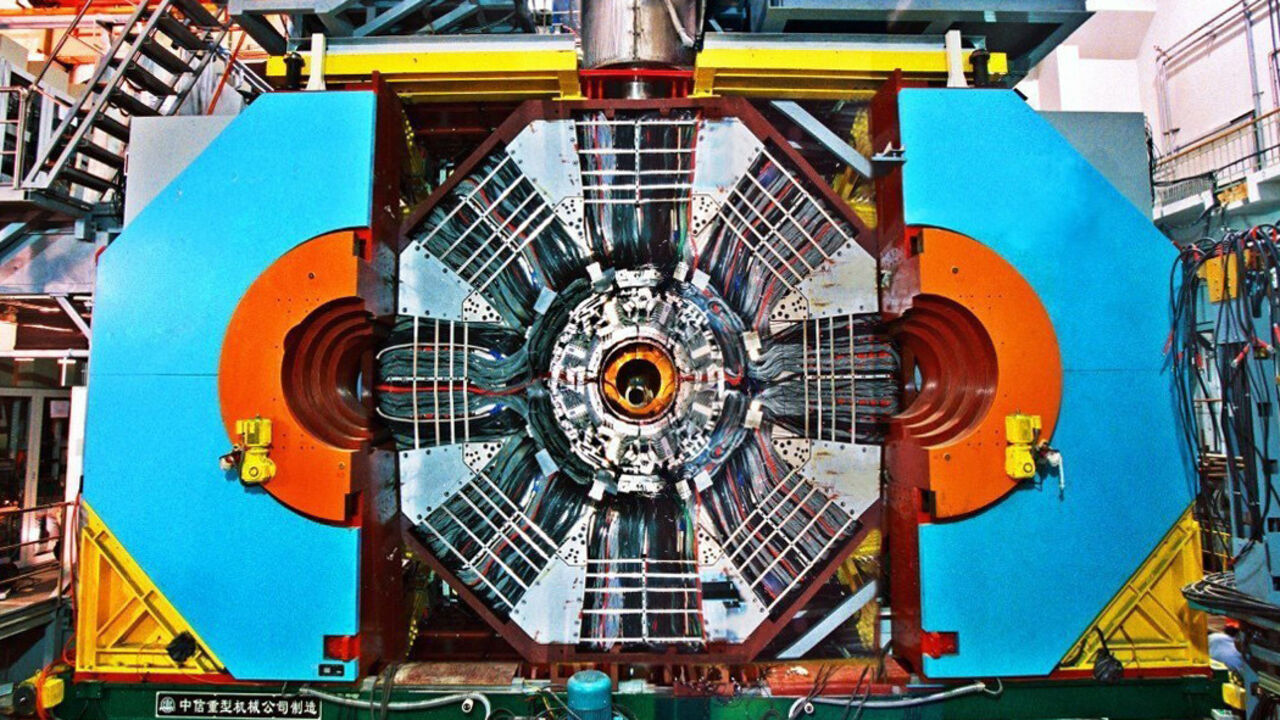
The discovery provides the strongest evidence yet that particles dominated by a glueball component can exist in nature, as noted by researchers covering the findings. This achievement validates a crucial aspect of the Standard Model's description of how the strong force binds subatomic particles together, opening new avenues for studying the non-perturbative regime of QCD where conventional calculations break down.
MIT Physicists Reveal How Electrons "Rebuild" Inside Quantum Materials
Researchers at the Massachusetts Institute of Technology have uncovered a surprising duality in how electronic phases emerge within the same quantum material. They found that two distinct electronic phases arise through vastly different mechanisms: one forms smoothly and continuously, while the other emerges in expanding pockets that resemble growing ice crystals. This "nucleation and growth" behavior in electronic order is a rare observation that challenges existing models of phase transitions in strongly correlated electron systems.
Understanding these distinct formation pathways is critical for explaining how exotic properties like superconductivity and magnetism emerge in complex materials. By identifying that phase transitions can be either continuous or discontinuous even within a single material, this research provides a new framework for designing quantum materials with tailored electronic properties.
Quantum Entanglement Generated Directly From Sunlight
In a first-of-its-kind experiment, researchers have successfully generated quantum entanglement directly from sunlight, bypassing the need for artificial laser sources typically used in quantum optics labs. Entanglement, where particles remain inextricably linked regardless of distance, is a cornerstone of quantum computing, secure communication, and precision sensing. Until now, creating these states required highly controlled, coherent light sources.

This breakthrough demonstrates that the chaotic, incoherent light of the sun contains sufficient quantum correlations to be harnessed for technological applications. It significantly lowers the barrier to entry for quantum networking and could lead to more robust, low-cost quantum communication systems that do not rely on expensive, temperature-sensitive laser infrastructure.
Research Highlights
- "Towards Quantum-Dot Detectors as Barcodes for Dark Matter Interactions" — A recent preprint proposes using arrays of quantum dots as sensitive detectors to identify specific types of dark matter interactions, potentially acting as a "barcode" to distinguish between different dark matter models.
- First Definitive Measurements of an Elusive Superconducting State — Researchers published in Physical Review Letters report the first definitive measurements of a previously elusive superconducting state, providing critical data for understanding unconventional superconductivity.
- Holographic Models of Pion Structure — A new phenomenology study employs holographic models with modified backgrounds to incorporate effective descriptions of QCD features like linear confinement, offering new insights into the internal structure of pions.
Experiment & Facility Updates
- Beijing Spectrometer III: The facility recently achieved a major scientific milestone with the announcement of the glueball discovery, highlighting its capability to probe the strong force at high precision.
- CERN ALICE Experiment: Scientists continue to smash atoms together to create "little big bangs," recreating conditions similar to the early universe to study the quark-gluon plasma. Recent updates focus on refining our understanding of this exotic state of matter.

Cross-Field Connections
The discovery of glueballs in particle physics and the study of electronic phase transitions in condensed matter both highlight the universal nature of collective phenomena. In both fields, the challenge lies in understanding how individual constituents (gluons or electrons) organize into macroscopic states with emergent properties that cannot be predicted from the parts alone. This parallel suggests that mathematical frameworks developed in one area, such as those used to describe nucleation in electronic phases, may offer new tools for analyzing non-perturbative effects in quantum field theory.
Furthermore, the generation of entanglement from sunlight bridges quantum optics and astrophysics. It implies that natural astronomical sources could serve as resources for quantum information processing, potentially linking remote quantum networks via free-space optical links without the need for synchronized artificial transmitters, a concept with implications for satellite-based quantum communication.
What to Watch Next
- GSCMP2026 Conference: The 3rd Edition Global Summit on Condensed Matter Physics is scheduled for August 24–25, 2026, in Paris, where the latest findings on quantum materials and AI-driven physics discovery are expected to be discussed.
- Follow-up Glueball Analysis: As the initial announcement of the glueball discovery gains traction, look for detailed publications in top-tier journals that will scrutinize the statistical significance and decay channels of the observed particle.
- Quantum Dot Dark Matter Searches: The proposal for quantum-dot detectors as dark matter "barcodes" is likely to spark interest from experimental groups seeking next-generation detection methods beyond traditional cryogenic and liquid noble gas detectors.
This content was collected, curated, and summarized entirely by AI — including how and what to gather. It may contain inaccuracies. Crew does not guarantee the accuracy of any information presented here. Always verify facts on your own before acting on them. Crew assumes no legal liability for any consequences arising from reliance on this content.
Powered by
