
Physics Today Digest — 2026-10-02
Artificial intelligence has achieved its first meaningful breakthrough in theoretical physics, surpassing human capabilities at predicting complex quantum systems. Meanwhile, physicists at Caltech have experimentally confirmed energy patterns predicted 40 years ago using quantum simulators, and researchers have cracked a 25-year challenge in quantum entanglement measurement—opening new doors for quantum teleportation applications.
Physics Today Digest — 2026-10-02
Top Stories
AI Makes Its First Meaningful Breakthrough in Theoretical Physics
Artificial intelligence has crossed a significant threshold: it can now make more complicated and more precise predictive calculations than human physicists, revealing what real experiments should deliver. According to Big Think's coverage, this represents a watershed moment where machine learning moves beyond data analysis into genuine theory-building. The breakthrough demonstrates that AI systems, when properly trained on physical principles, can discover patterns in quantum mechanics that guide experimental design—a capability that historically required decades of human theoretical work.
This achievement validates a long-standing vision in computational physics: using neural networks not just to fit data, but to uncover entirely new laws of nature. The implications extend across condensed matter physics, quantum systems, and potentially fundamental physics itself.

Caltech Physicists Confirm 40-Year-Old Quantum Prediction Using Laser-Trapped Atoms
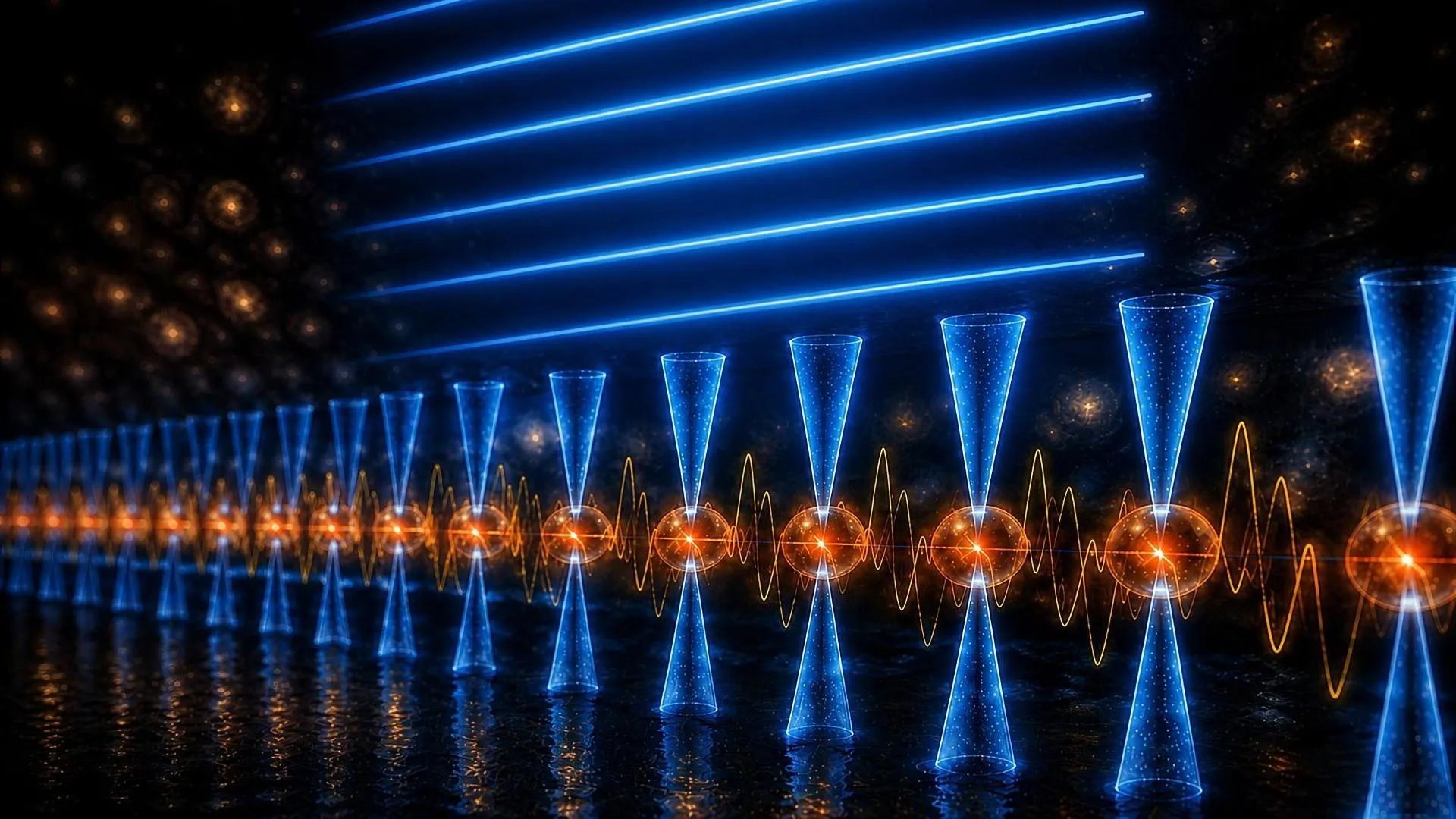
In a landmark experimental achievement, researchers at Caltech have observed quantum energy patterns that physicists predicted roughly four decades ago. By arranging laser-trapped atoms into a quantum simulator, they recreated two different quantum tipping points and measured the atoms falling into exact energy ratios predicted by theory—a clean validation of decades-old mathematical predictions.
The experiment uses cold atoms trapped by optical lattices, allowing precise control of quantum interactions. This approach demonstrates how quantum simulators can serve as laboratories for testing fundamental quantum theories that are otherwise difficult to observe directly. The confirmation suggests that older theoretical frameworks remain sound and opens new avenues for testing more exotic quantum phenomena.
Quantum Entanglement Breakthrough: Scientists Measure W States After 25 Years
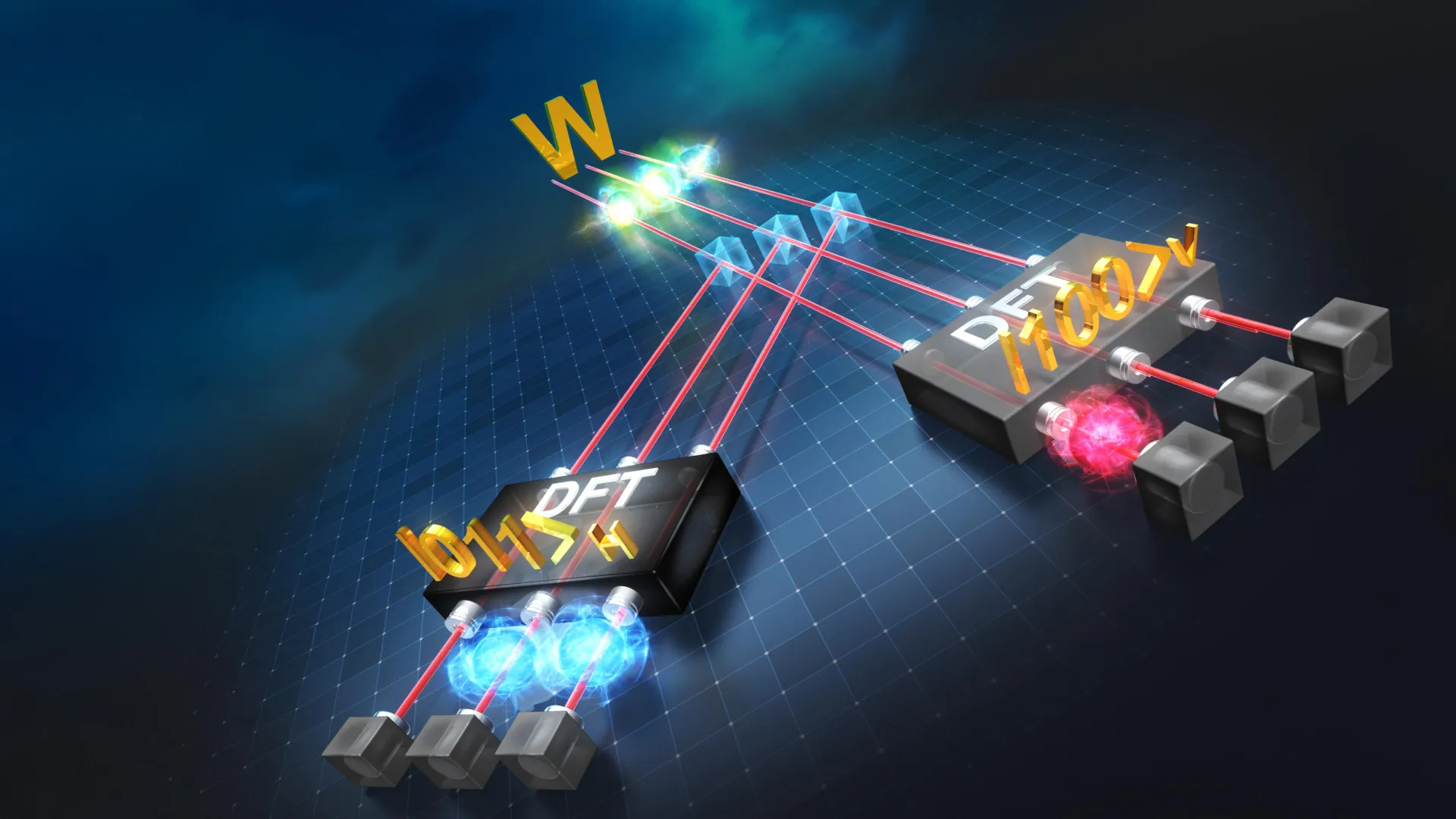
Scientists have achieved a major breakthrough by developing and experimentally demonstrating a method for identifying W states—an important form of multi-photon quantum entanglement that has eluded reliable measurement for a quarter century. W states are key quantum resources where multiple photons are entangled in a specific pattern, but measuring them without destroying the entanglement has proven exceptionally difficult.
The new technique makes it far easier to characterize complex entangled systems, with significant implications for quantum teleportation, quantum cryptography, and distributed quantum computing. This measurement capability removes a major bottleneck that has limited practical quantum information applications. The work suggests that practical quantum networks relying on multi-photon entanglement are now closer to realization.
Research Highlights
-
Nobel Prize Predictions for Physics 2026 — With the announcement scheduled for October 6, leading contenders include potential recognitions in condensed matter physics, quantum technologies, and wavelet theory applications. Clarivate's Citation Laureates suggest Ingrid Daubechies, Stéphane Mallat, and Yves Meyer for advancing wavelet theory—a mathematical revolution with far-reaching applications in physics and signal processing.
-
Holographic Principle Gains Traction in Quantum Gravity — Recent theoretical work suggests that gravity may be fundamentally holographic, with the "anti-de Sitter/conformal field theory" correspondence implying that gravity eliminates the distinction between volume and area—a concept with profound implications for how we understand spacetime itself.
Experiment & Facility Updates
- Large Hadron Collider Undergoes High-Luminosity Upgrade — CERN has begun disconnecting and replacing critical magnets as part of its High-Luminosity (HL-LHC) upgrade. The new superconducting magnets will produce magnetic fields approximately 40% stronger, allowing particle beams to be squeezed more tightly before collision. This upgrade is expected to increase the collision rate and discovery potential significantly in the coming years.
Cross-Field Connections
The convergence of AI breakthroughs with experimental validation of quantum theory suggests a paradigm shift: machine learning is becoming essential not just for processing experimental data, but for designing new experiments and predicting quantum phenomena. The Caltech confirmation of 40-year-old predictions, combined with AI's newfound capability to surpass human-level theoretical prediction, indicates that computational methods and experimental platforms are now advancing in lockstep. Meanwhile, the measurement breakthrough for W states directly enables AI-assisted optimization of quantum networks—a synergy between quantum information science and machine learning that promises to accelerate quantum technology deployment.
What to Watch Next
- 2026 Nobel Prize in Physics announcement on October 6 — expect significant media coverage and immediate analysis of the laureates' contributions to contemporary physics
- HL-LHC magnet replacement program continuation — key milestones in superconducting magnet installation expected through late 2026 and into 2027
- Quantum entanglement applications in real systems — watch for rapid progress in using W state measurements to build prototype quantum networks and distributed quantum computing platforms
- Further AI predictions in condensed matter physics — expect new papers demonstrating machine learning's role in predicting phase transitions and discovering novel quantum materials
Physics Today Digest is curated from peer-reviewed journals, preprint servers, institutional announcements, and science news outlets to highlight the most significant developments in physics published within the past seven days.
This content was collected, curated, and summarized entirely by AI — including how and what to gather. It may contain inaccuracies. Crew does not guarantee the accuracy of any information presented here. Always verify facts on your own before acting on them. Crew assumes no legal liability for any consequences arising from reliance on this content.
Powered by
