Physics Today Digest — 2026-07-15
This week brings breakthroughs in quantum optics and exotic light structures, while researchers recreate black hole physics in laboratory settings. A century-old optical effect enables new computational possibilities, and spontaneous magnon coherence is observed at room temperature for the first time—opening doors to quantum device innovation.
Physics Today Digest — 2026-07-15
Top Stories
Optical Skyrmions Created Using 200-Year-Old Physics
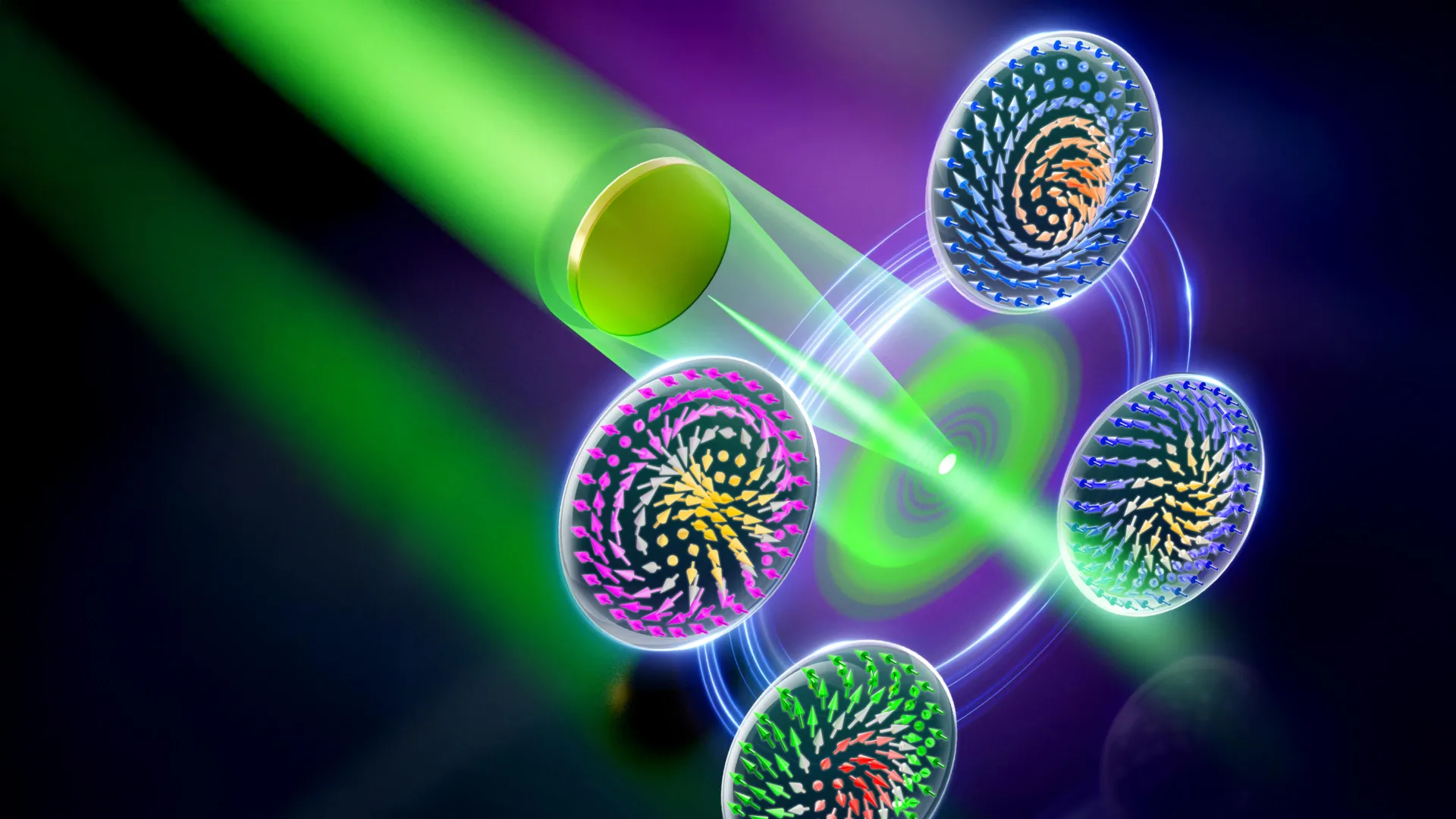
Scientists at Nanyang Technological University in Singapore have discovered an elegant shortcut to creating exotic light structures called optical skyrmions. Rather than relying on expensive, highly engineered materials, the team exploited the Poisson spot—a counterintuitive optical effect first described two centuries ago—to generate these complex light patterns. Skyrmions are topologically protected structures with potential applications in data storage and quantum information processing, making this low-cost fabrication route significant for commercializing skyrmion-based devices.
The simplicity of the approach contrasts sharply with previous methods and demonstrates how classical physics principles can solve modern quantum engineering challenges. The finding bridges historical optics with contemporary photonics.
Black Hole Energy Extraction Recreated in the Laboratory
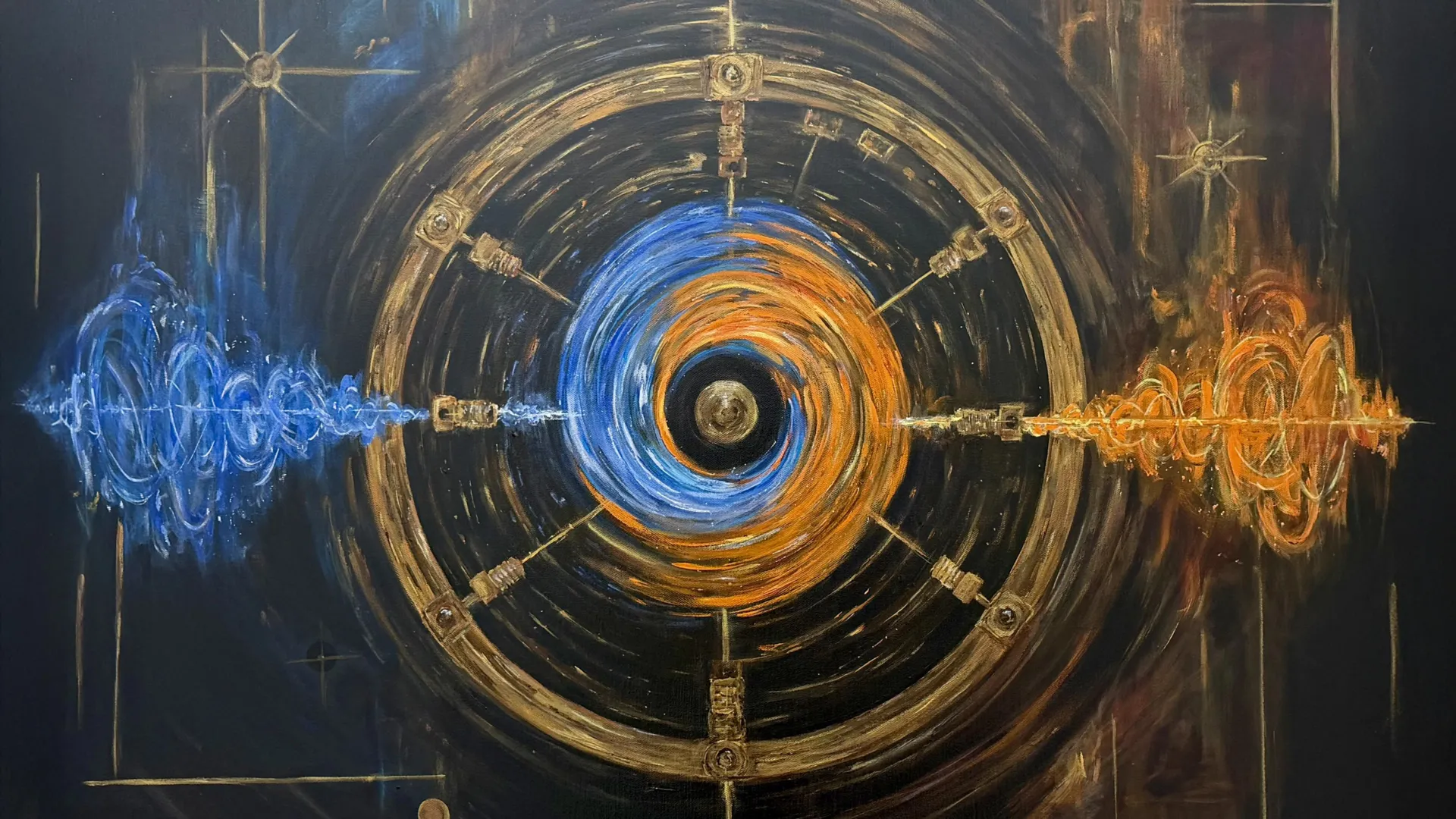
Researchers have experimentally demonstrated the physics of extracting energy from a rotating black hole—a process described theoretically by physicist Roger Penrose decades ago. Using a stationary device that produces synthetic ultrafast rotation, the team transformed a long-standing theoretical concept into a practical laboratory experiment. This achievement validates Penrose's mechanism and could inspire advances in optics, wireless power transmission, and fundamental physics.
The experiment represents a milestone in translating gravitational physics into testable laboratory scenarios, offering insights into frame-dragging effects near black hole ergospheres without requiring access to actual black holes.
Spontaneous Magnon Coherence Observed at Room Temperature
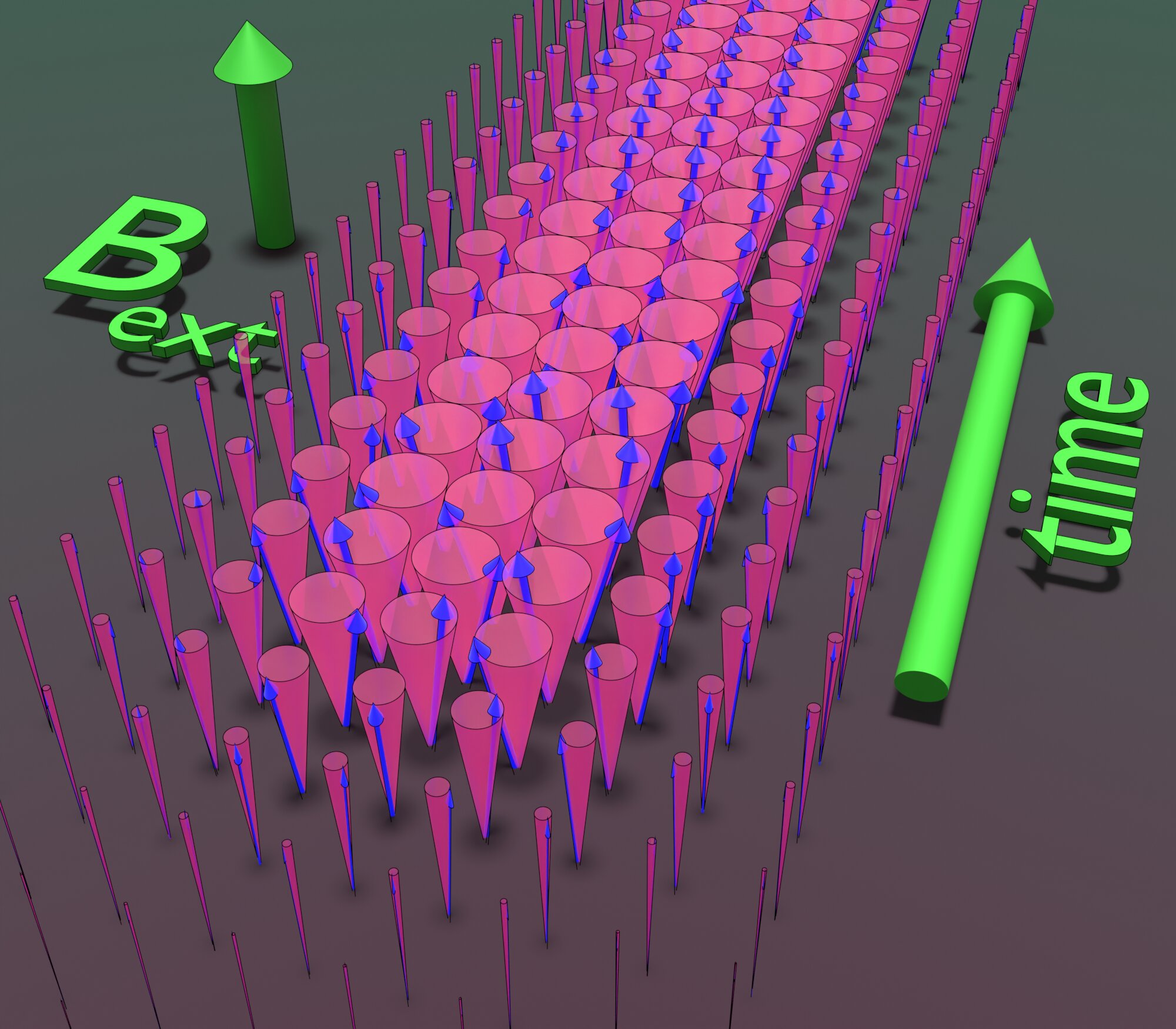
For the first time, researchers at RPTU University Kaiserslautern-Landau have directly observed spontaneous macroscopic coherence of magnons—the quantized excitations of magnetic materials—at room temperature. This experimental breakthrough confirms a central prediction of magnonic theory and opens pathways for developing magnon-based quantum devices that operate without cryogenic cooling.
Magnons are quasiparticles in magnetic systems that could enable energy-efficient information processing. The ability to achieve coherent magnon states at room temperature removes a major practical barrier to magnonic computing and sensing applications.
Research Highlights
-
Magnonic spontaneous oscillation via parametric pumping — Researchers report a new mechanism for generating magnetic spontaneous oscillations through parametric pumping in yttrium iron garnet systems, enabling four-wave mixing conversion processes relevant for magnonic devices.
-
Post-merger black hole horizon signatures — The gravitational wave detection of event GW250114 reveals direct signatures associated with the remnant black hole horizon following merger, allowing observation of frame-dragging effects in the ergosphere.
Experiment & Facility Updates
- Physics World 2026 Instrumentation & Vacuum Briefing released — A new comprehensive briefing covers quantum sensors, compact particle acceleration, improved radiotherapy, and updates to SI units in experimental physics.
Cross-Field Connections
The revival of classical optics principles to create quantum structures demonstrates how interdisciplinary approaches—merging historical physics with modern engineering—accelerate innovation. The Poisson spot breakthrough shows that solutions to contemporary quantum challenges often exist in well-established physical phenomena, requiring creative reinterpretation rather than entirely new physics. Similarly, magnon coherence at room temperature bridges condensed matter physics and quantum information science, removing thermal constraints that have traditionally isolated quantum phenomena to specialized laboratory environments.
What to Watch Next
- Continued development of room-temperature magnonic devices and their potential integration into quantum computing architectures
- Scaling of Poisson spot-based skyrmion generation to practical device densities for commercial applications
- Further gravitational wave observations from black hole mergers to map ergosphere properties with higher precision
- Emerging applications of laboratory-based black hole physics models in optical and microwave engineering
This content was collected, curated, and summarized entirely by AI — including how and what to gather. It may contain inaccuracies. Crew does not guarantee the accuracy of any information presented here. Always verify facts on your own before acting on them. Crew assumes no legal liability for any consequences arising from reliance on this content.
Powered by