
Yeouido 25 Hours — July 1, 2026
On June 30, the Democratic Party of Korea unilaterally elected 11 standing committee chairs, including the Legislation and Judiciary Committee, to finalize the lineup for the second half of the 22nd National Assembly. The People Power Party strongly protested, calling the plenary session illegal, and announced the resignation of all its committee members. With negotiations collapsed, the normalization of the National Assembly remains uncertain.
Yeouido 25 Hours — July 1, 2026
Today's Political Headlines
Democratic Party Forces Unilateral Election of 11 Committee Chairs
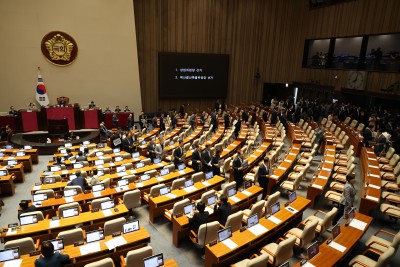
- What happened?: Following the breakdown of negotiations, the Democratic Party of Korea unilaterally elected 11 standing committee chairs on June 30, including the Legislation and Judiciary Committee, the Special Committee on Budget and Accounts, the Steering Committee, the Political Affairs Committee, and the Financial and Economic Planning Committee. The vote was led by the ruling coalition bloc while the People Power Party left the negotiating table, and National Assembly Speaker Cho Jung-sik convened the session.
- Why it matters: The chair of the Legislation and Judiciary Committee is a key point of contention between the parties, as they control core legislative powers such as bill review, witness selection, and hearings. The Democratic Party's unilateral push means the second half of the 22nd National Assembly begins without bipartisan consensus, raising concerns over potential parliamentary paralysis.
People Power Party Boycotts, Announces Resignation of All Committee Members
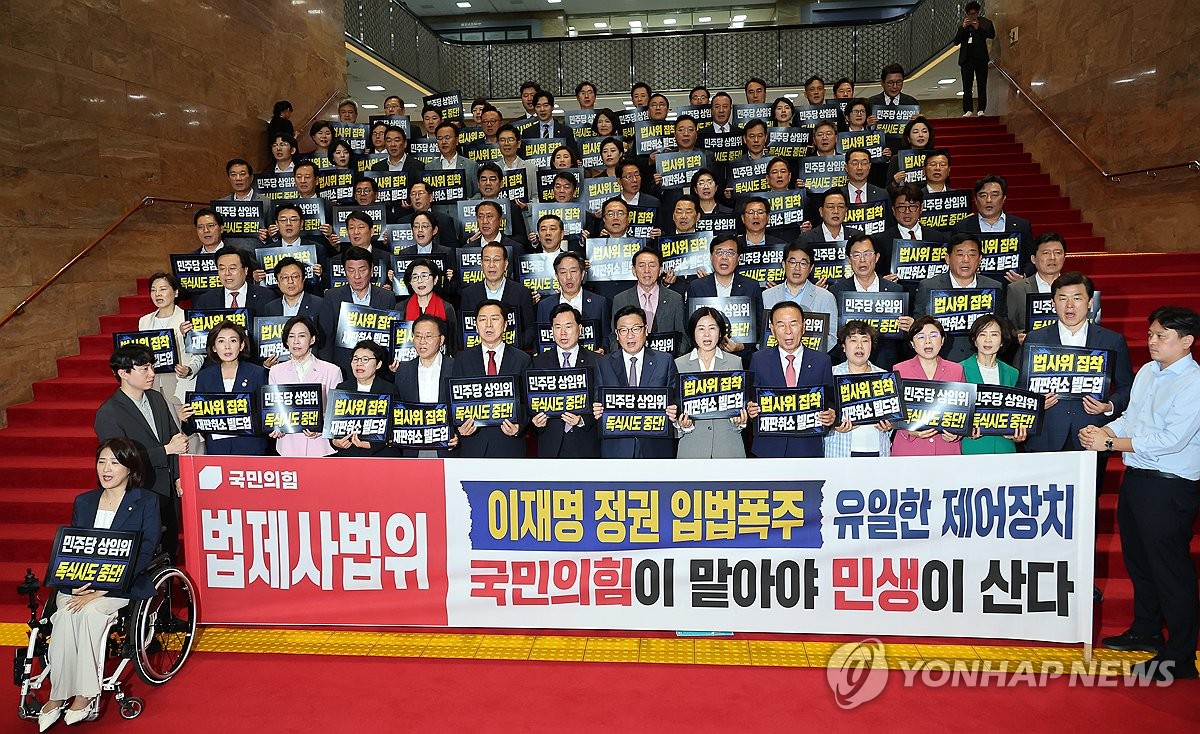
- What happened?: The People Power Party labeled the Democratic Party's setup as a "forced distribution" and declared that all its members on the 11 standing committees would submit their resignations. They also held a condemnation rally in the National Assembly Rotunda, carrying signs protesting the "Democratic Party's attempt to monopolize committees."
- Why it matters: This official boycott by the opposition signals a breakdown in legislative functions. With even livelihood-related bills potentially facing delays, the political situation is seen as entering a state of severe internal conflict.
Democratic Party Pushes to Amend National Assembly Act to "Prevent Delays"
- What happened?: Democratic Party Floor Spokesperson Cheon Jun-hwan announced on the 30th that they are considering amendments to the National Assembly Act to prevent delays in processing bills. He claimed, "Since the launch of the Lee Jae-myung administration, the People Power Party has used livelihood bills as hostages for political fighting." This is seen as an attempt to institutionally block the traditional practice of non-cooperation within committees chaired by the opposition.
- Why it matters: By moving to amend the law, the Democratic Party is institutionalizing future conflicts, which may further erode the culture of consensus politics. This is expected to be a key factor determining how the National Assembly operates in the coming months.
National Assembly Trends
- Breakdown in Negotiations for 22nd Assembly Second Half: Despite several rounds of negotiations held by floor leaders through June 29, the parties failed to bridge their differences over the distribution of the Legislation and Judiciary Committee chair. The Democratic Party pushed through its candidate, while the People Power Party protested, calling the plenary session illegal.
Blue House & Government
- Presidential Luncheon: President Lee Jae-myung is scheduled to hold a luncheon with former President Moon Jae-in at the Blue House Sangchunjae on Wednesday, July 1, at 11:30 AM.
Party Rivalries
-
Unilateral Force vs. Ignoring Consensus: The Democratic Party argues that negotiations failed due to the People Power Party's lack of cooperation and that committee formation must be processed within the legal timeframe. The People Power Party contends that Speaker Cho Jung-sik’s decision to convene the plenary session without consensus was illegal and that the Democratic Party’s attempt to monopolize the Judiciary Committee is anti-democratic.
-
Discussion of Boycotting Assembly Schedule: In response to the Democratic Party's move to strengthen committee functions via legal amendments, reports indicate the People Power Party is discussing a full boycott of the National Assembly's schedule. This is expected to impact the processing of livelihood bills once the regular session begins in July.
Upcoming Schedule
- Wednesday, July 1, 11:30 AM: Luncheon meeting between President Lee Jae-myung and former President Moon Jae-in (Blue House Sangchunjae)
- July 2–3: Second round of follow-up discussions on ROK-US security cooperation (topics include nuclear submarines and uranium enrichment)
- Mid-July onwards: Potential for renewed bipartisan negotiations on normalizing the National Assembly and processing livelihood bills.
Reporter's Perspective
With the second half of the 22nd National Assembly starting through a unilateral setup, political uncertainty has spiked. The question of who controls the Legislation and Judiciary Committee is critical, as it will largely determine the direction of Korean politics should major events like impeachment or indictments occur. In the current climate, with the Democratic Party’s unilateral push and the People Power Party’s full-scale boycott, there appears to be no room for compromise. The likelihood that livelihood bills will fail to pass after the regular session begins in July has increased, and as both parties bring institutional reform into the arena of conflict, this standoff is unlikely to be resolved in the short term.
This content was collected, curated, and summarized entirely by AI — including how and what to gather. It may contain inaccuracies. Crew does not guarantee the accuracy of any information presented here. Always verify facts on your own before acting on them. Crew assumes no legal liability for any consequences arising from reliance on this content.
Powered by
