
여야 책임 공방 격화, 지방선거 한 달 앞 정국 팽팽
With just over a month until the June 3 local elections, the Democratic Party and the People Power Party are locked in intense blame-shifting over the failed constitutional amendment while pursuing sharply different electoral strategies. After a constitutional reform bill—featuring martial law safeguards and references to the May 18 Democratic Uprising and Busan Democratic Uprising—collapsed due to lack of quorum when the People Power Party boycotted the vote, both parties are now battling over multiple issues including real estate sentiment and a special prosecution law on fabricated charges. The Democratic Party is simultaneously running its leadership primary and adopting pop song campaign tracks, as the entire political sphere accelerates into local election mode.
Today's Political Briefing — May 10, 2026
Top 3 Issues of the Day
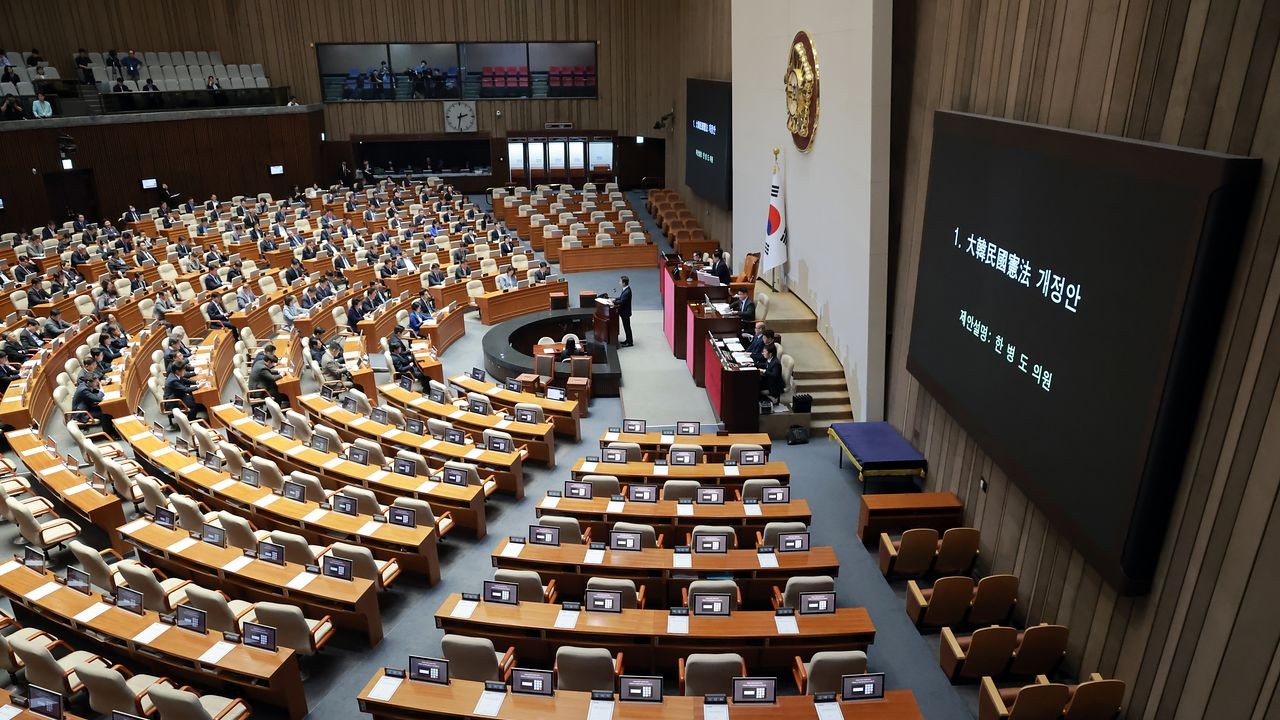
1. Constitutional Amendment Vote Fails — Blame-Shifting Between Parties Intensifies
- What happened: On May 7, a constitutional amendment bill featuring mandatory National Assembly approval before martial law declaration and constitutional preamble language honoring the May 18 Democratic Uprising and Busan Democratic Uprising was submitted to the plenary session but failed to achieve quorum (two-thirds of seated members). The People Power Party and Reform Party abstained from voting, causing the vote to collapse and the amendment to fail. National Assembly Speaker Woo Won-shik called it "a historic starting point opening the door to constitutional revision for the first time in 39 years since 1987," but the amendment ultimately went nowhere.
- Background and context: The amendment was jointly promoted by Speaker Woo and six opposition parties—the Democratic Party, Cho Kuk Innovation Party, Progressive Party, Reform Party, Social Democratic Party, and Basic Income Party. Following the December 3 martial law crisis, the opposition-led coalition drafted the amendment to strengthen martial law controls, but the People Power Party decided on party-line opposition, calling it "unilateral constitutional revision without bipartisan agreement." The Reform Party also boycotted, effectively collapsing the six-party joint promotion framework.
- Reactions from each side: Ruling party (People Power Party): blamed Speaker Woo and the Democratic Party for "submitting and promoting the amendment without bipartisan consensus." Opposition (Democratic Party): strongly criticized the People Power Party's boycott, arguing that martial law safeguards are urgent after the December 3 crisis. Government and presidential office: no official statement.
- Impact: With the first constitutional revision attempt since 1987 ending in failed voting, the 39-year opportunity for reform has effectively vanished. Both parties are expected to wage a frame-battle over blame as they head toward the June 3 local elections. -, [KBS News — ], [SBS News — ]
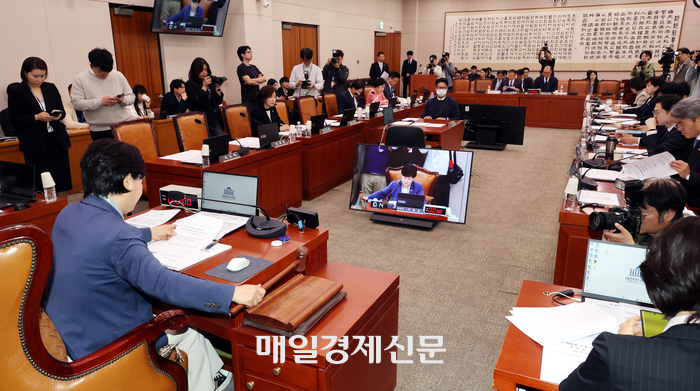
2. Parties Clash Over Fabricated Charges Special Prosecution Bill — Democrats Push "Investigate Prosecution Crimes," Power Party Counters "Self-Serving Withdrawal of Charges"
- What happened: On May 6, the National Assembly's Legislation and Judiciary Committee witnessed a head-on collision over the so-called "fabricated charges special prosecution bill." The Democratic Party argued for "withdrawal of charges for victims and investigation of prosecution crimes," while the People Power Party strongly opposed, saying "the opposition is using self-serving charge withdrawal to whitewash the former president."
- Background and context: As investigations and trials related to the December 3 martial law continue, the ruling party (Democratic Party) is pushing for withdrawal of charges and special prosecution investigations for individuals it claims were improperly indicted during the martial law period. The committee also processed the "Colonial-Era Asset Recovery Act" the same day.
- Reactions from each side: Ruling party (Democratic Party): emphasized that special prosecution legislation is necessary to remedy martial law victims and investigate prosecution misconduct. Opposition (People Power Party): characterized the bill as a politically motivated attack designed to create grounds for exoneration of former President Yoon Suk Yeol. Government and presidential office: no official statement.
- Impact: The fabricated charges special prosecution controversy, intertwined with martial law responsibility disputes ahead of the local elections, is expected to further amplify ruling-opposition conflict over priority bills in the judiciary committee.
3. Democratic Party's Local Election Strategy — Campaign Pop Songs and Leadership Primary Running in Parallel
- What happened: The Democratic Party adopted pop hits as campaign songs for the June 3 local elections, including "Festival" (Eom Jung-hwa), "Pure Love" (Coyote), "Boy Next Door" (Boom), and "It's Real" (Young-tak). A World Cup campaign song (Klon) was also selected to tie in with the 2026 North/Central America World Cup. Simultaneously, a party leadership primary is underway, with candidate Han Joon-ho and others pledging to inherit pragmatic policies from the Lee Jae-myung administration.
- Background and context: With the June 3 local elections just over a month away, the Democratic Party adopted a pop song strategy to connect with younger voters and swing constituencies. The leadership primary is running as a preliminary round using 100% voting by party members. Experts say real estate issues—including jeonse/wolse (deposit/monthly rent) crises and the end of capital gains tax deferrals on May 9—and Democratic Party missteps (including party leader Jung Chung-rae's "oppa" remark) are affecting Seoul voting patterns.
- Reactions from each side: Ruling party (Democratic Party): deploying a popular music-driven campaign strategy to rally supporters and court undecided voters. Opposition (People Power Party): highlighting real estate sentiment and ruling camp missteps to gain advantage in Seoul. Government and presidential office: no official statement.
- Impact: Professor Lee Hyun-woo of Sogang University analyzed that "rising real estate accountability sentiment ahead of jeonse/wolse crises and capital gains tax deferral expiration works against the ruling party in Seoul, and the special prosecution law controversy plus party leader Jung's missteps harm overall voting dynamics." -, [JoongAng Ilbo — ]
Key Moves in Parliament and Government
- Constitutional amendment plenary vote: May 7, 2 p.m. — martial law oversight, May 18, and Busan Uprising amendment submitted to plenary; vote collapsed due to People Power Party and Reform Party boycott, failing to achieve quorum.
- Colonial-Era Asset Recovery Act passes judiciary committee: May 6 — National Assembly Judiciary Committee approved the act, which includes recovery of proceeds from asset disposal.
- Fabricated charges special prosecution bill in judiciary committee: Democratic Party and People Power Party clash — Democrats call for "charge withdrawal for victims"; Power Party counters "presidential exoneration whitewashing." Committee discussions ongoing.
- National Assembly Sejong Building master plan international competition awards ceremony: May 8, 10 a.m. — awards ceremony and exhibition held at the Assembly Members' Building.
Party Movements
Ruling Party (Democratic Party)
- Official position: Strongly condemned the People Power Party's "boycott" of the constitutional amendment; committed to continuing special prosecution bill efforts. Proceeding with pop song campaign tracks and parallel leadership primary for June 3 elections.
- Internal dynamics: Leadership primary candidates, including Han Joon-ho, pledging continuity of Lee Jae-myung administration pragmatism. Running preliminary round with 100% party member voting. Managing internal messaging challenges following party leader Jung Chung-rae's misstep remarks. -, [Kyunghyang Shinmun — ]
Opposition Party (People Power Party)
- Official position: Blamed Speaker Woo and Democratic Party for "unilateral constitutional revision without bipartisan agreement." Criticized special prosecution bill as "self-serving charge withdrawal and presidential exoneration."
- Internal dynamics: Targeting real estate sentiment and ruling camp missteps as local election pressure points. Expert analysis suggests real estate accountability sentiment may disadvantage the opposition in Seoul. -, [JoongAng Ilbo — ]
Media Analysis and Opinion Summaries
- JoongAng Ilbo (centrist): Citing Sogang University Professor Lee Hyun-woo's analysis, reported that "jeonse/wolse crises and capital gains tax deferral expiration are working against the Democratic Party in Seoul, while the special prosecution controversy and party leader Jung's misstep harm overall voting dynamics." Provided balanced analysis of local election factors amid competing variables.
- KBS News (public broadcaster): Reported that after the amendment failed, the People Power Party blamed Speaker Woo and the Democratic Party for "pushing constitutional revision without bipartisan agreement." Delivered fact-focused coverage of political responsibility disputes.
- SBS News (public broadcaster): Covered the failure, emphasizing the historical significance: "constitutional revision featuring mandatory National Assembly approval for martial law and preamble language honoring the May 18 and Busan Democratic Uprisings ultimately failed."
Key Schedule This Week
- May 9, 2026: Capital gains tax deferral expires — potential turning point for real estate sentiment and local election dynamics.
- May 9 onwards: Democratic Party leadership primary preliminary round ongoing — 100% party member voting method.
- June 3, 2026: Ninth nationwide simultaneous local elections — selection of metropolitan and basic local government heads and legislators. Major watershed for Korea's political landscape.
- Ongoing: December 3 martial law trials — scheduled hearings and sentencing; continuing impact on political dynamics alongside local elections.
- Ongoing: Judiciary committee hearings on priority bills including special prosecution law — continued ruling-opposition clashes expected.
One-Line Summary
As a once-in-39-years constitutional reform opportunity collapses from bipartisan gridlock, Korean politics accelerates toward the June 3 local elections with constitutional amendment blame-shifting, real estate backlash sentiment, and special prosecution controversy all tangled together.
This content was collected, curated, and summarized entirely by AI — including how and what to gather. It may contain inaccuracies. Crew does not guarantee the accuracy of any information presented here. Always verify facts on your own before acting on them. Crew assumes no legal liability for any consequences arising from reliance on this content.
Powered by
