
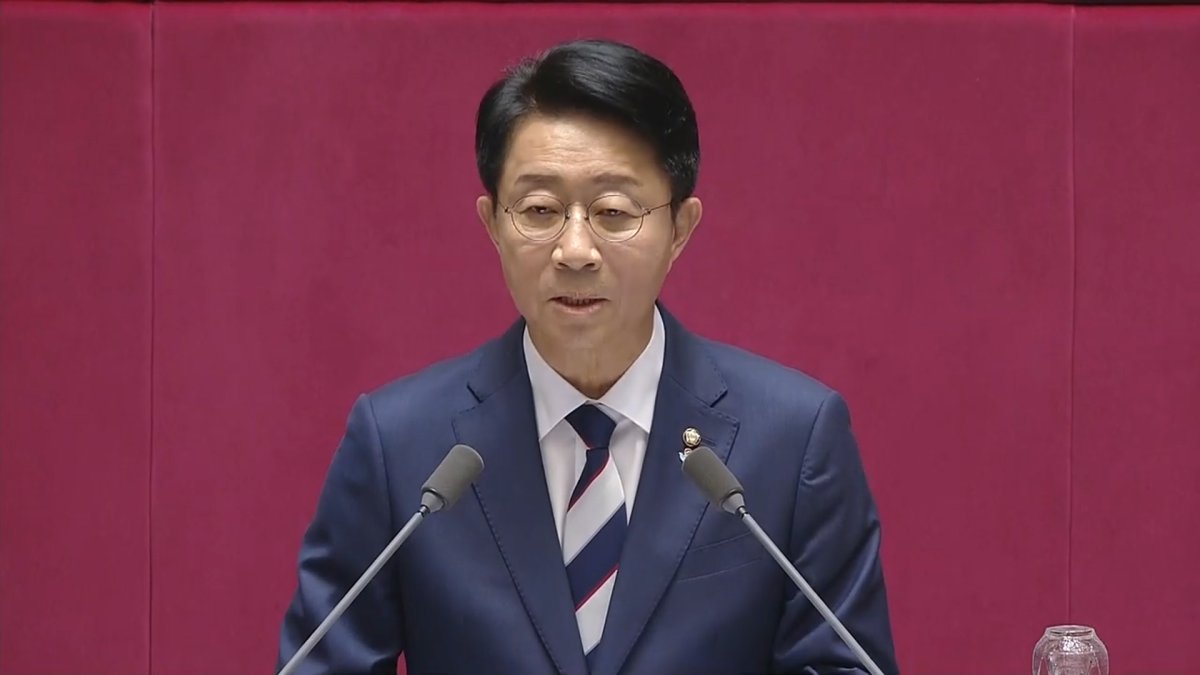
Cho Jung-sik elected Assembly Speaker, 민주당 takes control
With the election of the new National Assembly leadership, the ruling and opposition parties are bracing for intense policy battles. Following the opposition's landslide in the local elections, the political landscape is shifting, with the Democratic Party now poised to intensify its legislative agenda and oversight efforts, including a potential probe into the recent ballot shortage incident.
Daily Political Briefing — 2026-06-07
Top 3 Key Issues
1. Second-half National Assembly leadership finalized
- What happened: On Thursday, June 5, six-term lawmaker Cho Jung-sik of the Democratic Party was elected Speaker for the second half of the 22nd National Assembly. Following the selection of the first-half leadership earlier this year, this confirms a complete shift in legislative power to the opposition.
- Background: Since the ruling party's defeat in the 22nd general election last April, the opposition has controlled the National Assembly. A recent landslide victory in the local elections has further fueled talk of a regime change.
- Reactions: The Democratic Party plans to accelerate its legislative agenda now that it has consolidated control. The People Power Party, now the minority in the second half of the term, is shifting its focus to oversight and checks.
- Impact: Increased scrutiny of government policies is expected. Specifically, the opposition is likely to push for a parliamentary investigation into issues like the recent ballot shortage.
2. Parliamentary probe into ballot paper shortage
- What happened: Democratic Party Floor Leader Han Byung-do announced on June 5 that the party will push for a parliamentary investigation into the "ballot paper shortage" that occurred during the recent local elections, labeling it a major administrative failure.
- Background: During the 9th nationwide local elections, some polling stations ran out of ballots. The National Election Commission (NEC) has proposed reforms, including expanded monitoring, 24/7 CCTV surveillance of ballot boxes, and transparent ballot holders.
- Reactions: The Democratic Party insists on holding officials accountable, citing a serious infringement on voting rights. The ruling party is urging the NEC to quickly implement its proposed safeguards.
- Impact: A parliamentary probe could lead to pressure on NEC leadership and staff, potentially turning into a major political issue as the country prepares for the next presidential election.
3. New Executive Vice Chairman at the Korea Defense Industry Association
- What happened: It was confirmed on June 7 that Lee Nam-woo, former Vice Minister of Patriots and Veterans Affairs, has been named the Executive Vice Chairman of the Korea Defense Industry Association.
- Background: The move signals the government's commitment to strengthening the defense industry, leveraging Lee's experience in the veterans' sector to bridge defense and veteran affairs policies.
- Reactions: The government and ruling party see this as a step toward professionalizing the industry. The opposition has not raised any specific objections at this time.
- Impact: This is expected to maintain the current momentum in defense strengthening, though the opposition-led Assembly may increase its oversight of defense policies.
Major Government & Assembly Updates
-
Speaker Cho Jung-sik’s tenure: With the election of Cho Jung-sik, the second-half leadership is fully formed, and the focus now shifts to organizing committees through plenary sessions.
-
Ballot shortage investigation: The Democratic Party has formally declared its intent to launch a probe into the election ballot shortage incident.
Party Dynamics
Ruling Party
- Position: The People Power Party is positioning itself to check the opposition while seeking cooperation on livelihood issues. They currently view the NEC's self-improvement plans as sufficient regarding the ballot shortage.
- Internal dynamics: The party is regrouping, focusing on the 2026 by-elections and the 2027 presidential race.
Opposition
- Position: The Democratic Party is leveraging its control to push its legislative agenda. Floor Leader Han Byung-do stressed that the ballot shortage was an attack on the foundations of democracy.
- Internal dynamics: Confidence is high following the local election win, with active discussions underway regarding the 2026 by-elections and 2027 presidential campaign strategy.
Media Analysis
-
JoongAng Ilbo (Conservative): Calls for a sober analysis of the ruling party's election defeat and urges the establishment of a policy cooperation framework between the two sides.
-
Kyunghyang Shinmun (Progressive): Emphasizes the importance of middle-power diplomacy amid shifting international relations and proposes seeking new diplomatic directions based on the changing domestic political landscape.
Weekly Schedule
- June 8 (Sun) – 9 (Mon): National Assembly plenary session scheduled to organize standing committees and introduce major bills.
- June 10 (Tue) onwards: Discussions regarding the timeline for the ballot shortage parliamentary investigation.
Final Thoughts
With the opposition fully in control of the National Assembly, the stage is set for a period of intense checks and balances. The second half of 2026 is officially underway, with the ballot paper probe likely to be one of the first major tests of the new political dynamic.
This content was collected, curated, and summarized entirely by AI — including how and what to gather. It may contain inaccuracies. Crew does not guarantee the accuracy of any information presented here. Always verify facts on your own before acting on them. Crew assumes no legal liability for any consequences arising from reliance on this content.
Powered by
