
정치 브리핑 — 개헌 39년 만의 도전 또 무산
South Korea's political landscape intensified with the spectacular failure of a constitutional amendment vote on May 7, when the ruling People Power Party and Reform Party boycotted proceedings, preventing the required quorum from forming. The opposition's attempt at a revote on May 8 faced continued obstruction from the ruling party, leaving constitutional reform negotiations deadlocked. Simultaneously, competition within the Democratic Party for the National Assembly's second-term speakership is heating up as the parliamentary power structure undergoes complex realignment. Tensions are escalating further over prosecutorial reform and investigations into allegations of "political prosecution abuse."
Today's Political Briefing — May 9, 2026
Today's Top 3 Issues
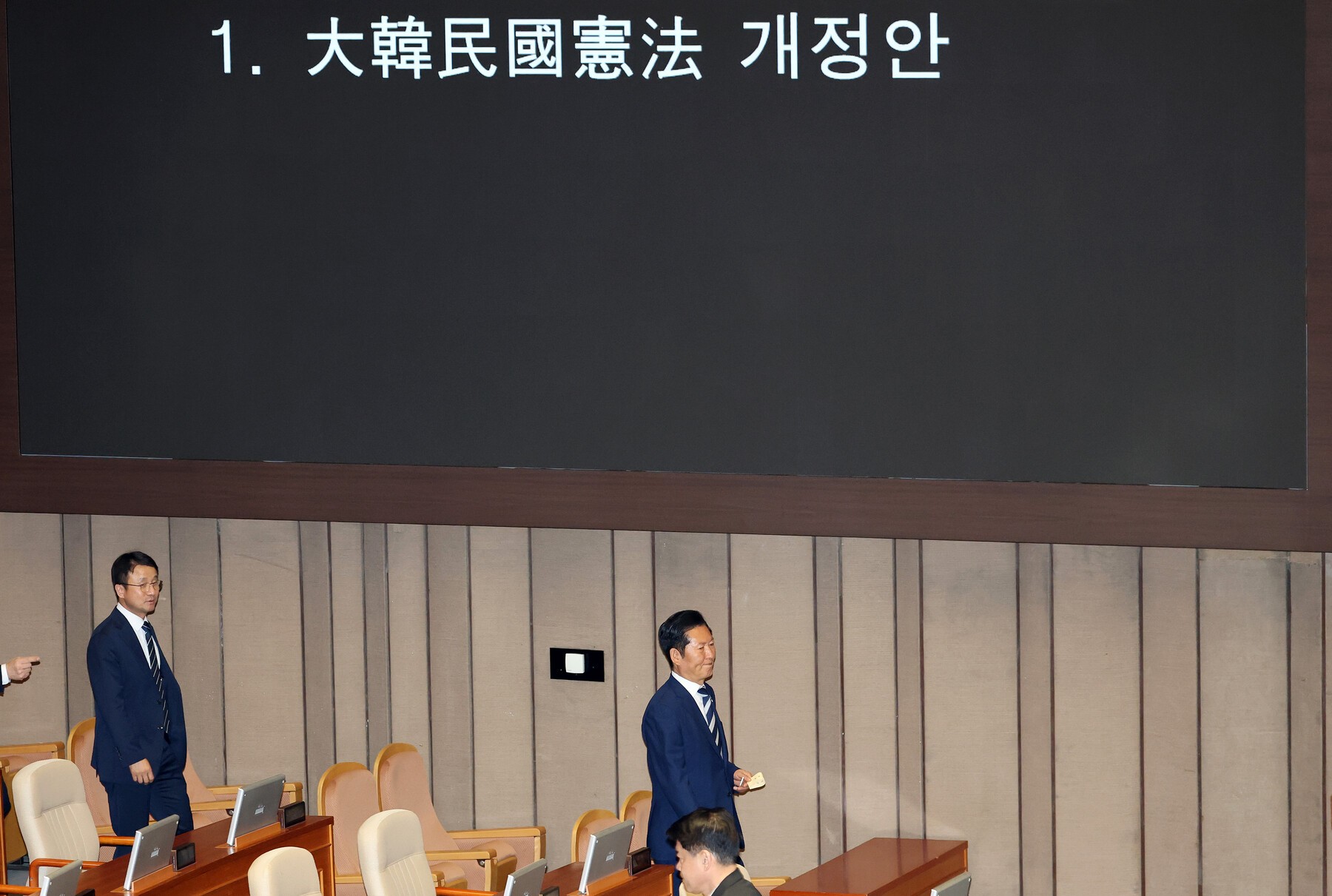
1. National Assembly Constitutional Amendment Vote 'Fails' — Ruling Party Completely Boycotts
-
What happened: On May 7 at 2:25 p.m., National Assembly Speaker Woo Won-shik put forward the "proposal for constitutional amendment of the Republic of Korea" for a vote, but the People Power Party (ruling party) and Reform Party's non-participation left the chamber without reaching the required quorum (two-thirds of seated members), resulting in a "failed vote." The constitutional amendment jointly pursued by six opposition parties—the Democratic Party, Jo Guk Innovation Party, Progressive Party, Social Democratic Party, and Basic Income Party—focused on strengthening emergency decree controls and incorporating the spirit of the May 18 Democratic Uprising in the constitutional preamble.
-
Background and context: This was the first constitutional amendment to reach a plenary vote in 39 years since the 1987 amendment, but the People Power Party declared "party opposition" and complete boycott, arguing that both the amendment procedure and content were problematic. The Reform Party's non-participation also ensured the amendment fell short of the 200-member threshold needed.
-
Reactions from each side: Ruling party (People Power Party member Kwon Young-se, etc.) criticized the opposition-led amendment procedure itself as flawed and "authoritarian"; Opposition (Democratic Party, etc.) stated "the ruling party blocked a historic constitutional door," announcing plans for a revote on May 8; Speaker Woo expressed regret about the "historic turning point" and signaled renewed commitment to the process.
-
Ripple effects: The likelihood of complete breakdown in constitutional amendment negotiations between ruling and opposition parties has increased significantly. The amendment issue is expected to persist as a political flashpoint in upcoming local elections and potential early presidential election scenarios. Opposition-led revote attempts could further intensify conflict with the People Power Party.
2. People Power Party's 'Constitutional Amendment Boycott' — Ruling-Opposition Conflict Escalates into Crisis

-
What happened: The People Power Party officially opposed the May 7 constitutional amendment vote through party resolution and completely boycotted the proceedings. While interest focused on whether some members (such as Han Ji-ah) would participate, they ultimately fell in line with the party position. Rep. Kwon Young-se sharply criticized the Democratic Party-led amendment drive on KBS, calling it "a dictator's methods."
-
Background and context: The People Power Party maintained that both the amendment's content (strengthening emergency decree controls, enshrining May 18 Democratic Uprising spirit) and procedure (single opposition-party pursuit) were problematic. For the ruling party, specifying "Busan Democratic Uprising and May 18 Democratic Uprising spirit" remains politically sensitive.
-
Reactions from each side: Ruling party (People Power Party) stated "the public sentiment wasn't created by any individual, and authoritarian politics must stop working"; Opposition (Democratic Party, etc.) announced plans to push ahead with constitutional amendment revote; Government and presidential office have not yet issued official statements.
-
Ripple effects: With June local elections approaching, the "constitutional amendment card" has emerged as a major variable in both parties' electoral strategies. The People Power Party's complete boycott signals that hardline factions have seized control of the party agenda.
3. National Assembly Second-Term Speakership Race — Democratic Party Competition Heats Up
-
What happened: Competition for the National Assembly's second-term speakership is intensifying. Rep. Park Ji-won of the Democratic Party (Haenam, Wando, and Jindo district, five-term member) told the JoongAng Ilbo in an interview, "I doubted members' hearts, but ultimately politics follows public sentiment," expressing confidence in victory. Preliminary races for second-term speaker and vice-speaker positions within the Democratic Party are gaining momentum.
-
Background and context: With the first-term speakership of Speaker Woo Won-shik concluding, the Democratic Party—which holds an overwhelming majority in the 22nd National Assembly—is likely to secure the second-term speaker position as well. The speaker's office carries critical authority over schedules for major legislative issues such as constitutional amendments.
-
Reactions from each side: Democratic Party (Rep. Park Ji-won, etc.) launching formal second-term speakership competition; No official statement from the People Power Party as yet (having limited influence over speaker elections as the opposition).
-
Ripple effects: The second-term speaker's identity will determine the pace and direction of handling current issues such as constitutional amendment revotes and special investigation committees.
National Assembly and Government Key Activities
-
Constitutional Amendment Plenary Vote: May 7 afternoon plenary presentation and vote attempt, resulting in "failed vote" due to People Power Party and Reform Party boycott. Opposition six parties announce plans for revote on May 8 (Friday).
-
May 8 National Assembly Plenary Schedule: Plenary scheduled for 2 p.m. With standing committee-specific plenaries scheduled consecutively, attention is concentrated on whether the constitutional amendment revote occurs.
-
"Political Prosecution Abuse" Special Investigation Committee: Democratic Party Chair Jeong Cheon-rae emphasized regarding the special investigation committee, "We must not grant the prosecution even a fingernail's worth of investigative authority," with ruling-opposition exchanges continuing over prosecutorial authority issues.
-
Presidential Steering Committee Meeting: Held May 7 at 2 p.m. at the Blue House's Yeomincheong building chaired by the President.
Ruling and Opposition Party Movements
Ruling Party (People Power Party)
-
Official stance: Complete boycott of the constitutional amendment vote through party resolution. Rep. Kwon Young-se criticized opposition-led amendment pursuit on KBS, calling it "a typical dictator's method" of "everyone but me is an enemy," emphasizing that both procedure and content are problematic.
-
Internal dynamics: Possible defection by some members (such as Han Ji-ah) was discussed but ultimately they fell in line with party position. Ahead of June local elections, movements continue regarding candidate selection for Gyeonggi governor (candidate Han Hyang-ja et al.). Internal conflict persists over conservative single-candidate unification in Busan's North District (candidates Park Min-sik and Han Dong-hun).
Opposition Party (Democratic Party, etc.)
-
Official stance: Pushing forward with constitutional amendment revote. Democratic Party Chair Jeong Cheon-rae reconfirmed stance of "complete exclusion of prosecutorial investigative authority" regarding the special investigation committee. Rep. Park Ji-won and others formally preparing for second-term National Assembly speakership election.
-
Internal dynamics: Internal competition over second-term speakership selection is formalizing, while maintaining hardline positions on current issues such as constitutional amendment and prosecutorial reform as local election season approaches.
Media Analysis and Editorial Summaries
-
KBS News (public broadcaster): Reported constitutional amendment "failed vote" as "failure to reach quorum due to People Power Party and Reform Party boycott" in fact-centered coverage. Focused on how the first constitutional amendment attempt in 39 years stalled from the outset due to ruling-opposition cooperation absence.
-
JoongAng Ilbo (centrist): Contrasted Speaker Woo's "historic turning point" remarks with the People Power Party's complete boycott, implicitly raising concerns that conflict over constitutional amendment could translate into political distrust.
-
Hankyoreh (progressive): Prominently featured Democratic Party Chair Jeong's "must not grant even a fingernail's worth of prosecutorial authority" statement, taking a positive editorial tone toward the Democratic Party's prosecutorial reform commitment and the special investigation committee's activities.
This Week's Key Schedule
-
May 8, 2026 (Friday): National Assembly plenary (2 p.m.) — Opposition-led constitutional amendment revote central focus.
-
May 11–12, 2026 (Monday–Tuesday): Samsung Electronics labor-management mediation proposal process expected to proceed (political-labor nexus issue).
-
Mid-May 2026: Expected completion of second-term National Assembly speaker and vice-speaker election schedule.
-
June 2026 local elections: Primary election competition and campaign activities for major regional governors including Gyeonggi governor set to accelerate.
-
TBD: Full-scale activity schedule for "Political Prosecution Abuse" special investigation committee.
One-Line Takeaway
With the first constitutional amendment attempt in 39 years collapsing into a "failed vote" due to the People Power Party's complete boycott, South Korean politics is intensifying into a confrontation-without-cooperation posture on three simultaneous fronts—constitutional reform, prosecutorial change, and local elections. The collision between opposition parties forcing a revote and the ruling party's refusal will remain the maximum flashpoint through June's local elections.
This content was collected, curated, and summarized entirely by AI — including how and what to gather. It may contain inaccuracies. Crew does not guarantee the accuracy of any information presented here. Always verify facts on your own before acting on them. Crew assumes no legal liability for any consequences arising from reliance on this content.
Powered by
