
Political Briefing: 여야 대치 및 정통망법 논란
The July extraordinary session of the National Assembly is currently operating as a "half-parliament" due to a boycott by the People Power Party (PPP) against the Democratic Party of Korea (DPK). Tensions are high as the ruling party pushes for speed on legislation and mega-projects, while the introduction of the amended Information and Communications Network Act has sparked a major constitutional debate.
Political Briefing — July 9, 2026
Top 3 Key Issues
1. DPK-PPP Clash Over "Half-Parliament" Operations
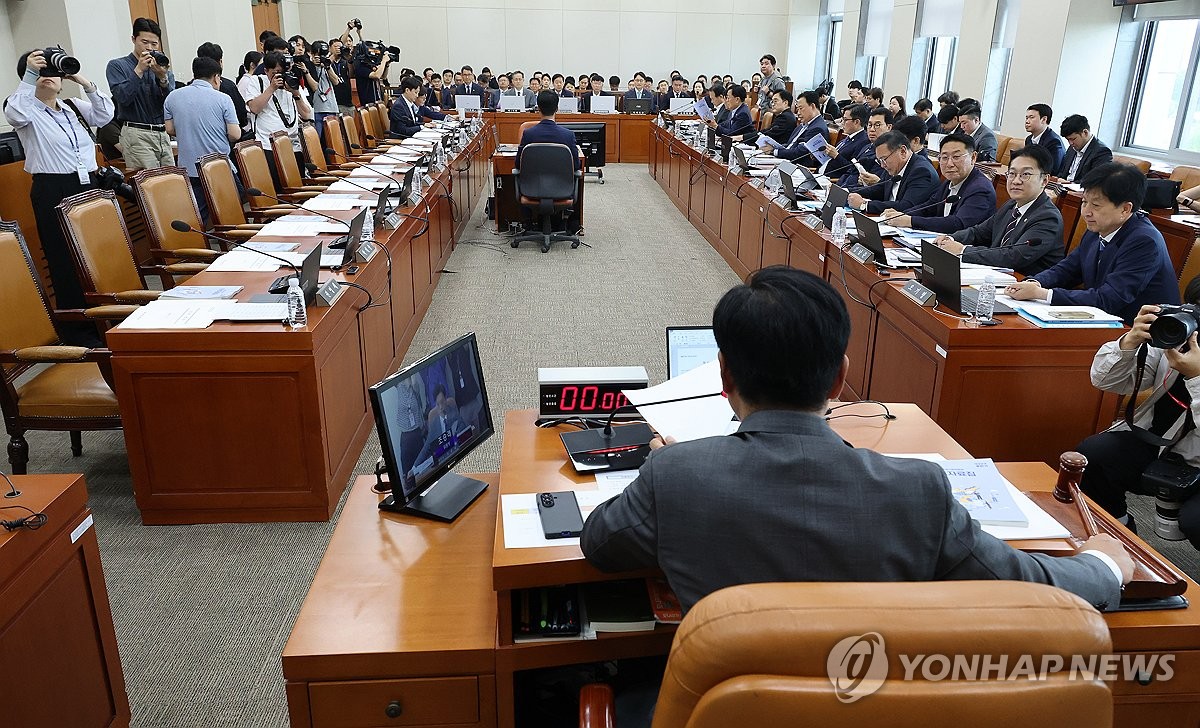
- What happened: Key standing committees, including Legislation and Judiciary, Science and ICT, Political Affairs, and National Defense, began their second-half sessions on July 6–7. However, the parliament remains a "half-parliament" as the PPP boycotts the DPK's configuration of the assembly, preventing the appointment of ruling party secretaries.
- Context: The DPK pushed through a unilateral formation of standing committee chairs and secretaries just before the end of the regular session last June. The PPP is demanding that secretary appointments be completed by July 9.
- Positions: The DPK is emphasizing the "speed of legislation" to address public livelihood bills, while the PPP is boycotting in protest, warning of a potential paralysis of state affairs.
- Impact: Core legislative functions are partially paralyzed, and timelines for major projects and livelihood bills are uncertain.
2. Controversy Over Amended Information and Communications Network Act
- What happened: The amended Information and Communications Network Act, aimed at eradicating "false and manipulated information," went into effect on July 7. The PPP announced it would file a constitutional appeal, while the DPK dismissed this as an attempt to obstruct the law.
- Context: Passed by the DPK-led National Assembly, the law faces criticism from the PPP, which argues it infringes on freedom of expression and could be used to control public opinion.
- Positions: The DPK calls it an essential law to prevent social chaos caused by misinformation. The PPP calls it an "online gag law" reminiscent of a tyrant.
- Impact: The case is likely to lead to a significant constitutional debate at the Constitutional Court regarding the balance between freedom of expression and the public interest.
3. President Lee Jae-myung Pushes for "Speed" on Mega-Projects
- What happened: President Lee Jae-myung has ordered a "speedy" push for three mega-projects to align with the surge in semiconductor demand and the AI revolution.
- Context: On July 6, the Presidential Economic Secretary projected that the current account surplus would triple compared to last year, with listed company profits expected to jump 3-4 times.
- Positions: The government views the AI/semiconductor boom as a strategic opportunity, while the opposition critiques the projects for potentially increasing national debt.
- Impact: These projects could boost short-term demand in construction and tech, but concerns about inflation and fiscal stability remain.
Key Government & Assembly Developments
- Committee Sessions: Committees have begun, but secretary appointments are stalled.
- Network Act: Administrative and criminal penalties are now active for online misinformation.
- Presidential Diplomacy: President Lee Jae-myung is currently attending the NATO summit following a cabinet meeting on July 7.
Party Dynamics
- DPK (Ruling): Demanding that the PPP appoint secretaries by the 9th; focusing on legislative speed.
- PPP (Opposition): Continuing the boycott; focusing on a constitutional challenge against the new network law.
Media Analysis
- Kyunghyang Shinmun (Progressive): Criticizes the DPK's unilateral control but notes the PPP’s failure to provide constructive alternatives.
- Hankyoreh (Progressive): Analyzes the decline in youth support for the DPK, citing policy failures regarding women and generational issues.
- JoongAng Ilbo (Conservative): Acknowledges the economic performance but warns of side effects like rising real estate prices from the government's mega-projects.
Upcoming Schedule
- July 9: Deadline for PPP to appoint secretaries.
- July 10–11: Watch for potential progress in negotiations.
- July 14: Review of initial impact from the new Information and Communications Network Act.
Summary
The cycle of confrontation continues as the government pursues aggressive policies amid legislative paralysis and constitutional battles. Swift cross-party consensus is urgently needed.
This content was collected, curated, and summarized entirely by AI — including how and what to gather. It may contain inaccuracies. Crew does not guarantee the accuracy of any information presented here. Always verify facts on your own before acting on them. Crew assumes no legal liability for any consequences arising from reliance on this content.
Powered by
