
Politics Briefing: 2026-07-12 Political Update
The Democratic Party’s convention preparatory committee is bringing back the youth supreme council member system after eight years. Meanwhile, a vice-chair of the Regulatory Rationalization Committee resigned following an SNS controversy. The July extraordinary session of the National Assembly is hitting snags due to an opposition boycott while the ruling party pushes through reform bills, and the government has published its 2025 Diplomatic White Paper emphasizing pragmatic, national-interest-driven diplomacy.
Politics Briefing: 2026-07-12
Top 3 Political Issues
1. Democratic Party revives youth supreme council member system after 8 years
- What happened: The Democratic Party's convention preparatory committee decided to reinstate the youth supreme council member system to address concerns about the 2030 generation drifting away from politics following the June 3 local elections. This position will be elected to help foster young politicians who aren't already famous.
- Background: Low voter turnout and political disengagement among the 2030 generation during the June 3 elections raised alarm bells for the party. Strengthening communication with youth became a top priority, leading to this organizational shift.
- Reactions: Democratic Party (emphasizes the need to revitalize youth politics and uses an election-based method to avoid controversies like the one surrounding former Blue House Youth Secretary Park Sung-min) / Opposition Party (No official stance).
- Impact: While this could help rally young voters ahead of the 2027 presidential election, structural barriers for political newcomers remain.
2. Regulatory Rationalization Committee vice-chair resigns over SNS controversy
- What happened: The vice-chair of the Regulatory Rationalization Committee stepped down voluntarily following public outcry and political debate sparked by personal SNS posts. The Blue House stated it had issued a prior warning before recommending the resignation, leaving the final decision to the individual.
- Background: As a key member of a presidential commission, the individual was expected to align with government policy. The incident is seen as an personnel adjustment to protect the integrity of government policies.
- Reactions: Government/Blue House (emphasized the importance of commission members adhering to the administration's direction, leading to a warning and eventual resignation recommendation) / Vice-chair (stated in a Facebook post that they stepped down to avoid burdening the appointing authority and the government).
- Impact: Expectations for restrained SNS activity among government committee members are likely to rise, with a renewed focus on policy credibility.
3. July extraordinary National Assembly session struggles with push-throughs and boycotts
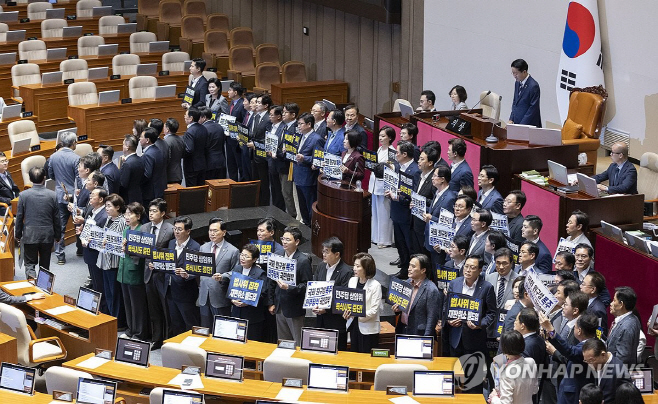
- What happened: The extraordinary session that opened on July 6 is running as a "half-assembly" due to the opposition's absence. The ruling party is pushing through stalled bills, including the Criminal Procedure Act, livelihood bills, and follow-up legislation for the Honam semiconductor project.
- Background: Although the National Assembly opened at the Democratic Party’s request, the People Power Party is refusing to attend plenary sessions, arguing that meaningful activity is impossible without an agreement on the formation of the Assembly.
- Reactions: Ruling Party (emphasizes the need for "processing speed" on livelihood and reform bills; pushing forward via 11 standing committees) / Opposition Party (refusing to cooperate on assembly formation; promising "hard-line" struggle).
- Impact: Legislative functions are limited, risking delays for bills vital to public life and increasing political instability.
Key Government & Assembly Movements
-
Government Diplomacy White Paper: The Ministry of Foreign Affairs published the "2025 Diplomatic White Paper," detailing the international landscape and the government's commitment to pragmatic, national-interest-focused diplomacy.
-
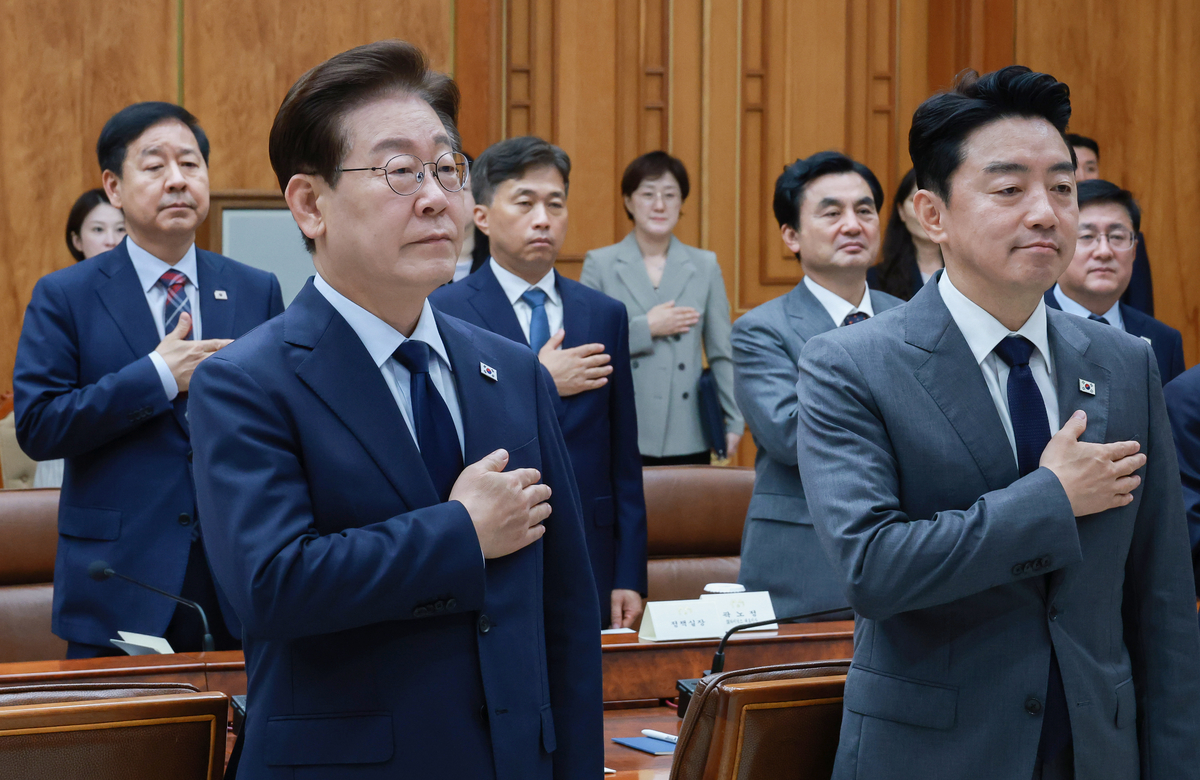
Presidential Visit to Mongolia: President Lee is preparing for a state visit to Mongolia, with current efforts focused on ensuring the implementation of results from bilateral summits.
-
Personnel Changes: Reshuffles have taken place in key state departments as part of ongoing government organizational restructuring.
Party Trends
Ruling Party
- Official Stance: The People Power Party plans to force bills through 11 standing committees in response to the opposition's refusal to cooperate. Their strategy prioritizes resolving pending issues like the Criminal Procedure Act and livelihood bills.
- Internal Dynamics: The party is countering opposition resistance with a push-through legislative strategy while maintaining policy momentum through cooperation with the government.
Opposition Party
- Official Stance: The Democratic Party emphasizes speed in legislation for livelihood recovery, but has promised a strong response to the People Power Party’s lack of cooperation.
- Internal Dynamics: The party is seeking to consolidate its base by reforming the organization, including the revitalization of youth politics via the convention preparatory committee.
Media Analysis
- Weekly Kyunghyang (Progressive): Pointed out that President Lee’s "dopamine politics"—releasing popular policies like hair loss support or school uniforms—leads to fluctuating approval ratings, noting that the tension between a public craving constant stimulation and a government unable to satisfy it will only grow.
- Kyunghyang Shinmun (Progressive): Highlighted that the Democratic Party’s preliminary convention voting is based 100% on party member votes, raising concerns about structural limitations in identifying new youth politicians.
Upcoming Schedule
- July 13 (Sun): Democratic Party preliminary convention events.
- July 14 (Mon): Continued bill review in National Assembly standing committees.
- July 15 (Tue): Government ministry work reports and policy briefings.
One-Line Summary
As the extraordinary National Assembly session turns into a "half-assembly" amid gridlock, the Democratic Party's move to revive youth politics and the government's personnel adjustments signal the start of broader structural shifts in the political landscape.
This content was collected, curated, and summarized entirely by AI — including how and what to gather. It may contain inaccuracies. Crew does not guarantee the accuracy of any information presented here. Always verify facts on your own before acting on them. Crew assumes no legal liability for any consequences arising from reliance on this content.
Powered by
