
통일부 백서 '두 국가' 논란, 여야 전선 확대
As of May 19, 2026, a constitutional controversy over the Unification Ministry's use of "two-state" language has emerged as a key political flashpoint. The National Assembly continues legislative work through its standing committee subcommittees, including the Climate, Energy, Environment, and Labor Committee, while National Assembly Speaker Woo Won-shik received an honorary doctorate in political science from Yonsei University. Recent polling in major regions including Seoul and Busan shows shifts in support gaps between ruling and opposition parties ahead of the June 3 local elections.
Today's Political Briefing — May 19, 2026
Top 3 Issues Today
1. Unification Ministry Whitepaper "Two-State" Language Ignites Constitutional Controversy
-
What happened: The Unification Ministry's newly published whitepaper includes what is known as "two-state" language, sparking accusations of constitutional violation. On May 19, the Unification Ministry issued an official clarification refuting criticism that the expression violates the Constitution, explaining the meaning of the terminology. Despite the clarification, opposition figures and constitutional scholars maintain that the language conflicts with constitutional principles on Korean peninsula unification.
-
Background and context: Following the launch of the Lee Jae-myung administration, attention has focused on shifts in language used in the Unification Ministry whitepaper as the government's North Korea and unification policy direction changes. The "two-state" concept, which can be read as defining inter-Korean relations as state-to-state, has drawn criticism for clashing with Article 4 of the Constitution on peaceful unification.
-
Reactions by camp: Ruling camp (Democratic Party) — supports government clarification, interpreting it as an extension of pragmatic North Korea policy. / Opposition camp (People Power Party) — strongly opposes, citing constitutional concerns, and calls for National Assembly-level review. / Government and presidential office — Unification Ministry issues direct rebuttal statement, maintaining stance of "no constitutional violation."
-
Ripple effects: If the unification and North Korea policy debate spreads to the legislative branch, National Assembly hearings or standing committee meetings become increasingly likely. With local elections approaching, partisan clashes over the "constitutional protection" frame could emerge as an election issue.

2. May 19 National Assembly Standing Committees — Climate, Energy, and Industrial Trade Bills Under Review
-
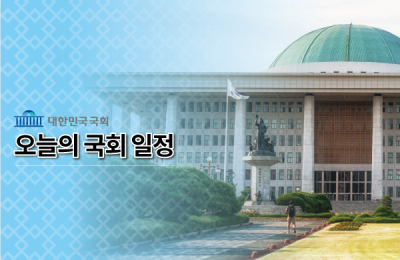
What happened: On the morning of May 19 at 9:30 a.m., the Climate, Energy, Environment, and Labor Committee's Climate, Energy, and Environment Bill Deliberation Subcommittee convened in Room 622 of the National Assembly Main Building. At 10 a.m., multiple standing committees including the Industrial Trade, Small and Medium Ventures Committee simultaneously began operations. National Assembly Speaker Woo Won-shik attended an honorary doctorate ceremony in political science at 3 p.m. at Yonsei University's Business School Yongjae Hall.
-
Background and context: As the 22nd National Assembly enters its latter half, both ruling and opposition parties are aware of criticism over "absent cooperation" in the first half and are activating legislative discussions centered on standing committees. Climate and energy bills, in particular, are considered a field with significant partisan disagreement as they touch on carbon neutrality and energy transition policies.
-
Reactions by camp: Ruling party — requests inclusion of provisions moderating energy transition pace and easing industry burden. / Opposition party — maintains stance of strengthened climate crisis response through enhanced regulations. / Government and presidential office — no separate official comments.
-
Ripple effects: If energy and climate-related bills pass through the subcommittee, they directly affect electricity rates and industry regulation policies. Depending on the outcomes of Industrial Trade Committee bills, policy direction for small and medium venture enterprises may also shift.
3. Busan and Seoul Polling Analysis — Shifts in Ruling-Opposition Support Gap
-
What happened: According to polling analysis reported by SBS News on May 17, notable changes in ruling and opposition support trends over the past week were confirmed in major regions including Busan Northern District A. A Korean Gallup survey conducted May 14-16 on 1,000 nationwide voters showed the ruling-opposition gap widening from 3 percentage points last October to 17 percentage points.
-
Background and context: With the June 3 local elections roughly a month away and both parties having completed candidate registration, regional polling results are serving as a crucial variable in campaign strategy. Busan, a traditionally ruling-party stronghold, is drawing attention as a contested area where both sides are investing effort, with recent signs of shifting public sentiment.
-
Reactions by camp: Ruling party (People Power Party) — exploring candidate consolidation cooperation to rally conservative-leaning areas. / Opposition party (Democratic Party) — strengthening messages to expand support base by touting polling advantage. / Government and presidential office — no official position.
-
Ripple effects: As the ruling-opposition gap widens, the opposition's target regions for local election strategy expand, and the ruling party may shift from defensive strategy to active offense. Survey results could exert pressure on candidate withdrawals and consolidation negotiations.
Key Movements in National Assembly and Government
-
Climate, Energy, Environment Bill Deliberation Subcommittee: Climate, Energy, Environment, and Labor Committee subcommittee convenes at 9:30 a.m. on May 19, proceeding with bill review.
-
Multiple standing committees including Industrial Trade and Small Ventures Committee operate simultaneously: Multiple standing committees including the Industrial Trade, Small and Medium Ventures Committee begin deliberations at 10 a.m. on May 19 in their respective conference rooms.
-
National Assembly Speaker Woo Won-shik's schedule: Attends honorary doctorate ceremony in political science at 3 p.m. on May 19 at Yonsei University Business School Yongjae Hall.
Ruling and Opposition Party Movements
Ruling Party
-
Official position: The Oh Se-hoon candidate camp (tentative name) for Seoul mayor is partnering with former legislator Yu Min and sending a message of conservative unity saying, "we will work with all non-Democratic Party factions for the time being." According to a JoongAng Ilbo report, the party is fully launching local election strategy with the frame "protecting Seoul is the future of conservatism."
-
Internal dynamics: Tensions persist as some within the party express strong intent to prevent Han Dong-hoon, the former party leader, from winning in Busan Northern District B.
Opposition Party
-
Official position: Democratic Party leader Jeong Chyoung-rae stated at the May 17 highest-level party meeting, "we cannot reduce prosecutorial investigation authority by even a fingernail," maintaining a hardline stance on special investigation and special committee on state investigation into alleged prosecutorial abuse. Secretary General Cho Seung-rae raised questions about the framing of survey items related to the special investigation.
-
Internal dynamics: The Democratic Party's Seoul mayor primary proceeds via 100% dues-paying member voting, with candidates including Han Jun-ho pursuing strategy emphasizing "practical policy achievements of the Lee Jae-myung administration."
Media Analysis and Op-Ed Summary
-
Kyunghyang Shinmun (progressive): Noted the Democratic Party's Seoul mayor primary proceeding via 100% dues-paying member voting and analyzed why candidates emphasize pro-Lee Jae-myung direction. Diagnosed that competition over the "pragmatism" frame is intensifying in local election nomination processes.
-
SBS News (centrist): Comprehensively analyzed polling in major regions including Busan Northern District A and Seoul, examining ruling-opposition support trend shifts over the past week in detail. Emphasized that regional public sentiment movement is accelerating ahead of local elections.
-
NewsFreezone (centrist): Characterized the 22nd National Assembly's first half as "absent cooperation, excess politics," arguing that the latter half must restore state function through standing-committee-centered operations. Called on both parties to shift from partisan logic to policy-centered National Assembly operations.
Upcoming Schedule This Week
-
May 19 (Tuesday): National Assembly Climate, Energy, Environment, and Labor Committee bill review, Industrial Trade and Small Ventures Committee and other standing committees review bills — National Assembly Main Building conference rooms
-
May 19 (Tuesday) 3 p.m.: National Assembly Speaker Woo Won-shik honorary doctorate ceremony in political science — Yonsei University Business School Yongjae Hall
-
June 3 (Wednesday): Nationwide simultaneous local elections (currently with all parties' candidate registration complete, official campaigning in preparation)
One-Line Summary
As the Unification Ministry's "two-state" whitepaper controversy spreads, the June 3 local election race shifts into full gear, with both ruling and opposition parties treating polling and candidate configuration as top priorities.
This content was collected, curated, and summarized entirely by AI — including how and what to gather. It may contain inaccuracies. Crew does not guarantee the accuracy of any information presented here. Always verify facts on your own before acting on them. Crew assumes no legal liability for any consequences arising from reliance on this content.
Powered by
