
Today's Political Briefing — 2026-05-08
The constitutional amendment vote failed in the National Assembly plenary session on the 7th due to the absence of the People Power Party and the Reform Party, failing to meet the quorum. The ruling and opposition parties continue to clash sharply over the "Fabricated Prosecution Special Investigation Law," while the "Pro-Japanese Asset Recovery Law" passed the Legislation and Judiciary Committee and awaits plenary processing. With the June 3 local elections just around the corner, real estate sentiment and constitutional amendment politics are intertwining, keeping the entire political sphere bustling with activity.
Today's Political Briefing — 2026-05-08
Top 3 Issues of the Day
1. Constitutional Amendment Vote in National Assembly Fails to Proceed
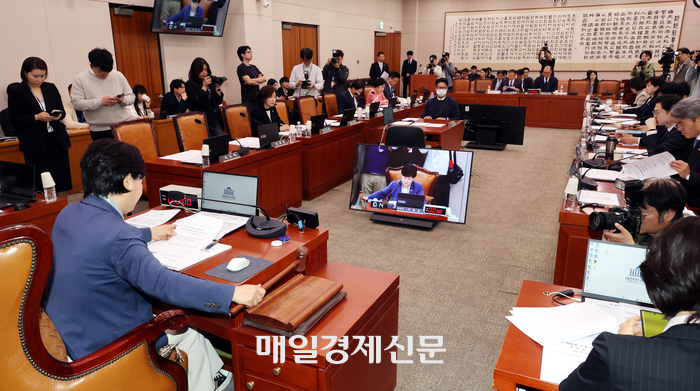
- What happened: The constitutional amendment vote took place in the National Assembly plenary session on the 7th, but the People Power Party and Reform Party boycotted the vote, resulting in failure to meet quorum—the vote itself was invalidated. The amendment included strengthening the National Assembly's martial law control authority and incorporating the spirit of the May 18 Democratic Uprising into the constitutional preamble as key provisions. Despite six parliamentary parties—the Democratic Party, Cho Kuk Innovation Party, Progressive Party, Reform Party, Social Democratic Party, and Basic Income Party—jointly pushing the amendment under National Assembly Speaker Woo Won-shik's leadership, processing ultimately failed.
- Background and context: The constitutional amendment gained momentum after the December 2024 martial law emergency, with heightened calls for new "martial law control" provisions. Incorporating May 18's spirit into the constitutional preamble has long been a cherished goal of progressive forces, and observers widely held that the outcome was opaque due to major disagreements between ruling and opposition parties.
- Each side's response: Ruling party (Democratic Party, amendment proponents) argues for "minimal safety guardrails to prevent recurrence of martial law incidents" / Opposition party (People Power Party) boycotts the vote per party line, criticizing it as "rushed constitutional reform with political intentions" / Government and presidential office: no official position confirmed
- Ripple effects: The failure of the constitutional amendment makes May 18 constitutional recognition impossible in this session. The chances of the constitutional amendment dispute becoming a campaign issue in the June 3 local elections have risen significantly.
2. Ruling and Opposition Clash Head-On Over "Fabricated Prosecution Special Investigation Law" in National Assembly Legislation Committee
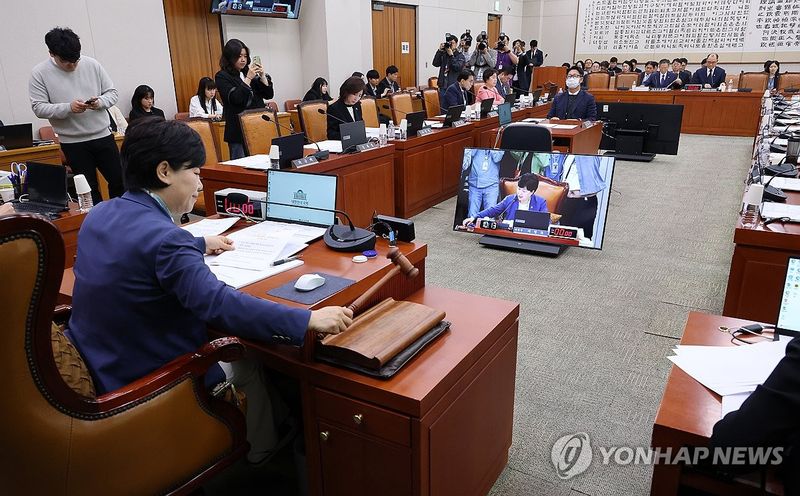
- What happened: The National Assembly Legislation and Judiciary Committee held a full plenary meeting on the 6th where the ruling and opposition parties clashed directly over the "Fabricated Prosecution Special Investigation Law." The Democratic Party emphasized the legitimacy of the special investigation, arguing it was "to investigate the prosecution's crimes," while the People Power Party countered with accusations that it was an attempt to "whitewash the president's innocence through self-prosecution dismissal." On the same day, the "Pro-Japanese Asset Recovery Law" (expanding recovery to include proceeds from asset disposal) passed the committee.
- Background and context: The Fabricated Prosecution Special Investigation Law is legislation targeting unlawful and inappropriate conduct by prosecutors in past investigations. The ruling camp is pushing it as part of the Lee Jae-myung government's judicial reform initiative. The People Power Party is strongly resisting, arguing that the current government is abusing prosecutorial power for political purposes.
- Each side's response: Ruling party (Democratic Party) frames it as "righting injustice by dismissing prosecution against victims" / Opposition party (People Power Party) designates it as a "political special investigation to whitewash the president's innocence," strongly opposing / Government and presidential office: specific position not confirmed
- Ripple effects: If the committee conflict leads to plenary processing, ruling-opposition tensions are expected to intensify further. The committee passage of the Pro-Japanese Asset Recovery Law could prompt legal action from affected asset holders and historical organizations.
3. Real Estate Sentiment Deteriorates Ahead of June 3 Local Elections
- What happened: As the June 3 local elections approach, signs of public sentiment shifting away from the government over failed real estate policies are emerging. Joong Ang Ilbo reported on a special election in Pyeongtaek (featuring five-way race among candidates including Kim, Cho Kuk, Yu Ui-dong, Kim Jae-yeon, and Hwang Kyo-ahn) showing that "initial expectations that President Lee Jae-myung would control housing prices have transformed into disappointment amid jeonse-wolse chaos and supply shortages." Park Sung-min, CEO of political consulting firm Min, warned that real estate sentiment could be a decisive variable in capital region elections.
- Background and context: The Lee Jae-myung government pursued aggressive real estate stabilization policies early in its tenure but faces criticism over jeonse-wolse chaos in the rental market and declining new supply. With local elections just over a month away, real estate matters have become a sensitive issue directly affecting capital region candidates from each party.
- Each side's response: Ruling party (Democratic Party): specific rebuttal not confirmed / Opposition party (People Power Party): expected to intensify attacks on real estate policy failure / Government and presidential office: reportedly reviewing additional supply measures
- Ripple effects: If capital region sentiment shifts due to real estate issues, the ruling party could face worse-than-expected results in the June 3 local elections. The Pyeongtaek special election is drawing nationwide attention as a barometer of public sentiment.
National Assembly and Government Key Movements
- Constitutional amendment: Brought to National Assembly plenary vote on the 7th; quorum not met due to People Power Party and Reform Party absence—vote invalidated. Includes May 18 spirit in constitutional preamble and enhanced martial law control provisions.
- Pro-Japanese Asset Recovery Law: Expanded recovery scope to include proceeds from asset disposal passed the National Assembly Legislation and Judiciary Committee on the 6th, pending plenary processing.
- Fabricated Prosecution Special Investigation Law: Ruling-opposition clash at full committee meeting on the 6th. Ruling party shows intention to process; opposition maintains party-line opposition.
- National Assembly plenary schedule (7th): Constitutional amendment vote plus discussions on other major livelihood legislation.
Ruling and Opposition Party Dynamics
Ruling Party (Democratic Party-led governing coalition)
- Official position: Expressed regret over failure to process the constitutional amendment, while accelerating progress on legislative agenda including the Fabricated Prosecution Special Investigation Law and Pro-Japanese Asset Recovery Law. Maintaining six-party coordination under National Assembly Speaker Woo Won-shik's leadership.
- Internal dynamics: Concerns about capital region real estate sentiment erosion ahead of the June 3 elections reported from within the party. The Pyeongtaek special election results are expected to determine whether the ruling party revises its strategy.
Opposition Party (People Power Party)
- Official position: Maintains party-line opposition to the constitutional amendment vote, designating it as "rushed constitutional reform." Strongly opposes the Fabricated Prosecution Special Investigation Law as "whitewashing the president's innocence." Using parliamentary strategic boycotts to block ruling party-led legislation.
- Internal dynamics: Coordinated boycott with the Reform Party achieved, though future alliance sustainability remains unclear. Internal conflict signs persist over local election candidate nominations.
Media Analysis and Editorial Summaries
- YTN (centrist): Reports the constitutional amendment vote failure as a result of "People Power Party party-line opposition," pointing out structural limitations making ruling-opposition constitutional compromise virtually impossible. Leaves open the possibility of renewed constitutional amendment discussions following structural political realignment after the June 3 elections.
- Joong Ang Ilbo (center-right): Warns of capital region real estate sentiment erosion, analyzing that the Lee Jae-myung government's failure to stabilize housing prices will emerge as the greatest variable in the June 3 local elections. Highlights the Pyeongtaek special election as a barometer of nationwide sentiment.
- Financial News (center-economy): Summarizes the ruling-opposition Legislation Committee clash using the frame "Fabricated Prosecution Special Investigation Law vs. Self-Prosecution Dismissal," presenting a critical perspective that political disputes are repeatedly crowding out livelihood legislation.
Week's Key Schedule
- 2026-05-08 (today): Watch for Pro-Japanese Asset Recovery Law plenary processing; further discussion on Fabricated Prosecution Special Investigation Law expected
- 2026-05-09~10: National Assembly standing committee legislation deliberation schedule—real estate livelihood legislation processing pace to watch
- 2026-06-03: Ninth National Simultaneous Local Elections—Pyeongtaek special election included; capital region sentiment is the key variable
- Mid-June 2026: Constitutional amendment re-pursuit and ruling-opposition parliamentary strategy reorganization direction expected to be decided
One-Line Summary
As constitutional amendment failure and special investigation politics collide, deepening ruling-opposition deadlock, real estate sentiment emerges as the central variable in all political calculations heading into the June 3 local elections.
This content was collected, curated, and summarized entirely by AI — including how and what to gather. It may contain inaccuracies. Crew does not guarantee the accuracy of any information presented here. Always verify facts on your own before acting on them. Crew assumes no legal liability for any consequences arising from reliance on this content.
Powered by
