
Daily Political Briefing — July 19, 2026
On the 78th Constitution Day (the 17th), National Assembly Speaker Cho Jung-sik announced plans to draft a "people's sovereignty" constitutional amendment in 2027 and complete the 10th amendment by May 2028. Meanwhile, U.S. President Donald Trump has requested the construction of 10 U.S. Navy warships in South Korea, with U.S. industry proposing "distributed shipbuilding" as a solution. Additionally, People Power Party floor leader Jung Jeom-sik warned against the implementation of the revised Information and Communications Network Act (the "7·7 Act"), signaling intensifying political friction.
Daily Political Briefing — July 19, 2026
Top 3 Key Issues
1. Speaker Cho: "Targeting May 2028 for 10th Constitutional Amendment"
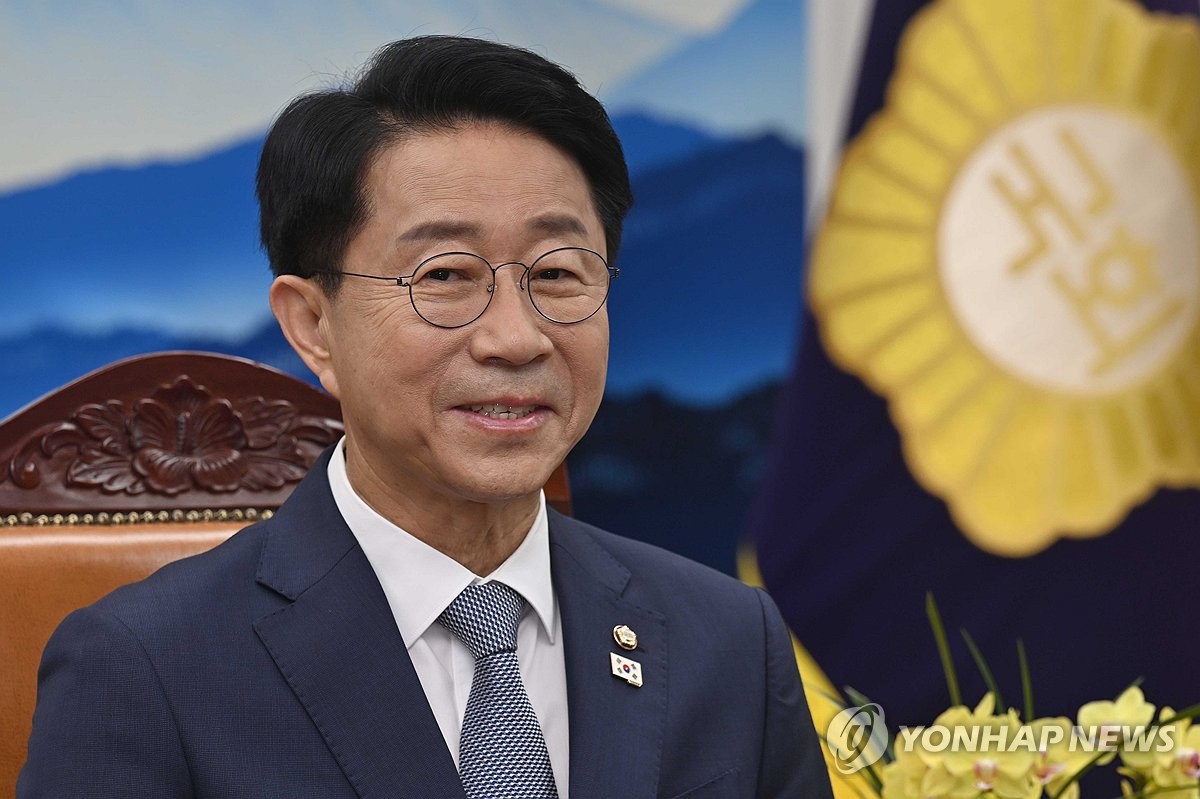
- What happened: On the 78th Constitution Day (the 17th), National Assembly Speaker Cho Jung-sik officially declared at a press conference, "Let us draft a constitutional amendment for people's sovereignty in 2027 and finalize the 10th amendment within this 22nd National Assembly." By setting a deadline of late May 2028, he provided a concrete roadmap, which is seen as reflecting the current administration's will for reform.
- Context: Since taking office, President Lee Jae-myung has made constitutional reform a key national agenda item, though progress has been slow due to difficulties in reaching a bipartisan consensus. This public announcement by the leadership is interpreted as an attempt to inject momentum into the process. Strengthening people's sovereignty is the central theme of this reform.
- Reaction: The ruling party welcomed the announcement. The main opposition party's official stance has not been clearly reported yet; historically, they have remained cautious toward government-led reforms.
- Impact: If moved forward, it could fundamentally alter the constitutional system and will directly affect political schedules leading up to the late-2028 presidential election. Bipartisan consensus will be the key battleground.
2. U.S. requests 10 warships from Korea, suggests "distributed shipbuilding"
- What happened: On the 17th (local time), U.S. industry experts proposed "distributed shipbuilding" as a way to ease the restriction on building U.S. naval vessels exclusively domestically, effectively allowing outsourcing to Korea. This follows a request from U.S. President Donald Trump to President Lee Jae-myung at last month's G7 summit: "Can you quickly build 10 U.S. warships?"
- Context: While the U.S. shipbuilding industry has traditionally built naval vessels domestically, the need to strengthen national defense amid time constraints has led to interest in Korea's technological prowess and speed.
- Reaction: The government has not yet made an official statement, but appears to be reviewing the request as a strategic opportunity. The ruling party is likely to view this positively as a sign of strengthening the ROK-U.S. alliance.
- Impact: Securing these contracts could boost the defense industry and job creation, though it risks clashing with protectionist sentiment in the U.S. Final approval from the U.S. Department of Defense and Congress remains the hurdle.

3. Floor Leader Jung Jeom-sik: "Revised Info-Communications Network Act is 'witch-hunt' violence"
- What happened: People Power Party floor leader Jung Jeom-sik strongly criticized the implementation of the revised Information and Communications Network Act (the "7·7 Act," also known as the "mouth-shutting law"), warning that it would "make witch-hunt violence a daily occurrence and create an atmosphere of fear and silence." He highlighted the danger of arbitrary interpretation, noting that some politicians are labeling others as "Ilbe" members over a simple dialect phrase used by an idol.
- Context: The revised act strengthens regulations on online defamation and insults. The opposition party has advocated for stronger regulation of online violence, while the ruling party has raised concerns regarding the infringement of freedom of expression.
- Impact: The implementation and interpretation of this act will significantly shape the balance between online freedom of expression and the protection of reputation. Disputes regarding its constitutionality at the Constitutional Court are expected.
Key National Assembly & Government Updates
- Constitution Day Ceremony: Speaker Cho Jung-sik held the 78th anniversary ceremony and announced the 10th constitutional amendment plan.
- Ministry Reporting: President Lee Jae-myung held the "2026 Second-Half Ministry Work Briefing" on the 16th at the Blue House, ordering improvements to daily life, including the operation of highway rest areas.
- Personnel: Personnel changes were made at the National Assembly Secretariat on the 16th.
Party Movements
Ruling Party (People Power Party)
- Official Stance: Floor leader Jung Jeom-sik voiced concerns over the revised Information and Communications Network Act while supporting Speaker Cho's constitutional reform roadmap. President Lee Jae-myung continues to focus on economic benefits and improving public livelihoods.
- Internal Dynamics: While minor differences in opinion exist between reform advocates and those concerned with the network act regulations, the party largely aligns with the government's policy stance.
Opposition Party (Democratic Party of Korea)
- Official Stance: No specific response statement has been reported recently. They maintain a traditional cautious stance on constitutional reform.
- Internal Dynamics: It is known that leadership candidates are touring regions ahead of the August 17th national convention.
Important Upcoming Dates
- July 20 (Sun): National Assembly plenary session scheduled (agenda pending).
- Mid-August: Democratic Party of Korea national convention.
- First Half of 2027: Scheduled drafting and deliberation of the "people's sovereignty" constitutional amendment.
Brief Summary
Speaker Cho's specific roadmap for constitutional reform and the U.S. request for South Korean-built warships are set to act as major variables in Korean politics and diplomacy, while the ruling party's criticism of the Information and Communications Network Act suggests that the debate over online regulation will persist.
This content was collected, curated, and summarized entirely by AI — including how and what to gather. It may contain inaccuracies. Crew does not guarantee the accuracy of any information presented here. Always verify facts on your own before acting on them. Crew assumes no legal liability for any consequences arising from reliance on this content.
Powered by
