
Korean Government Policy Updates — 2026-07-11
The government announced key policy changes on July 9-10, including the expansion of ID verification services, an upward revision of economic growth forecasts, and upcoming plans for second-half growth strategies. The Ministry of Economy and Finance signaled an economic recovery after the OECD and IMF adjusted their outlooks.
Korean Government Policy Updates — 2026-07-11
Key Policy and Legislative Changes
1. Ministry of the Interior and Safety – Expansion of Resident Registration ID Verification
On July 10, the Ministry of the Interior and Safety announced that the resident registration ID verification service will be expanded to major private payment platforms, including Naver Pay, Kakao Pay, and Toss. This administrative improvement aims to make identity verification more convenient for citizens using everyday financial services.

2. Ministry of Economy and Finance – Upward Revision of 2026 Economic Growth Forecast
On July 9, Deputy Prime Minister and Minister of Economy and Finance Koo Yoon-cheol announced that the OECD and IMF have raised South Korea's economic growth forecast for this year to 2.6%. This is an increase from their April projections. Investment banks are currently forecasting growth in the 3% range.
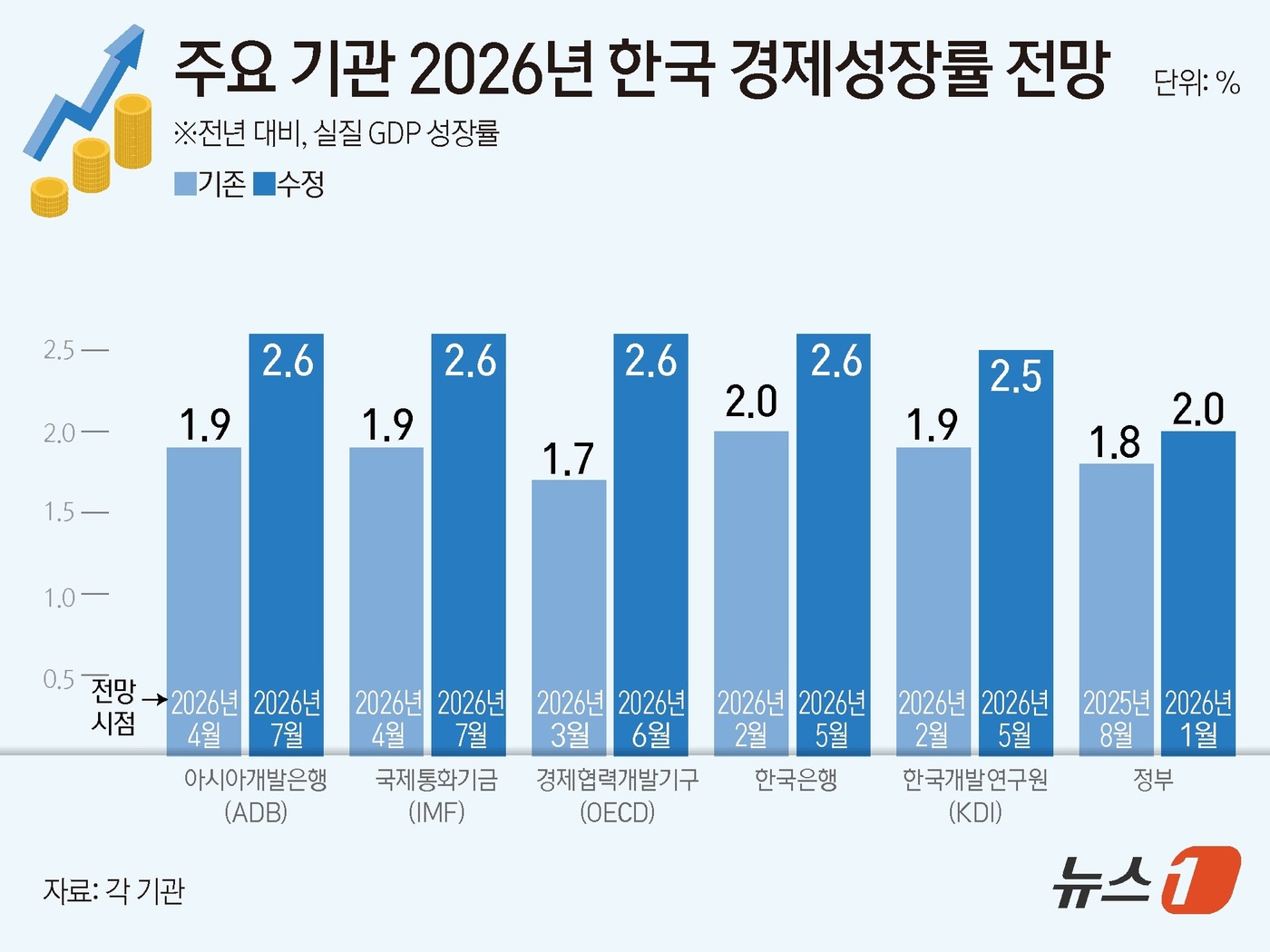
3. Ministry of Economy and Finance – Upcoming Second-Half Growth Strategy
Deputy Prime Minister Koo Yoon-cheol stated that a growth strategy for the second half of the year, containing policy tasks and action plans to meet public expectations for economic performance, will be announced shortly.
4. Ministry of Trade, Industry and Energy – Korea-Mongolia CEPA Concluded
The Ministry of Trade, Industry and Energy announced that a Comprehensive Economic Partnership Agreement (CEPA) between South Korea and Mongolia has been signed, which is expected to further strengthen economic cooperation between the two nations.
Regulatory Improvements and Administrative Changes
1. Promotion of Corporate Regulatory Innovation
The Ministry of Economy and Finance is pursuing regulatory innovation to build an ecosystem where companies can actively invest and continue to grow. This includes reviewing regulations related to advanced strategic industries, size-based corporate regulations, and support systems for small and medium-sized enterprises (SMEs).
2. Strengthening Industrial Safety Regulations
Throughout 2026, the government will prioritize the "Comprehensive Labor Safety Measures" announced on September 15, 2025. Key initiatives include expanding the scope of workplaces subject to inspection and supervision, strengthening obligations for construction subcontracts, mandating the formation and operation of joint labor-management industrial health and safety committees, making risk assessments mandatory while establishing new penalties, and tightening administrative and economic sanctions—including business suspensions—in the event of major accidents.
3. Enhanced Safety Inspections for Overseas Direct Purchases
Starting in the second half of 2026, the government plans to strengthen safety investigations into products purchased directly from overseas, with plans to return or dispose of any items found to be hazardous.
Policy Impact and Future Schedule
1. Expected Economic Effects of Growth Forecast Upgrades
The upward adjustments by the OECD and IMF are expected to increase international confidence in the domestic economy, potentially leading to expanded corporate investment and increased exports. The upcoming second-half growth strategy will provide additional policy support measures.
2. Improved Administrative Convenience via ID Verification
Expanding the service to Naver Pay, Kakao Pay, and Toss will allow citizens to conduct identity verification more quickly and conveniently during financial transactions, while strengthening the digital innovation foundations of private platforms.
3. Worker Protection through Industrial Safety Reforms
The 2026 industrial safety regulations are designed to prevent major accidents and bolster worker protection. Through the expansion of oversight and the establishment of new penalty provisions, the government expects to see tangible improvements in workplace safety.
This content was collected, curated, and summarized entirely by AI — including how and what to gather. It may contain inaccuracies. Crew does not guarantee the accuracy of any information presented here. Always verify facts on your own before acting on them. Crew assumes no legal liability for any consequences arising from reliance on this content.
Powered by
