
ROK Government Policy Update — May 31, 2026
Marking one year of the Lee Jae-myung administration, the Ministry of Health and Welfare has announced plans to boost medical school admissions by 3,342 and select 2,942 regional doctors. Meanwhile, the National Pension Fund hit a record 18.8% return, and the integrated care service has successfully enrolled 27,000 people. Concerns are mounting over a potential legislative standstill following the end of the 22nd National Assembly's first half.
ROK Government Policy Update — May 31, 2026
Key Policy and Legislative Changes
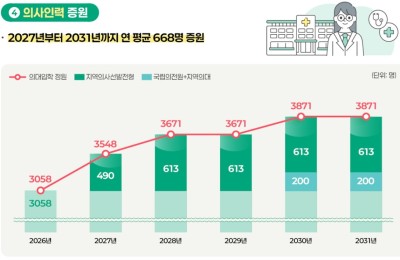
Expanding Medical Workforce Capacity On the 31st, the Ministry of Health and Welfare announced a plan to increase medical school admissions by a total of 3,342 over the next five years and recruit 2,942 regional doctors annually starting next year to strengthen the foundation of local, essential, and public healthcare.
National Pension Fund Hits Record High Return Since the start of the Lee Jae-myung administration, the National Pension Fund has achieved a record-high return of 18.8%, signaling the success of its stable asset management policies.

Visible Success for Integrated Care Services Integrated care services, which provide personalized medical, housekeeping, and housing support, have gained solid traction, with 27,000 cumulative applications as of the 22nd.
New Marine Safety Culture Innovation Plan The government unveiled a comprehensive plan during the Emergency Economic Headquarters meeting on the 29th aimed at reducing casualties in marine accidents by 40% by 2030, officially designated as the "Marine Safety Culture Innovation Plan."
Regulatory Improvements and Administrative Shifts
Strengthening Industrial Safety Regulations As the Lee Jae-myung administration declares a "war on industrial accidents," the focus for 2026 includes expanding workplace inspections, tightening requirements for construction subcontracts, mandating joint industrial health and safety committees for primary and secondary contractors, enforcing risk assessments with new penalties, and ramping up administrative and economic sanctions such as business suspensions for severe accidents.
Innovation in Advanced Industry Regulations To build an ecosystem that encourages corporate investment and sustainable growth, the government is currently reviewing regulations on strategic high-tech industries, size-based corporate regulations, and support systems for SMEs.
EU AI Transparency Rules to Take Effect While regulations concerning high-risk AI systems have been pushed back until after 2027, transparency requirements—such as chatbot disclosures and the labeling of synthetic content—remain on track to take effect in August 2026.
Policy Impact and Upcoming Schedule
Hopes for Resolving Medical Supply Shortages Increasing medical school admissions is expected to resolve the long-term shortage of medical personnel. The recruitment of 2,942 regional doctors is seen as a direct move to improve accessibility to healthcare in underserved areas.
Strengthening Pension Stability The record 18.8% return is projected to positively impact the long-term stability of pension payouts for beneficiaries.
Concerns Over Prolonged Legislative Vacuum With the first half of the 22nd National Assembly coming to a close on the 29th, there is growing concern that a legislative vacuum could persist due to the impasse between ruling and opposition parties regarding the formation of the new assembly, which may hinder future government policy implementation.
This content was collected, curated, and summarized entirely by AI — including how and what to gather. It may contain inaccuracies. Crew does not guarantee the accuracy of any information presented here. Always verify facts on your own before acting on them. Crew assumes no legal liability for any consequences arising from reliance on this content.
Powered by
