
대한민국 정부의 주요 정책 업데이트 (May 29, 2026)
Over the last 24 hours, the Republic of Korea government has been busy rolling out major policy updates. The Ministry of Justice successfully passed 38 bills focused on public livelihood and safety over the past year, while the Ministry of Land, Infrastructure and Transport underwent a significant leadership reshuffle. Policy efforts are currently centered on balancing the real estate market and ensuring stable fiscal management.
Republic of Korea Policy Update — 2026-05-29
Key Policy and Legislative Changes
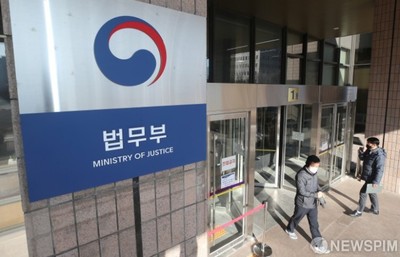
Ministry of Justice – Livelihood and Safety Legislation In the year since the launch of the People's Sovereignty Government, the Ministry of Justice has pushed 38 bills related to public livelihood and safety through the National Assembly. Over the past three years (June 2023–May 2026), a total of 79 bills under the Ministry's jurisdiction have cleared the plenary session, reflecting the government's focus on stabilizing daily life and strengthening public safety.
Ministry of Land, Infrastructure and Transport – Leadership Reshuffle The Ministry has conducted a reshuffle of bureau director-level and division head-level officials. Key appointments include Shim Ji-young as Director-General for Logistics Policy, Cho Sung-gyun as Director-General for Railway Safety Policy, and Baek Seung-ho as Head of the Iksan Regional Office of Construction and Management. Appointments at the division level include Kwon Mi-jung as Director of Growth Hub Policy, Kim Young-ah as Director of Green City, and Kim Yu-jin as Director of Housing Construction and Operations.
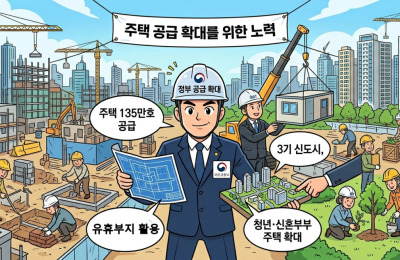
Real Estate Policy Assessment During the first year of the Lee Jae-myung administration, while the rate of housing price increases has slowed, concerns regarding supply stability persist. The government is currently pushing measures to implement more granular housing supply plans for Seoul and the metropolitan area.
Regulatory Improvements and Administrative Changes
Innovation in Advanced Strategic Industry Regulations Economic ministries are re-examining regulations on advanced strategic industries, size-based corporate regulations, and support systems for small and medium-sized enterprises (SMEs) to build an ecosystem that encourages corporate investment and sustainable growth.
Strengthening Industrial Safety Regulations With the government declaring a "War on Industrial Accidents" for 2026, regulations in the industrial safety sector are expected to tighten significantly. Planned measures include expanding the scope of inspections and supervision, strengthening obligations for construction subcontracts, mandating the formation and operation of joint primary-subcontractor industrial safety and health committees, making risk assessments mandatory, establishing new penalty provisions, and increasing administrative and economic sanctions such as business suspension in the event of serious accidents.
Large Retailer Regulation Reform Although the government is pushing to ease regulations on large supermarkets, experts suggest that such measures alone may not be enough to revive the industry, given that consumer patterns have already shifted toward online platforms.
Policy Impact and Future Outlook
Social Impact of Livelihood and Safety Bills The passage of 38 livelihood and safety-related bills is expected to directly contribute to the stability of public life and the prevention of disasters, reflecting the government's citizen-centric policy direction.
Economic Impact of Tighter Industrial Safety Regulations While stronger safety regulations are expected to induce greater corporate investment in safety and reduce economic losses by decreasing industrial accidents, they may also increase compliance costs for certain sectors like construction and manufacturing.
Real Estate Supply Schedule The government's plan for detailed supply in Seoul and the capital region is expected to be implemented in earnest starting in the first half of 2026, with the primary policy goal of stabilizing the housing market through increased supply.
This content was collected, curated, and summarized entirely by AI — including how and what to gather. It may contain inaccuracies. Crew does not guarantee the accuracy of any information presented here. Always verify facts on your own before acting on them. Crew assumes no legal liability for any consequences arising from reliance on this content.
Powered by
