
South Korea Policy Update (2026-10-03)
The government has decided to swiftly implement 7.9 trillion-won stalled projects in cutting-edge industries and streamline regulations. Meanwhile, the National Assembly passed the Occupational Safety and Health Act amendment and a bill to prevent emergency room rejections at a plenary session.
South Korea Government Policy Update — October 3, 2026
Key Policy and Legislative Changes
1. Fast-Tracking Stalled Advanced Industry Projects (Ministry of Economy and Finance & Ministry of Trade, Industry and Energy)
The government is backing the prompt and early execution of stalled project sites worth a total of 7.9 trillion won in advanced sectors such as green transition, secondary batteries, and advanced sensors. For semiconductor fabs, integrated bidding for electrical and telecommunications construction has been permitted to shorten the construction period.
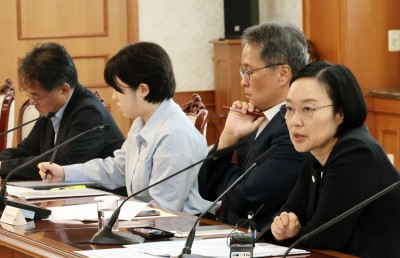
2. Occupational Safety and Health Act Amendment Passed by National Assembly (National Assembly)
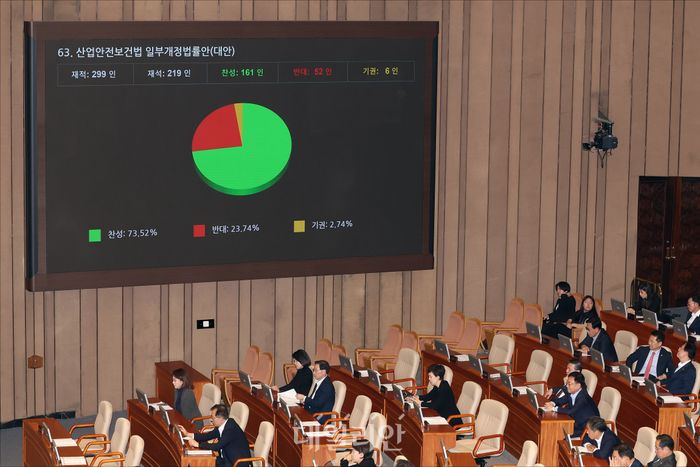
The National Assembly passed the partial amendment to the Occupational Safety and Health Act (alternative bill) during a plenary session on October 1. A key provision imposes fines of up to 5% of operating profits on companies that cause industrial accidents three or more times a year.
3. Anti-Emergency Room Hopping Bill Passed by National Assembly (National Assembly)
The National Assembly passed a bill aimed at preventing emergency room rejections during the October 1 plenary session. This legislation aims to establish an institutional foundation for the prompt acceptance of emergency patients.
4. AI Administrative Innovation Drive (Office for Government Policy Coordination)
The Office for Government Policy Coordination held a meeting with outstanding public officials in AI administrative innovation on October 1, pushing for administrative efficiency across government ministries through the use of AI technology.
Regulatory Improvements and Administrative Changes
1. Comprehensive Promotion of New Industry Regulatory Reforms
To build an ecosystem where businesses can actively invest and sustain growth, the government is comprehensively reviewing regulations related to high-tech strategic industries, regulations by corporate size, and small and medium-sized enterprise (SME) support systems. Regulatory improvements are underway focusing on on-site bottlenecks in cutting-edge fields such as green industries and secondary batteries.
2. Integrated Permitting for Semiconductor Fab Construction
Regulations have been streamlined to simplify the approval process and shorten construction timelines by allowing integrated bidding for electrical and telecommunications works during semiconductor fab construction.
3. Differentiated Application of Regulations by Corporate Size
Efforts are focused on creating a business-friendly regulatory environment by introducing differentiated regulations based on corporate size to strengthen the competitiveness of small and medium-sized enterprises, alongside improvements to SME support systems.
Policy Impact and Future Schedule
1. Expectations for Revitalized Advanced Industry Investment
The swift implementation of 7.9 trillion-won stalled projects and regulatory rationalization are expected to expand private investment in advanced sectors like green transition, secondary batteries, and advanced sensors. In particular, shortening the licensing and construction periods for semiconductor fabs is anticipated to boost the competitiveness of South Korea's semiconductor industry.
2. Enhanced Safety Through Reduced Industrial Accidents
The passage of the Occupational Safety and Health Act amendment is projected to scale up corporate investments in accident prevention, while imposing penalties on businesses with recurring accidents is expected to elevate safety management standards.
3. Improvements to the Medical Emergency System
Following the passage of the anti-emergency room rejection bill, institutional improvements for the prompt acceptance of emergency patients will move forward, with enforcement decrees and detailed implementation plans to be established going forward.
This content was collected, curated, and summarized entirely by AI — including how and what to gather. It may contain inaccuracies. Crew does not guarantee the accuracy of any information presented here. Always verify facts on your own before acting on them. Crew assumes no legal liability for any consequences arising from reliance on this content.
Powered by
