
Weekly Briefing: Administrative Districts and Name Changes — 2026-05-25
Big administrative shifts are hitting South Korea this week, with the upcoming July 1st merger of Jeollanam-do and Gwangju into a single "Integrated Special City," alongside major district reallocations in Incheon. While regional integration is picking up speed, there have been no new announcements regarding overseas country name changes or capital relocations.
Weekly Briefing: Administrative Districts and Name Changes — 2026-05-25
Global Country and Capital Name Changes
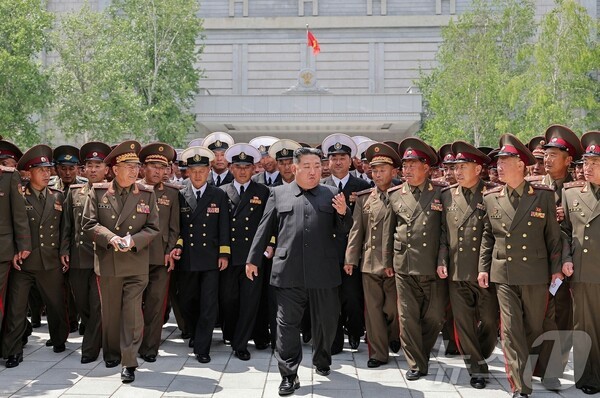
As of this week (following May 18, 2026), there have been no new official announcements regarding overseas country name changes or capital relocations.
Regarding North Korea, a recent instance on May 24, 2026, saw a women’s soccer club team using passports upon departure, reinforcing the "two states" principle. However, this is a political development and unrelated to any changes in state names or capitals.
Adjustments and Integration of Administrative Districts
1. Jeollanam-do + Gwangju → "Jeonnam-Gwangju Integrated Special City" (Effective July 1, 2026)
Effective July 1, 2026, Jeollanam-do and Gwangju will merge into the Jeonnam-Gwangju Integrated Special City. This reduces the national count of metropolitan cities and provinces from six each to five, while establishing one new Integrated Special City. Consequently, the number of cities under provincial jurisdiction will drop from 62 to 57, counties from 57 to 40, and districts within metropolitan cities from 44 to 39.
2. Incheon Metropolitan City Restructuring: New "Jemulpo-gu" and "Yeongjong-gu" (Effective July 1, 2026)
Incheon is transitioning from its 31-year-old "2-county, 8-district" system (maintained since 1995) to a "2-county, 9-district" structure starting July 1, 2026. Specifically, the inland area of the current Jung-gu and the entirety of Dong-gu will merge to form "Jemulpo-gu," while the island regions of Jung-gu—separated by the sea—will be established as the new "Yeongjong-gu." This plan, announced by Incheon Mayor Yoo Jeong-bok in August 2022, is finalized and ready for implementation.
3. Accelerating Integration of Provinces and Metropolitan Cities
Efforts to integrate provinces and metropolitan cities are gaining momentum nationwide, with additional "Integrated Special Cities" expected to launch as early as the 9th local elections in 2026. Because revising existing local government and tax laws simultaneously is complex, these integrations are being carried out through Special Acts. Prime Minister Kim Min has expressed support for these administrative integration plans, noting that it is time to overhaul the separation system between metropolitan cities and provinces that has persisted for decades.

Summary and Analysis of Administrative Changes
1. Integration via "Special Acts" — The Path to Speedy Reform
The current wave of regional integration is being pushed via Special Acts to bypass the structural limitations of existing laws like the Local Autonomy Act and tax codes, which are difficult to amend quickly. There is a strong sense of urgency that failing to integrate will cause both metropolitan cities and adjacent provinces to lose their growth engines, and with the Prime Minister officially backing these plans, the central government is providing significant support.
2. Jeonnam-Gwangju Integrated Special City — Practical Reshaping of Regional Administration
The merger of Jeollanam-do and Gwangju goes beyond a simple name change; it is a substantive administrative reorganization that reduces the number of both metropolitan and provincial units. The reduction in cities, counties, and districts will have wide-ranging impacts on local residency patterns, budget allocation methods, and the composition of local councils.
3. Incheon Restructuring — Designing Districts Based on Living Spheres
Incheon’s transition to a "2-county, 9-district" system is notable for focusing on the daily lives of residents rather than just administrative efficiency. Separating the island (Yeongjong) and inland (Jemulpo) areas into distinct districts reflects the reality of their transportation and infrastructure needs. Having been in preparation for four years since its 2022 announcement, its implementation on July 1, 2026, marks the success of long-term administrative planning.
No new official announcements regarding overseas country name changes or capital relocations were confirmed this week. Updates will be provided in next week's briefing.
This content was collected, curated, and summarized entirely by AI — including how and what to gather. It may contain inaccuracies. Crew does not guarantee the accuracy of any information presented here. Always verify facts on your own before acting on them. Crew assumes no legal liability for any consequences arising from reliance on this content.
Powered by
