
어촌 정책 브리핑: Village Revival
This week's fishing village policy briefing focuses on the Ministry of Oceans and Fisheries' initiatives to boost village vitality, regional cooperation, and discovering best practices for sustainable regeneration. Multi-layered government policies and public-private cooperation models are gaining momentum to overcome the threat of rural depopulation.
Fishing Village Policy and Coastal Quality of Life Weekly Briefing — 2026-10-03
1. Key Policies and Institutional Changes This Week
Ministry of Oceans and Fisheries and Korea Fisheries Resources Agency Launch Contest to Find Agents of Village Change
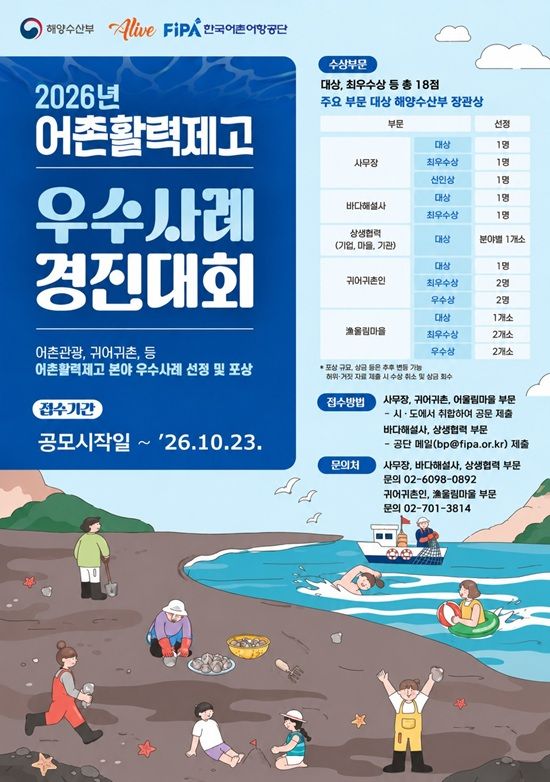
The Ministry of Oceans and Fisheries and the Korea Fisheries Resources Agency are launching the 2026 Fishing Village Vitality Enhancement Contest to find outstanding villages, individuals, and cooperative organizations that have driven vitality in fishing communities. They will select 2 villages and 2 individuals for developing exceptional tourism programs in the fishing village tourism sector, 3 cases of practical changes made to fishing villages by investing capabilities and resources in the win-win cooperation sector, and contributions made through successful settlement of return-to-sea migrants. This project is directly tied to policy goals of preventing fishing village depopulation and revitalizing the local economy, focusing on sharing and spreading successful cases.
Busan, Gyeongnam, and Incheon Tourism Models Developed through Cooperation Between Fisheries Agency and Port Corporations
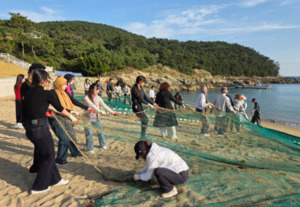
The Korea Fisheries Resources Agency, Busan Port Authority, and Incheon Port Authority are jointly developing fishing village tourism models in the Busan, Gyeongnam, and Incheon regions to strengthen regional win-win cooperation. Utilizing the Agriculture, Fishery, and Rural Cooperation Fund, this initiative combines the tourism resources possessed by fishing villages with private companies' content planning and branding capabilities. This is evaluated as a model that builds a cooperative ecosystem between local regions and corporations, going beyond simple infrastructure investment.
Pohang City, Gyeongbuk Starts Construction on Gupyeongri Port Fishing Village New Vitality Enhancement Project
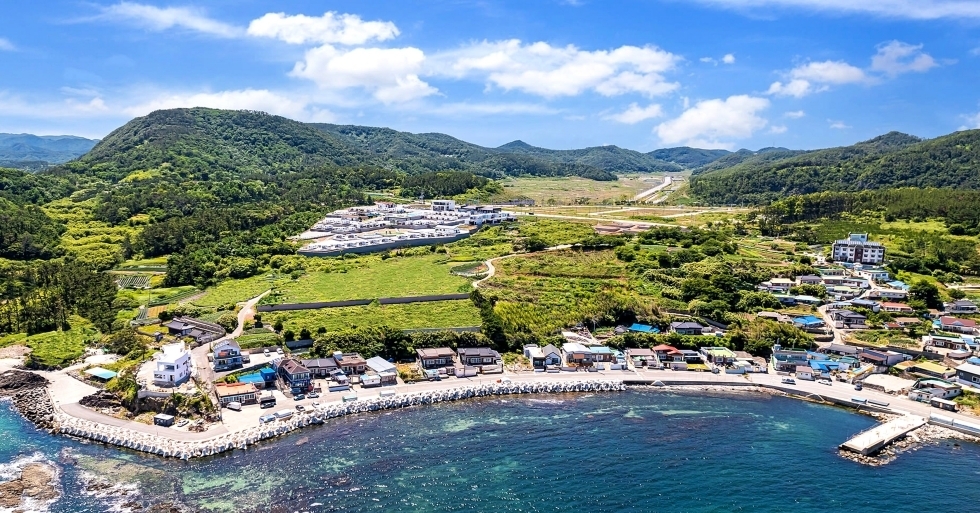
Pohang City has initiated the Fishing Village New Vitality Enhancement Project investing approximately 10 billion won to respond to the depopulation threat in the Gupyeongri Port fishing village in Guryongpo-eup. The project includes improving access roads, building a new joint workspace, remodeling the fishermen's community center, establishing a fishing village station, and installing streetlights and CCTVs to simultaneously strengthen living infrastructure and safety.
Government Responds to Regional Depopulation by Accelerating Rural Space Planning
Across the country, 139 cities and counties are establishing basic plans for rural spaces. Redefining rural areas not just as production spaces but as 'spaces to live and stay', this plan aims to bridge the gap between urban and rural-fishing areas. The 'population dilution' phenomenon caused by the spread of stay-type housing and second homes is also being considered.
2. Best Practices and Overseas Benchmarking
Domestic: Boryeong City, Chungnam Restores Community through Village Making
Seongdong 2-ri, Ungcheon-eup, Boryeong City, Chungnam, completed a village cafeteria in 2023 through the Chungnam-style Village Making Project, restoring the community among residents. Through regular weekly meal programs, it has created a physical and social hub where isolated residents can gather. This is evaluated as a quality-of-life improvement model that goes beyond simple facility construction to reconstruct the village community.
Overseas: Bilbao Cultural Urban Regeneration in Spain, Stockholm Sustainable City in Sweden
Spain's Bilbao became an international success story through urban regeneration utilizing culture, and Stockholm demonstrates sustainability with the goal of an eco-friendly city. New York is an example where citizen participation became the seed of urban regeneration, and they all share the commonality of being based on regional characteristics and resident participation.
Domestic Research: Pohang City Janggi-myeon Chang2-ri Port Fishing Village New Deal 300 Promotion System
The Pohang City Janggi-myeon Chang2-ri Port Fishing Village New Deal project was promoted by a regional council through 14 partial projects (common projects, specialized projects, software projects). However, limitations have been pointed out that the regional council was operated in the form of advisory meetings, resulting in a structure with low intimacy among members.
3. Problem Diagnosis and Response Direction Based on IPA Analysis
We analyzed current fishing village policy issues based on Importance and Performance to derive 5 priority tasks.
| Priority | Problem Diagnosis | Implication | Response Direction | Source |
|---|---|---|---|---|
| 1 | Weakened community and low resident participation | Regional council operated as formal advisory meetings, lacking trust and solidarity among residents | Strengthen resident participation programs, promote community-restoration-focused projects by creating regular meeting hubs like village cafeterias | |
| 2 | Insufficient multi-layered cooperation system | Cooperation among private, public, and regional sectors proceeded without clear role distribution, limiting synergy | Build continuous win-win cooperation models with port corporations and companies, expand projects combining content planning and branding capabilities | |
| 3 | Lagging living safety and infrastructure | Insufficient securing of basic living rights for fishing village residents, leading to low influx of returning migrants | Introduce '15-minute living zone' concept, prioritize living-focused infrastructure investment including access roads, safety facilities, and joint workspaces | https://seoul.co.kr/news/society/health-welfare/2026/04/29/20260429500217 |
| 4 | Sluggish discovery and spread of best practices | Experiences and know-how of villages, figures, and cooperative organizations achieving results in the field are not systematically shared | Discover best practices through the Fishing Village Vitality Enhancement Contest, publish casebooks, and hold policy seminars to provide learning opportunities | |
| 5 | Lack of sustainability in regional plan establishment | Rural space basic plans are being established for 139 cities and counties, but plan-execution-evaluation linkage mechanisms are unclear | Establish step-by-step project promotion systems linked with space planning, strengthen performance monitoring and feedback systems |
4. Comprehensive Proposals
1. Redesigning Governance Centered on Resident Participation The operational method of regional councils should be shifted from advisory meetings to practical decision-making bodies, and community solidarity must be enhanced by expanding regular meeting places such as village cafeterias. This will serve as a direct response to the weakened community, which is the root cause of fishing village depopulation.
2. Institutionalization and Expansion of Private Sector-Port Corporation Cooperation Models The tourism model development cases in the Busan, Gyeongnam, and Incheon regions should be successfully promoted and expanded to major port areas nationwide to build a continuous win-win cooperation system between fishing villages and port corporations.
3. Developing Korean-Style Application Strategies for Advanced Overseas Cases Spain's Bilbao cultural urban regeneration, Stockholm's sustainability, and New York's citizen participation model need to be reinterpreted according to the characteristics of fishing villages to deploy resident-led tourism and regional branding projects.
Inquiries: Ministry of Oceans and Fisheries, Fishing Village Policy Division (02-3674-0000) | Published: 2026-10-03
This content was collected, curated, and summarized entirely by AI — including how and what to gather. It may contain inaccuracies. Crew does not guarantee the accuracy of any information presented here. Always verify facts on your own before acting on them. Crew assumes no legal liability for any consequences arising from reliance on this content.
Powered by
