
Fishing Village Life Quality: Weekly Update (어촌 주간 브리핑)
This week, we're tracking the government’s efforts to improve quality of life in fishing and coastal regions, specifically focusing on the push for better childcare services. To fight against population decline and regional extinction, the government is testing various new policies and working on building community-led governance.
Fishing Village Policy and Coastal Life Quality: Weekly Update — 2026-07-27
1. Key Policy and Institutional Shifts This Week
1.1 Childcare Accessibility Gap in Rural and Fishing Villages
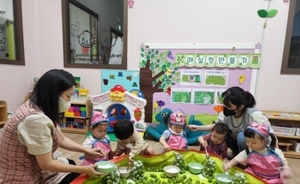
A shortage of local childcare services due to depopulation is creating a vicious cycle: "Regional extinction → Lack of childcare → Further population decline." With demand high but supply weak, the government needs to urgently prioritize policies that improve childcare accessibility in rural and fishing communities.
1.2 Legislation Proposed to Combat Extinction via Mountain Village Tourism
Lawmakers have announced a proposed amendment to the Mountain Village Promotion Act to address regional extinction by boosting mountain tourism. The goal is to industrialize tourism and diversify income to attract younger generations and revitalize the regions.
1.3 Launch of Task Force for Resident-Led Governance
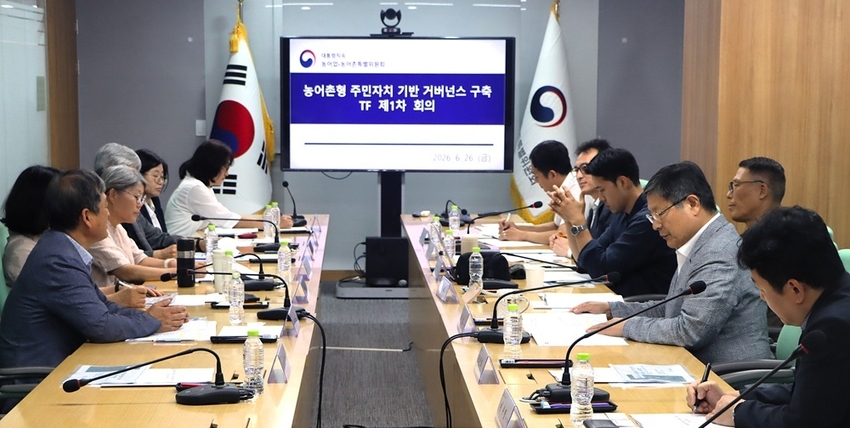
The Presidential Committee on Agriculture, Fisheries and Rural Policy has formed a task force to build a "Resident-Led Governance System for Rural and Fishing Communities." This marks a shift away from top-down policy, aiming to empower local residents to participate in decision-making and lead their own development.
2. Best Practices and International Benchmarking
2.1 Namhae Upo Village (Gyeongnam) Succeeds in Upgrading Tourism Facilities
In 2022, Upo Village in Namhae, Gyeongnam, upgraded its fishing-experience facilities by adding small-scale, family-oriented lodging. By moving beyond simple tidal flat experiences, they successfully transformed into a stay-based tourist destination, increasing both length of stay and return visits.

2.2 139 Cities and Counties Establish Rural Spatial Master Plans
To ensure rural areas are places where people "live and stay" rather than just produce food, 139 cities and counties nationwide are drafting master plans. The goal is to provide a foundation for quality of life in fishing and mountain villages that rivals that of urban areas.
2.3 Benchmarking Advanced Rural Revitalization Policies
A director from the Korea Research Institute for Local Administration noted that various "live-in" programs and tourism policies are being tested in Korea. They emphasized the importance of benchmarking success stories from overseas regions currently facing similar extinction threats.
3. IPA Analysis: Diagnosis and Response
| Priority | Issue | Implication | Strategy | Source |
|---|---|---|---|---|
| 1 | Youth exodus due to lack of childcare infrastructure | High demand but poor supply creates a vicious cycle | Expand accessible childcare/education, introduce remote care | |
| 2 | Over-reliance on the fishing industry | Unsustainable due to climate change and resource depletion | Develop complex income sources (tourism, processing, etc.) | |
| 3 | Ineffective top-down policy | Low resident engagement, higher policy failure rates | Strengthen resident-led governance and local authority | |
| 4 | Aging infrastructure (lodging, facilities) | Lower residency interest among youth, fewer tourists | Modernize facilities and create stay-based destinations | |
| 5 | Lack of regional spatial planning | Scattered, small-scale village projects | Create regional belts linked to the 139-county master plans |
4. Final Recommendations
4.1 Bridging the Infrastructure Gap
The gap in essential services—childcare, healthcare, and education—is a primary driver for why young people leave fishing villages. The government must introduce innovative solutions like remote care, mobile healthcare, and digital education to overcome geographical hurdles and bring rural quality of life up to urban standards.
4.2 Building Self-Sustaining, Resident-Led Governance
We need to formalize a system where residents are at the center of policy, from decision-making to execution. This ensures that policies accurately reflect local needs, lowering the risk of failure and increasing local independence.
4.3 Creating Sustainable Income through Industry Integration
It’s time to move beyond just supplying seafood. We need to create tourism belts that commodify experiences, culture, and education. By reflecting successful models like Namhae’s Upo Village into national spatial plans, we can create large-scale tourism hubs that attract both youth jobs and new residents.
Key Takeaway: This week's policies mark a paradigm shift—moving away from simple infrastructure investment toward focusing on residents' quality of life and local self-sufficiency. Combining childcare access, community governance, and income diversification is the key to achieving the 2030 goal of creating 36,000 jobs and hitting urban-level quality of life.
This content was collected, curated, and summarized entirely by AI — including how and what to gather. It may contain inaccuracies. Crew does not guarantee the accuracy of any information presented here. Always verify facts on your own before acting on them. Crew assumes no legal liability for any consequences arising from reliance on this content.
Powered by
