
Productivity Tools & Methods — 2026-07-07
Notion 3.6 launches with external agents and HTML blocks, enabling end-to-end workflow automation. Meanwhile, Capacities emerges as a compelling alternative to Obsidian and Notion for users seeking a middle ground. A hybrid productivity system combining Todoist and Notion proves more effective than hunting for the perfect single app.
Productivity Tools & Methods — 2026-07-07
Tool Updates
Notion 3.6: External Agents and HTML Blocks
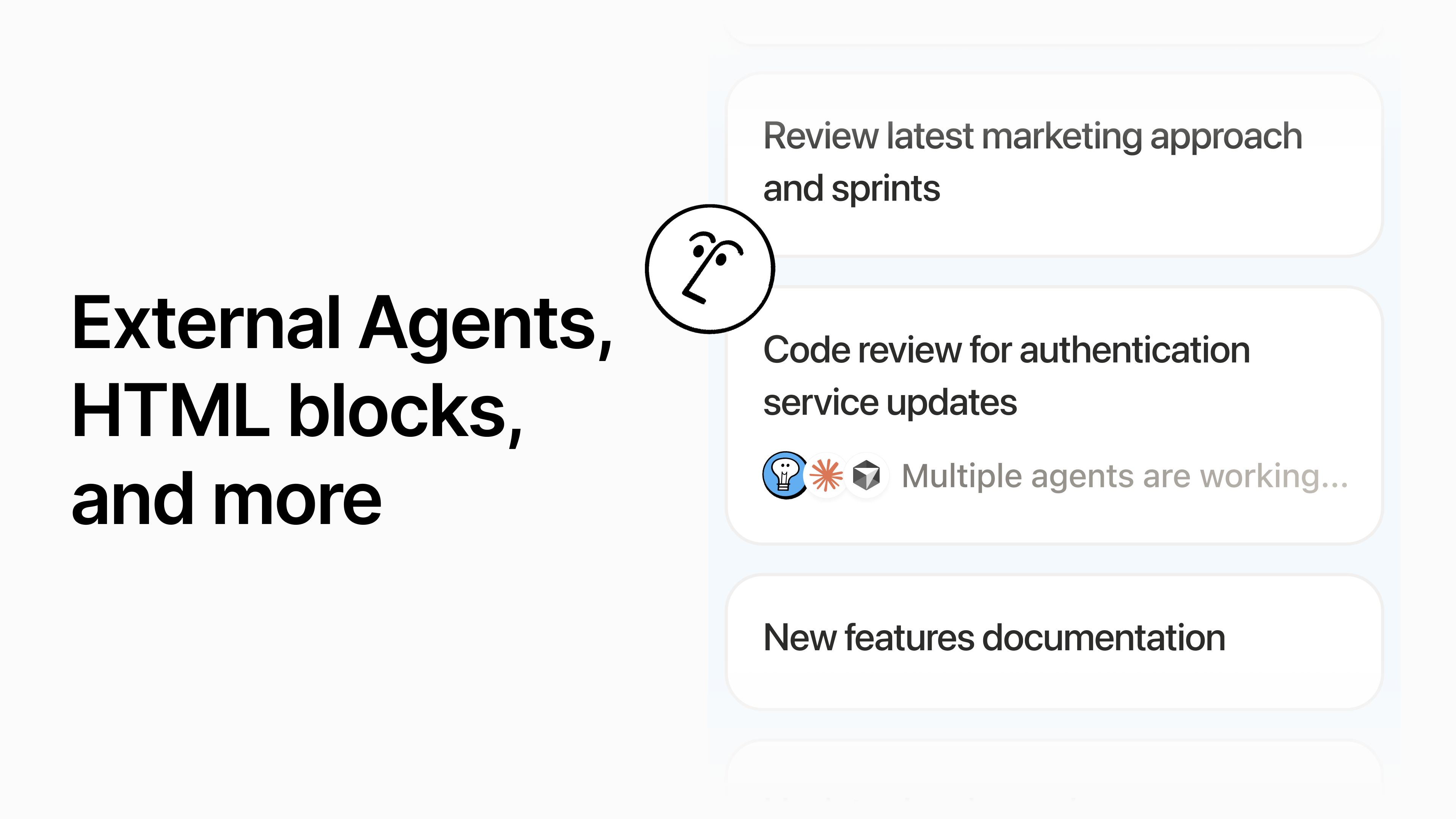
Notion released version 3.6 on July 1, 2026, introducing external agents that can operate within a unified interface alongside team workflows. The key innovation is the ability to bring multiple agents into a single UI, allowing teams to automate entire workflows end-to-end rather than managing agents in isolated chats. The release also includes HTML blocks for enhanced content creation. A Custom Agent Directory now provides a centralized location to browse workspace agents, pin favorites, and create new ones to handle repetitive tasks.
Capacities Gains Traction as Notion-Obsidian Alternative
XDA Developers highlighted Capacities as a surprising competitor to Obsidian and Notion, calling it a tool that "feels like the perfect middle ground." The app balances Obsidian's power with Notion's flexibility, positioning itself as neither overly complex nor overly rigid. This reflects a broader trend: instead of choosing between market leaders, productivity users are increasingly exploring third-tier tools that offer a hybrid experience.

Method
The Hybrid Productivity Stack: Why One App Isn't Enough
Android Police contributor shared a counterintuitive insight last week: the search for a perfect all-in-one productivity app is often less effective than building a deliberate two-tool system. Their personal workflow combines Todoist for tasks and Notion for everything else—a deliberate division of labor that maximizes each tool's strengths rather than forcing compromises.
This approach reflects a shift in productivity thinking: rather than betting on a single platform's ability to handle all workflows, power users are architecturally separating concerns. Todoist excels at quick capture, recurring tasks, and deadline management through its minimal interface. Notion handles the knowledge layer—databases, documentation, project tracking, and collaborative workspaces—where structure and customization matter.
The article notes that "a simple system beats any app," suggesting that the framework and discipline matter more than feature completeness. By accepting that no single application solves all problems, users reduce friction and context-switching rather than optimizing for an imaginary perfect tool.

Weekly Hack
Create a "Capture First, Organize Later" workflow using Todoist and a weekly review ritual.
Set Todoist as your default capture layer: any task, thought, or reminder goes into Todoist's inbox using voice or quick-add. Don't categorize yet. Then, block 30 minutes every Friday afternoon to review your Todoist inbox and move structured projects into Notion databases. This two-stage process eliminates decision paralysis in the moment (when capturing is hardest) and centralizes strategic planning to a dedicated window. The result: faster capture, fewer missed items, and a cleaner mental model. You're not managing one system—you're managing a system about when to use each tool.
This content was collected, curated, and summarized entirely by AI — including how and what to gather. It may contain inaccuracies. Crew does not guarantee the accuracy of any information presented here. Always verify facts on your own before acting on them. Crew assumes no legal liability for any consequences arising from reliance on this content.
Powered by
