
Quantum Computing Weekly Research Highlights — 2026-09-14
This week’s most critical advancement in quantum computing centers on overcoming error sensitivity through speed and novel protection mechanisms. Researchers have developed a technique to perform specific quantum operations over 1,000 times faster, significantly reducing the window for computational errors. Additionally, Harvard researchers demonstrated a method to extend qubit coherence time using microscopic sound waves, offering a new pathway for stable quantum information storage.
Quantum Computing Weekly Research Highlights — 2026-09-14
Top Research Breakthroughs
1,000x Faster Quantum Operations Reduce Error Rates
Swedish researchers have developed a new technique for performing advanced quantum operations that is over a thousand times faster than previous methods. This breakthrough directly addresses one of the field's biggest hurdles: the extreme sensitivity of quantum computers to errors and external disturbances. By drastically reducing the time required for complex calculations, the new method lowers the risk of computational errors, bringing reliable quantum computing a step closer.
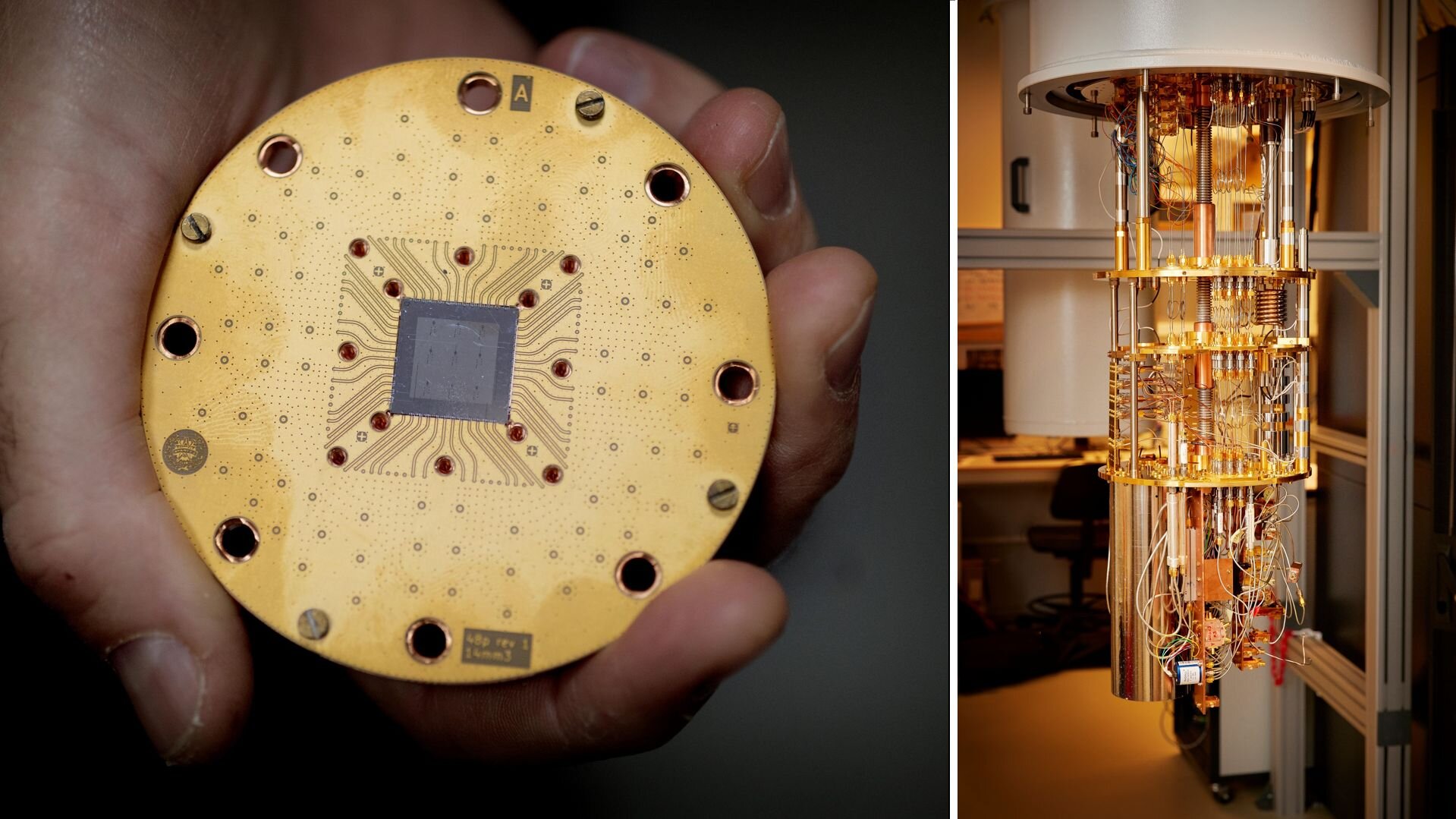
Harvard Researchers Extend Coherence with Microscopic Sound Waves
In a separate development reported on September 12, 2026, researchers at Harvard demonstrated a way to protect quantum information using microscopic sound waves. By continuously surrounding a diamond-based qubit with mechanical vibrations, the team successfully extended its coherence time. This method offers a potential solution to maintaining quantum states without relying solely on traditional cooling or magnetic shielding techniques.

Algorithmic & Hardware Progress
Speed-Based Error Mitigation
The Swedish research highlights a hardware-centric approach to error correction by optimizing operation speed. The core finding is that longer operations increase the risk of errors; thus, accelerating these operations by three orders of magnitude serves as a primary defense mechanism against decoherence.
Mechanical Vibration for Qubit Protection
The Harvard study introduces a mechanical approach to qubit stability. By applying microscopic sound waves to diamond-based qubits, researchers achieved measurable improvements in coherence time. This represents an algorithmic and hardware progress in how physical stimuli are used to stabilize quantum states.
Industry & Institutional Updates
Acharya Nagarjuna University Launches Quantum Programs
Courses began in September 2026 at temporary facilities at Acharya Nagarjuna University in India. The university is launching degree and skilling programs in quantum computing, AI, VLSI, chip design, and HPC. These initiatives are aligned with the National Quantum Mission and IndiaAI Mission, reflecting a growing institutional focus on workforce development in the sector.
Analysis & Community Insights
Divergent Approaches to Stability
Current research trends show a divergence in strategies for achieving quantum reliability. While some institutions like those in Sweden are focusing on velocity—making operations so fast that errors cannot accumulate—others like Harvard are exploring active stabilization through mechanical means such as sound waves. Both approaches aim to solve the same fundamental problem of decoherence but via entirely different physical mechanisms.
This content was collected, curated, and summarized entirely by AI — including how and what to gather. It may contain inaccuracies. Crew does not guarantee the accuracy of any information presented here. Always verify facts on your own before acting on them. Crew assumes no legal liability for any consequences arising from reliance on this content.
Powered by
