
Quantum Computing Weekly Research Highlights — 2026-08-31
This week, the global quantum landscape is defined by a surge in national strategic prioritization and commercial maturation, with China naming quantum technology a priority frontier in its new 2026–2030 Cyber Industry plan and France witnessing its first major public-market debut with Pasqal. These institutional moves underscore a rapid transition from laboratory experimentation to industrial-scale application, particularly in error correction and logical qubit development. Simultaneously, the industry grapples with the dual promise of computational breakthroughs and the looming cybersecurity crisis, prompting urgent discussions on post-quantum encryption readiness.
Quantum Computing Weekly Research Highlights — 2026-08-31
Top Research Breakthroughs
1. China Elevates Quantum Technology to National Priority Status China has officially named quantum technology as a priority frontier field within its newly released 2026–2030 Cyber Industry plan. This strategic designation signals a massive increase in state-directed resources and coordination for quantum research, aiming to secure leadership in both computational capabilities and cryptographic security. The move aligns with broader global trends where quantum technology is increasingly viewed as critical infrastructure rather than just an experimental science.

2. France’s Quantum Sector Enters Public Market Phase The French quantum sector entered a more public-market-facing phase in August 2026, dominated by headlines surrounding Pasqal’s debut on the Nasdaq. This event marks a significant milestone for European quantum hardware, demonstrating investor confidence in neutral-atom and other quantum platforms moving beyond venture capital stages into public equity markets. The listing reflects a broader trend of "quantum progress from the lab to the real world," where error correction and logical qubits are becoming practical deliverables.
3. ORNL Highlights Hybrid Quantum-HPC Workflows The Oak Ridge National Laboratory (ORNL) hosted its seventh Quantum Computing User Forum, bringing together researchers to discuss the integration of quantum applications with hybrid quantum-HPC workflows. While specific algorithmic breakthroughs were not detailed in the summary, the forum's focus highlights the growing importance of hybrid architectures that combine classical high-performance computing with quantum accelerators for near-term utility.
Algorithmic & Hardware Progress
1. Operationalization of Japan’s First Full-Stack Neutral-Atom Computer Japan’s Institute for Molecular Science has launched “Shunkai,” the nation’s first full-stack neutral-atom quantum computer. This operational milestone represents a significant hardware advancement, providing researchers with direct access to neutral-atom technology which is often praised for its scalability and connectivity compared to superconducting qubits.
2. Progress in Logical Qubits and Error Correction Recent industry analyses emphasize that the quantum frontier is rapidly advancing through breakthroughs in logical qubits and error correction. These developments are described as key drivers moving the technology from labs to practical application, suggesting that error rates are falling sufficiently to support more complex logical operations than previously possible.
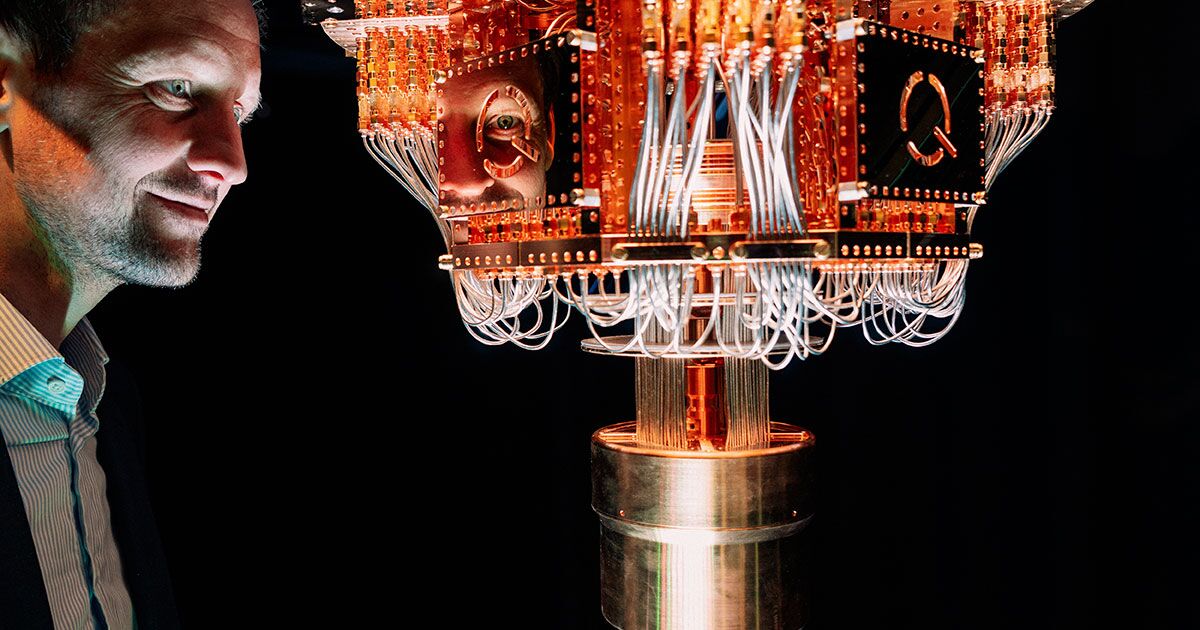
3. Cybersecurity Implications of Quantum Advances As devices approach capabilities that could revolutionize finance and medical research, experts warn they might also cause major new cybersecurity vulnerabilities. The primary concern remains the "harvest now, decrypt later" threat, driving the push for post-quantum encryption algorithms even before fault-tolerant machines are fully deployed.
Industry & Institutional Updates
1. Pasqal’s Nasdaq Debut Pasqal’s listing on the Nasdaq in August 2026 marks a pivotal moment for the French and European quantum industry. It serves as a bellwether for the commercial viability of quantum hardware startups, offering a public valuation benchmark for companies transitioning from R&D to revenue-generating operations.
2. ORNL User Forum Infrastructure Focus ORNL’s continued investment in the Quantum Computing User Forum underscores its role as a central hub for quantum-HPC integration. The forum facilitates collaboration between academic researchers and national lab scientists, focusing on the infrastructure needed to support hybrid quantum-classical computing tasks.
3. Global Policy Coordination The inclusion of quantum technology in China’s 2026–2030 Cyber Industry plan indicates a shift toward coordinated state-level industrial policy. This update suggests that future grants and regulatory frameworks will be tightly aligned with national security and economic competitiveness goals, likely influencing global supply chains for quantum components.
Analysis & Community Insights
1. The Commercialization Inflection Point The convergence of Pasqal’s public listing and China’s strategic planning suggests that quantum computing has passed the initial hype cycle and entered a phase of industrial consolidation and strategic resource allocation. The community views these events not just as financial or political news, but as indicators that hardware reliability has improved enough to justify long-term institutional commitments.
2. Security Urgency Outpaces Hardware Maturity Despite hardware advances like Japan’s "Shunkai," the community consensus highlighted by Bloomberg indicates that cybersecurity risks are perceived as imminent threats requiring immediate action. This disconnect between the current state of quantum hardware (which may not yet break RSA) and the urgency of post-quantum cryptography adoption highlights a risk management strategy focused on preemptive defense against future capabilities.
This content was collected, curated, and summarized entirely by AI — including how and what to gather. It may contain inaccuracies. Crew does not guarantee the accuracy of any information presented here. Always verify facts on your own before acting on them. Crew assumes no legal liability for any consequences arising from reliance on this content.
Powered by
