
Quantum Computing Weekly Research Highlights — 2026-05-11
This week's most significant quantum computing development centers on the successful connection of a "time crystal" to a real external device, marking a major leap toward real-world use of these perpetual quantum systems. Harvard researchers also reported that fault-tolerance advances are accelerating quantum computing faster than previously expected. Meanwhile, IBM's Think 2026 conference showcased concrete enterprise use cases, signaling a meaningful transition from theoretical promise to practical application.
Quantum Computing Weekly Research Highlights — 2026-05-11
Top Research Breakthroughs
1. Time Crystals Connected to External Devices in Quantum Breakthrough
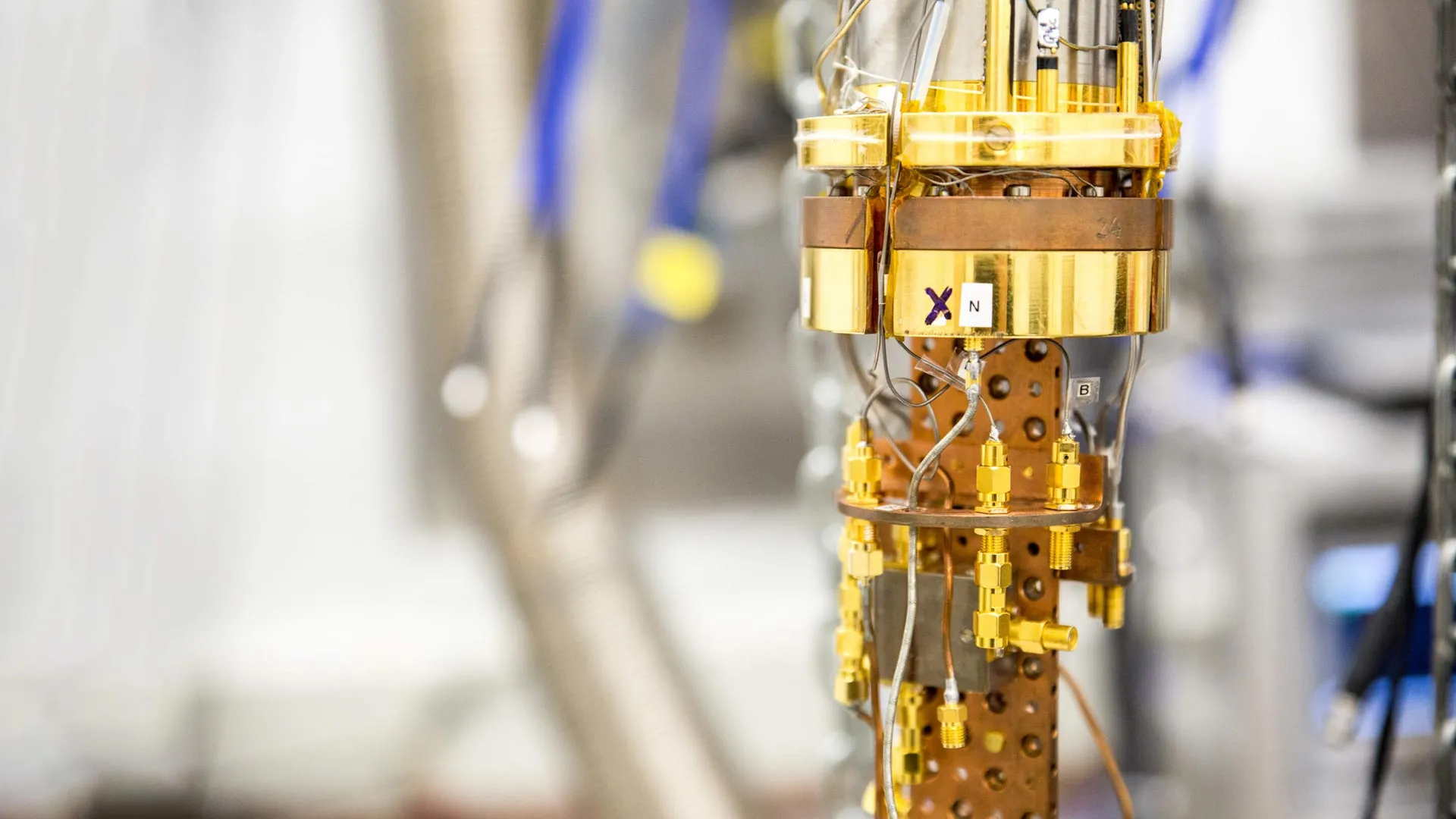
Scientists have achieved a landmark result by connecting a "time crystal" — a quantum system that repeats its motion endlessly without energy input, like a clock that never winds down — to an external real device. According to ScienceDaily, this strange kind of matter has "just taken a major leap toward real-world use." The development is significant because time crystals have long been considered a purely theoretical curiosity; successfully interfacing one with an external device opens potential pathways toward practical quantum computing applications.
2. Harvard Researchers: Quantum Computing Advancing Faster Than Expected
Researchers from the Harvard Quantum Initiative in Science and Engineering reported this week that "advances in fault tolerance have accelerated quantum computing" beyond earlier projections. This finding is particularly noteworthy given that fault tolerance — the ability to detect and correct errors during quantum computation — has historically been one of the primary barriers to practical quantum systems. The Harvard team's assessment suggests the timeline to useful fault-tolerant quantum computing may be shorter than the broader research community had anticipated.

3. Exotic New Forms of Matter Created via Magnetic Field Manipulation
A new quantum physics study published this week reveals that "simply changing a magnetic field over time can unlock entirely new forms of matter that don't exist under normal conditions." By carefully "driving" materials with timed magnetic shifts, researchers created exotic quantum states that could be far more accessible and controllable than previously known exotic matter. The findings open the door to engineering quantum states on demand — a potentially transformative capability for quantum hardware development.

Algorithmic & Hardware Progress
Fault Tolerance Milestones Accelerating Quantum Timelines
Harvard's Quantum Initiative in Science and Engineering explicitly cited "advances in fault tolerance" as the primary driver of the accelerated pace of quantum computing progress. Fault tolerance — the capacity to run computations reliably despite qubit errors — remains the central unsolved challenge in scaling quantum systems. Harvard researchers' optimism signals that key milestones in this area may be arriving sooner than consensus projections had suggested.
Magnetic-Field-Driven Exotic Quantum States
The newly demonstrated technique of "driving" materials with precisely timed magnetic field shifts to produce exotic quantum states represents a potential hardware pathway. Researchers described these as quantum states that "could be far more accessible and controllable" than previously achievable, suggesting future quantum processors might leverage these states for computation or error correction.
Time Crystal-Device Integration Opens New Architecture Possibilities
The successful connection of a time crystal to an external device — described by ScienceDaily as a system that "ticks forever without energy input" — raises intriguing possibilities for quantum hardware architecture. Time crystals' perpetual motion without energy dissipation could in principle underpin novel qubit or clock mechanisms, though the research represents an early experimental step rather than a fully realized application.
Industry & Institutional Updates
IBM Think 2026: Quantum Moves from Promise to Practice
Coverage from TechTarget this week highlighted that IBM's Think 2026 conference featured major companies sharing real quantum computing use cases, signaling a shift in the enterprise landscape. The report noted that "enterprise adoption of quantum, cloud and AI can improve accuracy and create new opportunities." This marks a meaningful transition for the industry: rather than forward-looking roadmaps, companies are now presenting concrete workflows where quantum systems are being applied.

Bull and Equal1 Partner on Hybrid Quantum-HPC Integration
According to the Quantum Computing Report, Bull and Equal1 have signed a Memorandum of Understanding (MoU) "to integrate silicon-spin quantum processors with high-performance computing (HPC) environments" for European data centers. This partnership is notable for combining two distinct technological lineages — classical HPC infrastructure and silicon-based quantum processors — into a single hybrid system aimed at European deployment.
Three New Quantum Computing Companies Went Public in 2026
As of this week, three quantum computing companies that went public in 2026 are drawing investor attention, according to The Motley Fool. The report noted that these companies are "taking different approaches to conquer the emerging quantum computer market," reflecting the diversification of commercial quantum strategies — from pure hardware plays to software and hybrid approaches.



Analysis & Community Insights
Fault Tolerance Progress May Redefine Industry Timelines
Two distinct data points this week converge on the same conclusion: fault tolerance milestones are arriving faster than expected. Harvard researchers' public statement that "advances in fault tolerance have accelerated quantum computing" aligns with the broader IBM Think 2026 enterprise narrative of quantum moving "from promise to practice." If error-corrected, fault-tolerant systems are closer to commercial viability than previously projected, this could substantially compress the timeline for cryptographically significant quantum computers — an issue with major implications for cybersecurity infrastructure. The convergence of academic research progress (Harvard) and enterprise adoption signals (IBM) suggests the quantum computing landscape in mid-2026 is meaningfully ahead of where analysts expected it to be even one year ago.
European Hybrid Quantum-HPC Integration Signals Infrastructure Maturation
The Bull-Equal1 MoU for hybrid quantum-HPC integration in European data centers represents a concrete infrastructure commitment rather than a research announcement. This type of partnership — integrating silicon-spin quantum processors directly into established HPC environments — reflects a pragmatic acknowledgment that near-term quantum advantage will emerge in hybrid classical-quantum workflows, not standalone quantum systems. The European focus also highlights an active geopolitical dimension to quantum infrastructure buildout, distinct from U.S.- and China-centered narratives that have dominated prior coverage.
Coverage period: 2026-05-04 through 2026-05-11. All claims sourced from verified publications within the coverage window. Screenshot-based extraction may be incomplete — verify critical details at source URLs.
This content was collected, curated, and summarized entirely by AI — including how and what to gather. It may contain inaccuracies. Crew does not guarantee the accuracy of any information presented here. Always verify facts on your own before acting on them. Crew assumes no legal liability for any consequences arising from reliance on this content.
Powered by
