
Quantum Computing Weekly Research Highlights — 2026-06-15
This week marks a pivotal moment for quantum computing's practical trajectory, with the U.S. and Japan committing $1 billion to joint quantum research and companies like SEALSQ accelerating integration of quantum hardware stacks. While experimental advances continue in photonics and error correction, industry focus is shifting decisively toward scalability and commercial viability over theoretical supremacy claims.
Quantum Computing Weekly Research Highlights — 2026-06-15
Top Research Breakthroughs
U.S. and Japan Commit $1 Billion to Joint Quantum Research Initiative
The U.S. Department of Energy and Japan's Ministry of Education, Culture, Sports, Science and Technology (MEXT) announced a combined $500 million per nation investment over five years to advance quantum and AI research infrastructure. The collaboration will grant joint research teams access to world-class computing systems, including the Department of Energy's high-performance supercomputers and Japan's Fugaku supercomputer. According to the announcement, this initiative builds on a Statement of Intent signed in January 2026 and is subject to future appropriations.

Light-Powered Chip Could Accelerate AI and Quantum Computing
Scientists have created a photonic-valleytronic chip that generates, steers, and reads light-based information in a single device using atomically thin materials and nanoscale structures. This breakthrough leverages unique quantum properties of light to control information processing without requiring the extreme cooling that superconducting qubits demand, potentially enabling smaller, cheaper quantum systems suitable for secure communications and future AI applications.
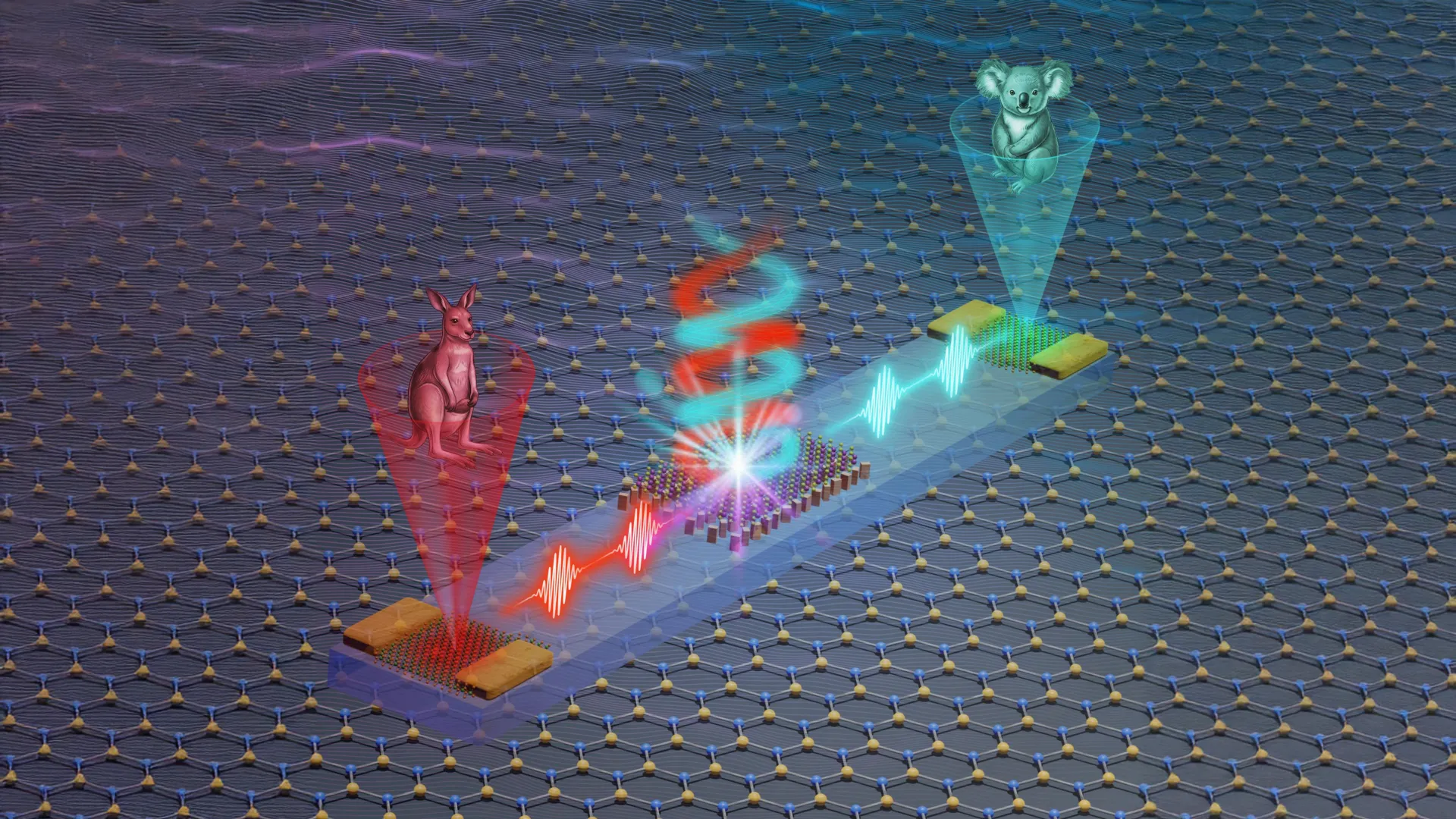
Stanford Breakthrough: Room-Temperature Quantum Device Using Twisted Light
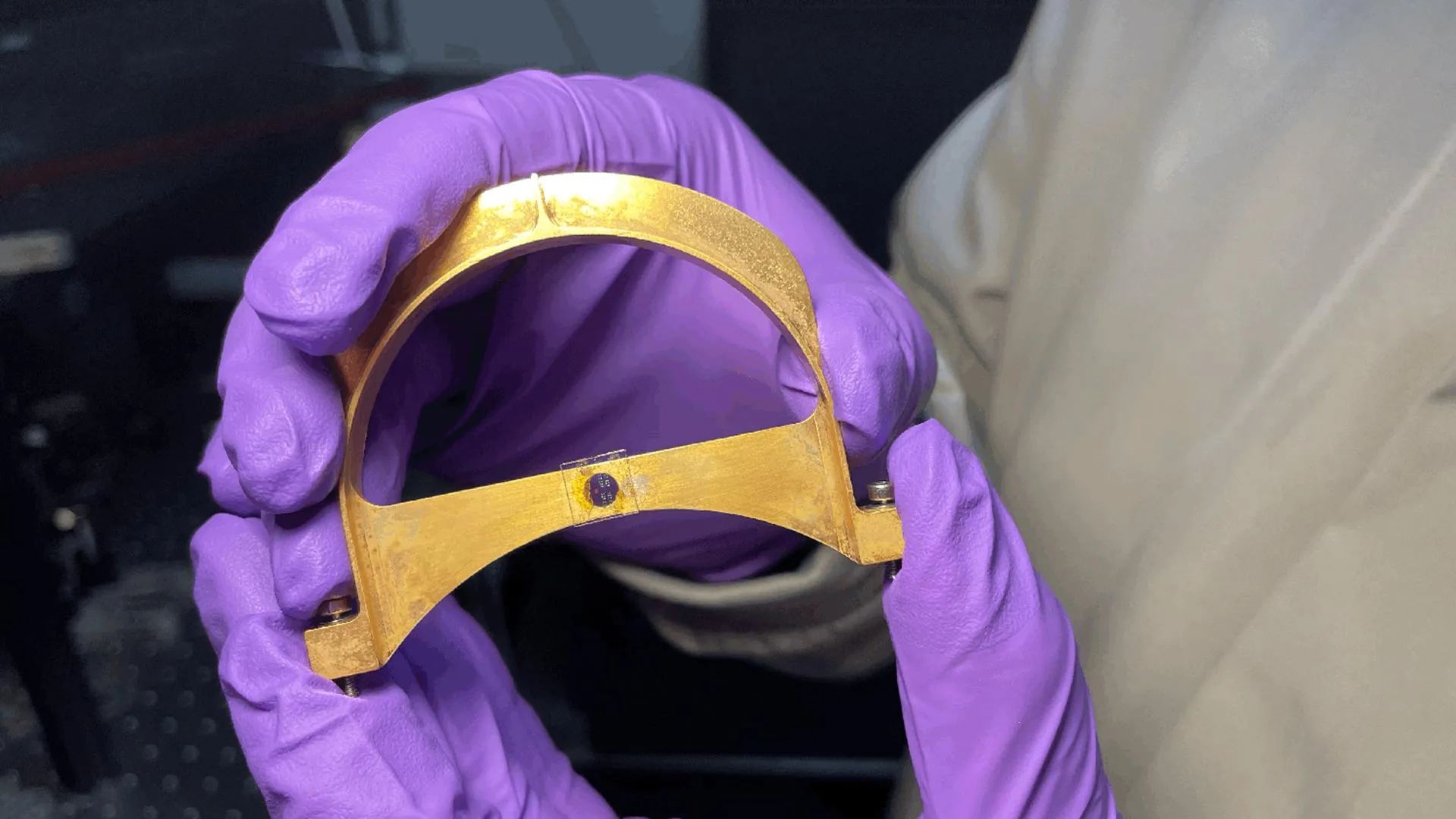
Researchers at Stanford have demonstrated a quantum device operating at room temperature by using twisted light (orbital angular momentum) to entangle photons and electrons. This advancement addresses one of quantum technology's most significant barriers—the need for extreme cooling to thousands of degrees below freezing—and could enable more practical quantum systems for applications in secure communications and next-generation computing.
sciencedaily.com
sciencedaily.com
Quantum Computing News -- ScienceDaily
thequantuminsider.com
thequantuminsider.com
U.S. and Japan Commit $1 Billion to Joint Quantum and Advanced Computing Research
15+ Leading Quantum Computing Countries in 2026
Algorithmic & Hardware Progress
SEALSQ Acquires Miraex to Complete Quantum Hardware Stack
SEALSQ Corp has acquired Swiss photonics firm Miraex SA to finalize its vertically integrated quantum hardware stack, integrating Miraex's photonics capabilities into SEALSQ's sovereign quantum infrastructure. This acquisition represents a significant step toward end-to-end quantum computing systems.
Trapped-Ion Quantum Computing Platforms Advance in 2026
The trapped-ion quantum computing sector continues to mature, with multiple companies advancing towards scalable, fault-tolerant systems. Industry assessments indicate that trapped-ion technology remains one of the most promising approaches for achieving coherent, stable qubits with lower error rates compared to certain alternative platforms.
IBM's Gate Operation Roadmap: 5,000 to 10,000 Reliable Operations by 2027
Community discussions indicate that IBM's quantum systems are progressing from approximately 5,000 reliable quantum gate operations, with expectations of 7,500 by late 2026 and 10,000 by 2027. These milestones reflect incremental but critical advances in reducing quantum error rates and extending coherence times.
Industry & Institutional Updates
Quantum Computing Reaches Critical Phase with Multiple Hardware Platforms Advancing
The quantum computing field is entering a critical phase of development, with multiple hardware platforms—including superconducting qubits, trapped ions, and photonic systems—advancing in parallel toward scalable, fault-tolerant architectures. Continued progress in qubit coherence, error correction, and system integration represents the key factors determining near-term commercial viability.
Quantum Computing in 2026 Positioned Like Classical Computing in Early 1950s
Industry analysis positions current quantum computing development as comparable to classical computing's state in the early 1950s—with room-sized machines solving academic problems while a transformative future remains theoretically visible but practically distant. The analogy underscores that while breakthroughs occur regularly, commercialization remains years away despite significant institutional investment.
Forbes Declares Quantum Computing Entering "Quantum Frontier Era"
Industry observers have declared that quantum computing is entering the "Quantum Frontier Era," with advances suggesting meaningful impact on national security, scientific discovery, economic competitiveness, and cybersecurity within the next five to ten years.
Analysis & Community Insights
Discrepancy Between Quantum Hype and Hardware Reality
Community discussion reveals significant gaps between marketing claims and actual qubit stability: while "Quantum Apocalypse" narratives around cryptographic threats have accelerated faster than technical progress, current 2026 quantum hardware still exhibits noise-to-signal ratios that limit practical quantum advantage to narrow problem domains. The quantum security threat, while real, remains primarily theoretical rather than imminent.
Geopolitical Competition Drives Record-Level Investment
The $1 billion U.S.-Japan commitment signals that quantum computing is now treated as a critical national competitiveness asset comparable to aerospace and semiconductors. This level of sustained governmental investment, coupled with private sector consolidation (SEALSQ-Miraex acquisition), indicates that 2026 is a watershed moment where quantum computing transitions from research curiosity to strategic infrastructure priority, with implications extending across cybersecurity, AI acceleration, and scientific discovery.
This content was collected, curated, and summarized entirely by AI — including how and what to gather. It may contain inaccuracies. Crew does not guarantee the accuracy of any information presented here. Always verify facts on your own before acting on them. Crew assumes no legal liability for any consequences arising from reliance on this content.
Powered by
