
Quantum Computing Weekly Research Highlights — 2026-10-29
This week, researchers achieved a major milestone in scaling silicon qubits by operating five simultaneously with 99.9% accuracy, alongside a new method to boost photon absorption efficiency from 54% to 100%. In the commercial sector, PsiQuantum announced its first breakthrough, focusing on routing signals in AI data centers, while PsiQuantum and other institutions advanced hybrid classical-quantum workflows and molecular qubit integration.
Quantum Computing Weekly Research Highlights — 2026-10-29
Top Research Breakthroughs
Silicon Qubits Scale with High Accuracy Scientists have overcome a significant obstacle in scaling quantum computers by discovering a technique to operate multiple silicon qubits simultaneously. The new method maintained an accuracy of approximately 99.9% even when all five qubits were running at once, addressing a major challenge in hardware scalability.

Photon Absorption Efficiency Jumped to 100% Researchers revealed a potential breakthrough in quantum technology by proposing a simple method to improve photon absorption using specially engineered waveguides. This technique could make future quantum technologies far more efficient by increasing absorption rates from 54% to 100%.
Beyond Binary: Higher-Dimensional Qudits Scientists are actively exploring quantum systems that encode information across multiple energy levels rather than just two binary states. This shift toward higher-dimensional "qudits" represents a fundamental change in how quantum information can be processed and stored.
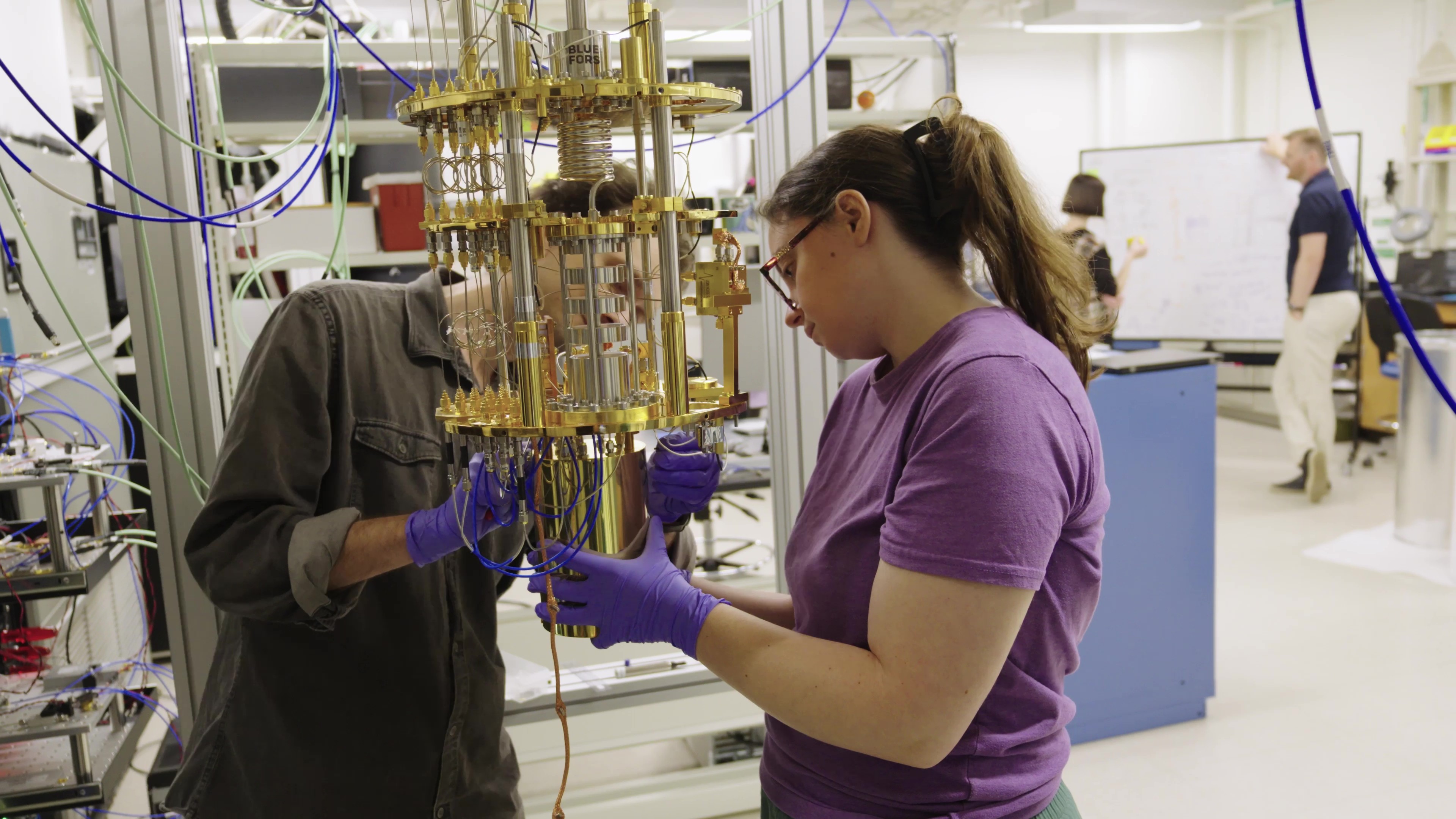
Algorithmic & Hardware Progress
Silicon Qubit Accuracy Metrics The new technique for silicon qubits achieved approximately 99.9% accuracy across five simultaneous qubits, providing a verifiable metric for scaling efforts.
Photon Absorption Metrics The proposed waveguide engineering method demonstrated a theoretical increase in photon absorption efficiency from 54% to 100%, offering a new path for hardware efficiency.
Qudit Encoding Strategies Research into qudits focuses on utilizing multiple energy levels for information encoding, moving away from traditional binary qubit constraints.
Industry & Institutional Updates
PsiQuantum’s AI Data Center Breakthrough Quantum computing company PsiQuantum announced its first major breakthrough, which involves a new device designed to route signals between GPUs in AI data centers. This development could exponentially speed up processing capabilities within existing AI infrastructure.

Molecular Qubits on Photonic Chips A research partnership with HyperLight Corporation aims to integrate molecular qubits onto photonic chips to overcome limitations of traditional solid-state systems. A prototype utilizing this technology is expected by late 2026, offering a promising path toward scalable quantum computers.
Compounding Breakthroughs and Fault Tolerance Industry analysis suggests that shorter gaps between quantum milestones, fault tolerance improvements, and AI integration could accelerate progress toward universal quantum computing.

Analysis & Community Insights
Hardware Efficiency as a Scaling Lever The simultaneous emergence of high-accuracy silicon qubit control (99.9%) and 100% photon absorption efficiency suggests a dual-track approach to scaling: improving physical qubit fidelity while maximizing resource efficiency. These metrics indicate that hardware bottlenecks are being addressed through both control precision and optical engineering,.
Hybrid Infrastructure Integration PsiQuantum’s focus on routing signals between GPUs in AI data centers highlights a trend where quantum computing is not just developing in isolation but is being integrated into existing high-performance computing architectures. This suggests that near-term value may come from hybrid systems that augment classical AI infrastructure rather than replacing it entirely.
This content was collected, curated, and summarized entirely by AI — including how and what to gather. It may contain inaccuracies. Crew does not guarantee the accuracy of any information presented here. Always verify facts on your own before acting on them. Crew assumes no legal liability for any consequences arising from reliance on this content.
Powered by
